When the heart is tired, the future feels uncertain, and all we can manage is one more whispered prayer. The Psalms have always been God’s gift for those kinds of days. They give us words when we have none, reminding us that trust isn’t pretending life is easy, it’s clinging to the God who is faithful. Today I’m grateful to welcome pastor H.B. Charles. In his new book, Psalms of Trust, he walks through some of Scripture’s most beloved psalms, helping us see the steady goodness of God in every season. I think you’ll be encouraged by this excerpt from Psalm 23, a reminder that our Shepherd never leaves us, even in the valleys. It’s a joy to welcome H.B. Charles to the farm’s table today…
Guest Post by H.B. Charles
Some people respond to trials by downplaying them or trying to pretend they don’t exist, but that’s not what David does in Psalm 23. He acknowledges an inevitable reality.
David begins, “Even though I walk through the valley of the shadow of death” (v. 4). This is not a hypothetical scenario.
It is a definite reality.
David acknowledges, almost reluctantly, that his good shepherd does not exempt him from dark times. But this is not an indictment against the goodness of the shepherd. And David is not confessing that he is in the valley because he has strayed away.
David has already said, “He leads me in the paths of righteousness” (v. 3). But there are times when the righteous ways of God require that His sheep go through the valley of the shadow of death.
Sometimes, God’s right paths lead into dark valleys.




It does not matter how much you pray, read your Bible, give, serve, or witness; you will travel through the valley of the shadow of death at some point. “The shadow of death” is a Hebrew idiom for a situation so dark that it seems death has eclipsed the light. It can refer to death, distress, depression, difficulty, or danger. The phrase applies to any dark situation where you cannot see your way out.
“It does not matter how much you pray, read your Bible, give, serve, or witness; you will travel through the valley of the shadow of death at some point.“
A sick bed can be the valley of the shadow of death.
A broken heart can be the valley of the shadow of death.
Divorce court can be the valley of the shadow of death.
An unmet need can be the valley of the shadow of death.
The unemployment line can be the valley of the shadow of death.
The death of a loved one can be the valley of the shadow of death.
The loss of your reputation can be the valley of the shadow of death.
The valley of the shadow of death is that difficult situation in your life that you would change if you could; but you’ve tried and you can’t.
But I have good news: It’s not Death Valley. It’s only “the valley of the shadow of death.” John Phillips wrote, “The shadow of a dog cannot bite, the shadow of a sword cannot kill, and the shadow of death cannot harm the child of God.”
In the very shadow of death, David declares, “I will fear no evil” (v. 4). The “evil” here can refer to difficult or dangerous circumstances. For example, the valley may be filled with steep cliffs, hungry predators, or lurking enemies, yet David refused to be anxious or afraid.
Notice that David was unafraid even though he did not control his situation. He was in the valley for as long as the Shepherd determined. But David could control his response to his situation. He chose not to be afraid of the evil, dangerous, or threatening things that were lurking in the valley, because he was not in the valley by himself.
And if you are trusting in the Lord,neither are you.
There is company in the valley.
“The darker the shadow, the closer the Lord.“
To be clear, David’s courage was not self-confidence. It was God-confidence. He was unafraid of the dangers in the valley because his faithful companion was present and prepared.
God Is Present. There are two types of God-talk in Psalm 23. Davids talk about God in verses 1– 3. Now in verse 4 David talks to God: “For you are with me.” It is one thing to talk about God in green pastures, near still waters, and on straight paths. But we instinctively talk to God in the valley of the shadow of death. Yet there is no reason to fear danger, death, or the devil, because the Lord is with you.
The darker the shadow, the closer the Lord.




This comfort of God’s presence is a constant refrain in Scripture. Psalm 16:8 says, “I have set the Lord always before me; because he is at my right hand, I shall not be shaken.”
“God is near to the brokenhearted. The crushed in spirit. And those who are afraid. He sees the ]despairing. The grieved. The bruised reeds.“
Isaiah 8:10 says, “Take counsel together, but it will come to nothing; speak a word, but it will not stand, for God is with us.”
Isaiah 41:10 says, “For not, for I am with you; be not dismayed, for I am your God; I will strengthen you, I will help you, I will uphold you with my righteous right hand.” Those who are in Christ have this same assurance today.
God is near to the brokenhearted. The crushed in spirit. And those who are afraid.
He sees the despairing. The grieved. The bruised reeds.
The Psalms encourage us to live with stubborn trust in God during every season of life.
Bring your complaints. Bring your sorrows. Sing the blues alongside the blues-singing psalmists.
And discover with them the God who knows, hears, and is worthy of your hurting heart.
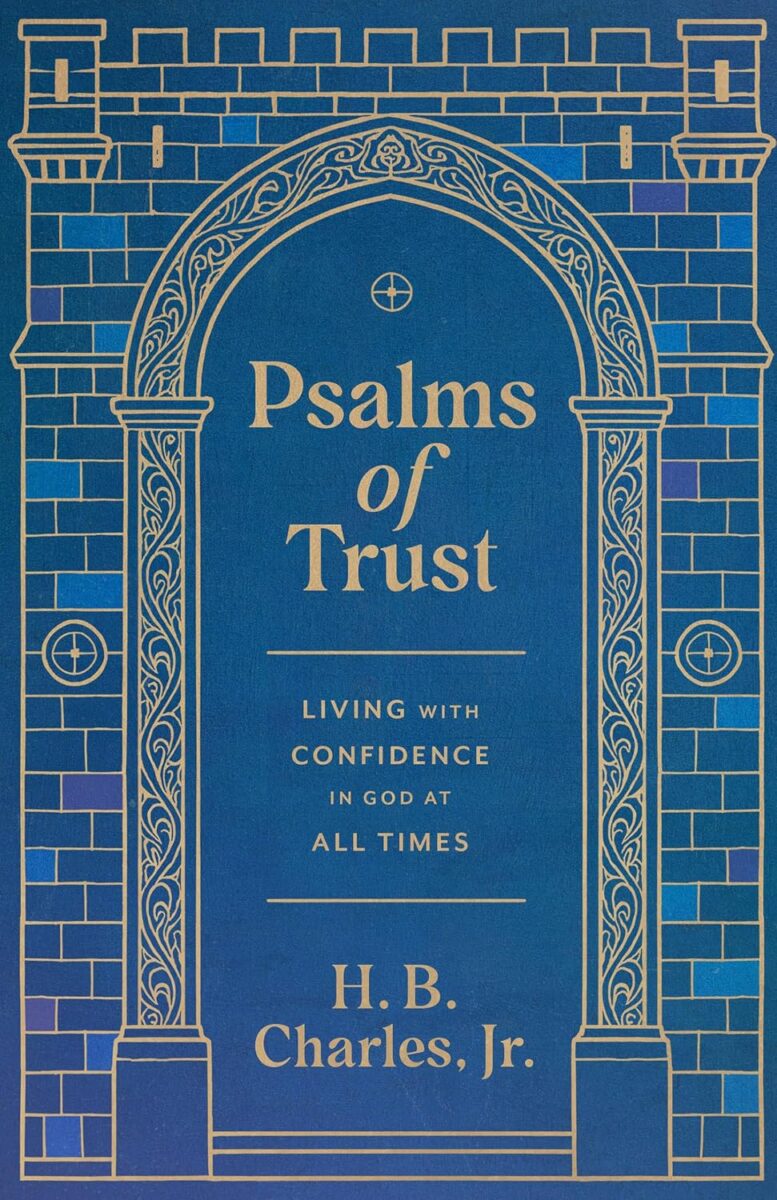
If this excerpt encouraged you, continue the journey in Psalms of Trust.
Through ten beloved psalms H.B. Charles offers biblical hope that will strengthen your faith and deepen your confidence in God’s presence, no matter what season you’re facing.
Let this book grow your courage in God at all times.
You can order here today!
Follow along with H.B. Charles on his website hbcharlesjr.com and on Instagram @hbcharlesjr.
{Our humble thanks to Moody Publishers for their partnership in today’s devotional.)