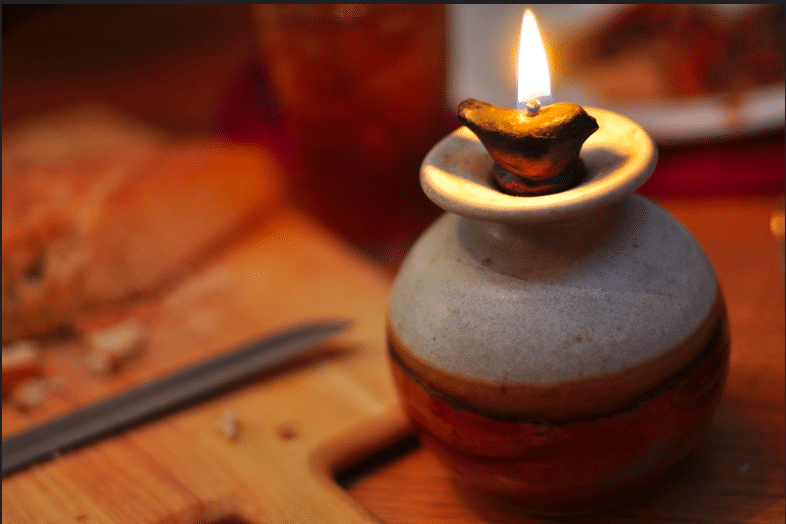
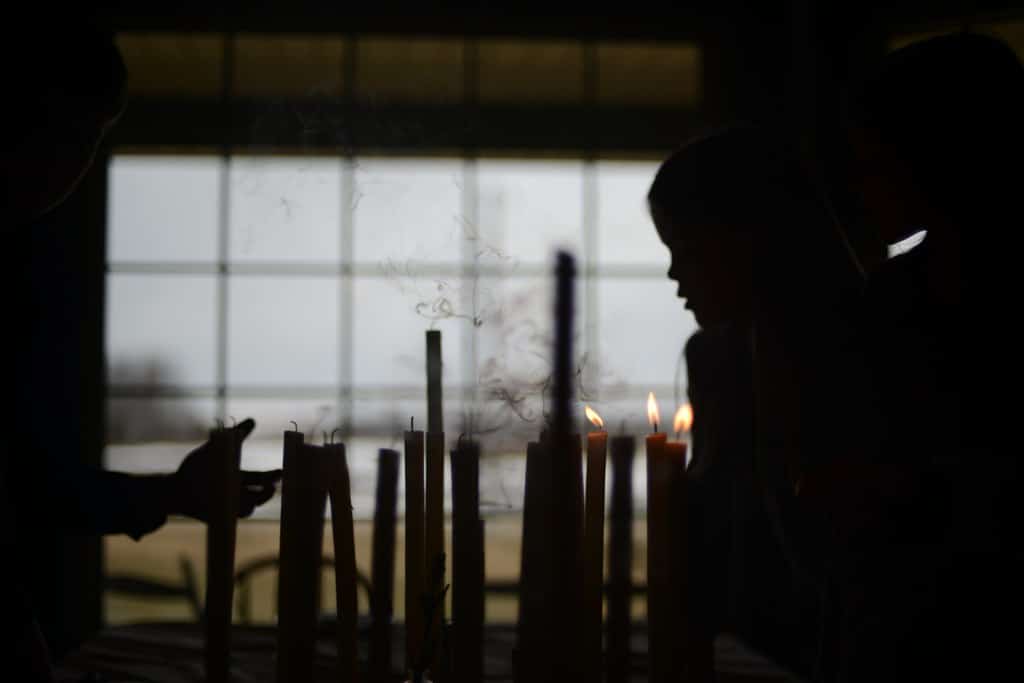
I light a candle early on Wednesday of Holy Week.
And maybe it’s not so much Spy Wednesday, or Silent Wednesday, because what happens on the Wednesday of Holy Week isn’t so much about the spy Judas, nor about any supposed silence about what really happened on Wednesday of Holy Week.
Because Jesus actually speaks quite loudly, clearly, and unequivocally about what should be remembered on Wednesday of Holy Week:
The gospel story isn’t complete without this Woman’s story.
Jesus says that, wherever in the whole world, that the real good news is ever remembered, then what this one Woman did on Holy Week Wednesday must be remembered too. (Matt 26:13)
It’s the only time in any of the four gospels that Jesus says anyone’s act will be told wherever the gospel is told. Not the surreal walking on water. Not the supernatural raising of Lazarus. Not the miraculous feeding of the five thousand. Not any act of Peter, John, or James. This is the only time Jesus ever speaks of a memorial to anyone – and it’s of a woman. As Calvin says, this woman’s act is “inextricably woven into the gospel” — the gospel story isn’t complete without this Woman’s story.


Spurgeon actually says, “So long as this gospel lives, shall this story of the woman be told – and when this story of the woman ceaseth to exist, then the gospel must cease to exist also, for they are co-eternal.”
Co-eternal. That’s the word Spurgeon chooses.
Her intimate, costly offering is the only way to really answer His ultimate, priceless offering.
This one Woman’s act and the gospel are not merely associated; this one Woman’s act and the gospel are divinely bound together – you cannot have the gospel without remembering what this one Woman did on Holy Wednesday.
Because it’s this one Woman who comes into the house of Simon the Leper, on the Wednesday of Holy Week, takes an alabaster jar, of extravagantly expensive nard, breaks it and pours it on Jesus’ head – and the room fills with the scent of love. In Hebrew, such a pleasing aroma is known as “reyach” – and it is the scent that rises from a sacrifice, the korban – which literally means to make a way for drawing near, coming close.
In the Old Testament, when one brings a sacrifice, “a korban to the Lord… he shall offer it… and the priest shall burn all of it on the altar, as a burnt offering, a food offering with a pleasing aroma — reyach — to the Lord.” (Leviticus 1:2-3, 9)
The scent of reyach, noted more than 40 times in the Old Testament, is almost always about a sacrifice, a korban.
The whole Old Testament system of sacrifice is this system of korban. And this sacrifice, which is always about making a way to come closer, results in a rising fragrance, a reyach – and the reyach scent signals complete acceptance.
That’s always been the way of God’s people:
Korban sacrificed. Reyach aroma rises. Sacrifice accepted. Atonement accomplished.
At-one-ment with God.
My candle burns lower on the table, and my own heart kindles, lit.
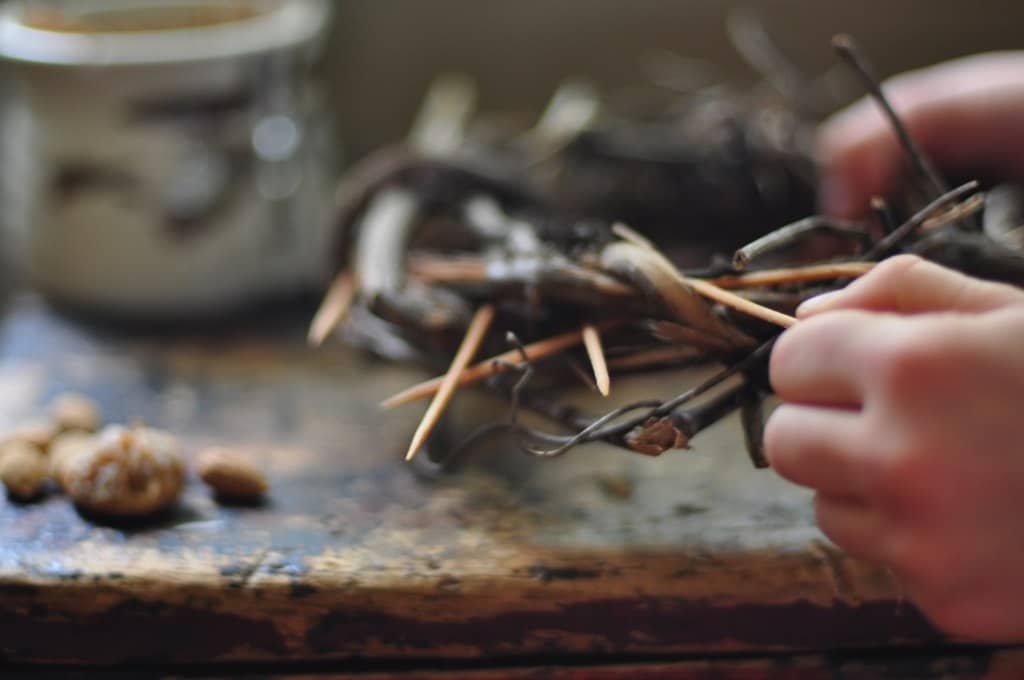
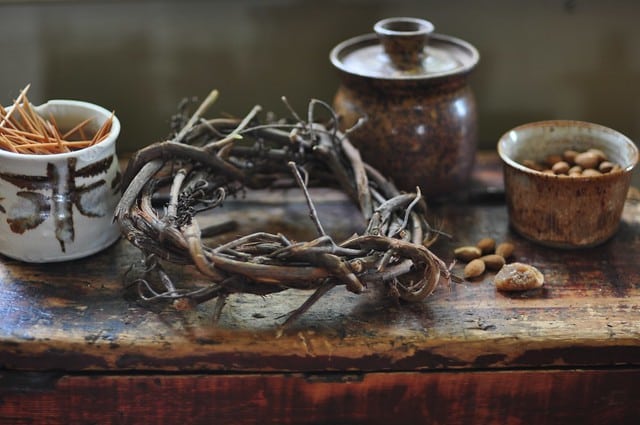
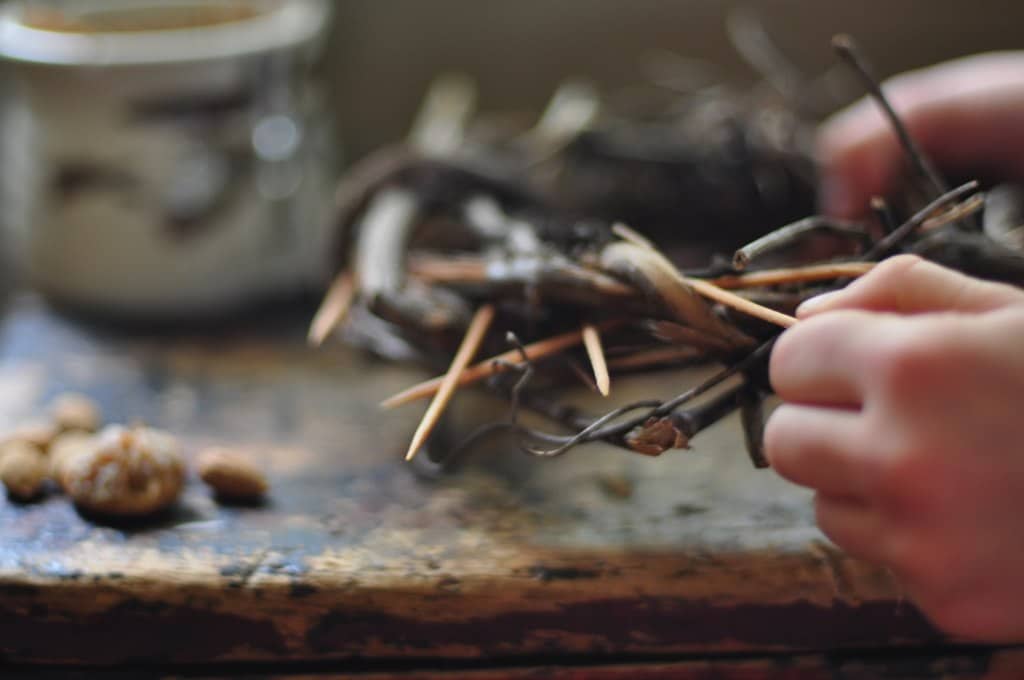
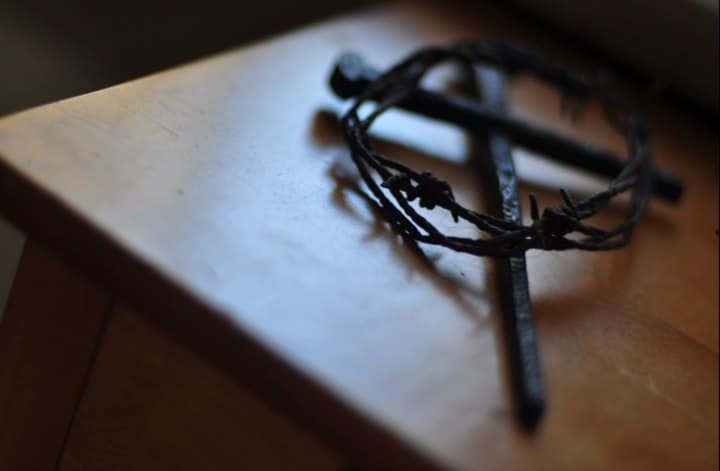
Beside the burning candles, lies a crown of thorns that a kind neighbor made from foraged vines, and dropped off later on the afternoon of Holy Wednesday. And beside the candle and the crown of thorns, I have Bible open on the coffee table all this Holy Week, and it lies open, ablaze, with this story:
Jesus is the ultimate korban, and this woman is the first reflected korban.
Jesus is the ultimate korban. Jesus is the perfect sacrifice – the complete, once-and-for-all-time korban who covers all sins, who covers and closes all of the distance, so all can draw near to God.
And that is what one Woman’s heart sees; she sees Jesus for who He really is and she can do nothing less than respond to Jesus’ ultimate korban-sacrifice with her own sacrifice.
Holding perfume worth almost a year’s wages, she brings it like a sacrificial korban, and draws near to the One who is the ultimate korban, the One who ultimately draws near.
Her korban answers His korban.
And the Woman breaks her alabaster jar.
She breaks over the One who will go to the Cross to be broken. Her korban of sacrificed nard runs down over Jesus, the ultimate sacrifice. She pours out all that she has and is – over the head of the One poured out for all, the sacrificed Lamb of God, whose head will soon wear the crown of thorns, as He’s raised as the conquering King of the universe.
Her intimate, costly offering is the only way to really answer His ultimate, priceless offering.
And the Reyach-aroma rises from the offerings – of her broken jar and His very being.
Reyach-aroma fills the room…. her reyach co-mingles with His reyach… and both their fragrant reyach rises to the heavenly throne room of God.
Her intimate, expensive sacrifice accepted by Jesus – and the ultimate, perfect, incalcuable sacrifice of Jesus accepted by God.
Atonement accomplished.
At-one-ment. Between her heart – and His.
This is why Jesus bound the very heart of the gospel to the heart of this vulnerable woman. This is why the gospel cannot be told without the Woman of Holy Week Wednesday.
Jesus is the ultimate korban, and this woman is the first reflected korban.
Her broken jar mirrors His broken body. Her poured-out perfume is an image of His poured-out blood. Her reyach-fragrace mixes with His forever reyach scent. Her heart-felt korban reflects His holy korban.
Jesus says this one Woman will be remembered wherever the gospel is remembered, not because her love was a singular kind of love — but because her sacrifical love is to be the way of all of Christ’s true followers.
Jesus says this one Woman will be remembered wherever the gospel is remembered, not because her love was a singular kind of love — but because her sacrifical love is to be the way of all of Christ’s true followers.
Jesus says that this Woman must be remembered wherever the gospel is told — because the only way to tell the gospel must be through this language of loving sacrifice. The language of korban. The language of costly giving, and cruciform surrendering, and humble life pouring out.
Our sacrifice drawing near to the Sacrificed One… our korban lovingly coming close to The Korban….our broken jar mirroring His Broken body, our poured-out lives answering His poured-out blood.
If we have truly experienced the love of the gospel, the story of Jesus’ultimate korban — how can we answer it with anything short of our whole lives? Our own korbans. The true followers of Christ are called to be reflected korbans.
And we can only be the reyach-fragrance of Christ, if we too make our lives a living korban-sacrifice.
Our living room fills with the rising fragrance of the candle growing lesser, lower, brighter.
How is my life the scent of God?


The Woman isn’t the only one in Simon’s room on Holy Wednesday.
Instead of costly sacrificing, to draw near to Jesus, all the Judases are the ones drawn by the smell of economic protection.
Judas, and all us, are in the same room with Jesus when the woman’s jar breaks. All of us and Judas smell the reyach-fragrance of real sacrifice too. It is undeniable, palpable, present.
The woman draws near, comes close.
But all the Judases distance.
Because instead of costly sacrificing, to draw near to Jesus, all the Judases are drawn by the smell of economic protection. The Judases are always the ones who try to extract value for themselves in every situation, instead of sacrificing what is of value, so their lives express how Jesus is infinitely worthy.
All the Judases distance themselves from Jesus’ presence when they care less about being a costly living sacrifice, and more about how much is lining their own pockets.
Same room. Same reyach.
But who are the ones sacrificing their lives as a korban and fragrant-reyach to Jesus – and who are the Judases bowing down at the altar of self and becoming a stench to God?
We can only be the reyach-fragrance of Christ, if we too make our lives a living korban-sacrifice.
I sit long — linger – with my candle on Holy Week Wednesday. Does my heart burn – or hurt? Or both?
This is not really Spy Wednesday. Nor is it supposed to be Silent Wednesday.
This is Scent Wednesday.
Because she co-joined Him in the costly aroma of the Gospel, the expensive scent of real sacrifice, the true fragrance of Christ.
Who is that woman? Who is that man, who will answer with their one life
This is Scent Wednesday.
Scent Wednesday is the day the reyach-fragrance of the korban fills the room — and uncovers what fills every heart present. How do I fill the nostrils of God?
This is Scent Wednesday.
The fragrance of how many candles burn on, on Holy Wednesday…
But how many hearts ignite?
But who is the scent of Christ?
And who, especially today, while there still is time, is the extravagant fragrance of sacrifice?

If you long to live a life that is the fragrance of Christ — a truly meaningful life — that is genuinely, sacrificially beautiful… start here with this book that has been touching hearts and changing lives all over the world.
Embark on a 40-day spiritual pilgrimage following the entire life of Jesus through the Gospel of John —
a 40-day journey to move you from barely getting through — to passionately living the fullest life.
Come be Loved to Life.
IF YOU ARE CONSIDERING HOW TO HAVE A MEANINGFUL, MEMORABLE EASTER, CONSIDER OUR FREE LIBRARY OF PRINTABLES & TOOLS TO Come Close and Draw Nearer TO THE BEAUTY OF HIS PRESENCE