Christ on the Cross is our korban. I’ve heard a myriad of reasons why Jesus had to go to the cross, but I stopped dead in my tracks, right there in the sheepfold, right there in the midst of feeding my wee flock of sheep. Why had I never realized the connection before? Or ever really heard this before?
I’m struck stock still with the epiphany of it all, because isn’t this what the Hebrew, Old Testament notion of korban, and the sacrifice of countless sheep — the sacrifice of everything — was always really about?
Sacrifice, the korban, has always been about more than only punishment or payment; sacrifice has always ultimately been about presence.
All Lent, as I kept failing and falling, as I washed pots and pans, chop vegetables, folded clothes, kept getting up and beginning again, what kept striking me, was just this:
How I’d once stood at Shiloh, where all sacrifices for sins happened for 369 years, the burnt offering, the flour offering, the peace offering, the sin offering, the guilt offering. Sheep, goat, grain, bull, dove— all the Old Testament sacrifices of God’s people for all their heart wanderings, all their sins—happened right where I was standing there at Shiloh.
And our Messianic Jewish guide, Arie Bar David, he had turned to me, and strikingly said this about sacrifice for our sins:
“Sacrifice in Hebrew is korban.” Arie flips the pages of his worn Bible to show me.
“See? Sacrifice is the Hebrew korban, which comes from the Hebrew root, K- R- V, which literally means to come near, an approach, a moving closer, to move into a closer relationship.”



That’s when tectonic plates, and the neural membranes under my own cranial plates, my whole interior world, had shifted for me —- and this Lent, that is what I kept returning to, what I kept telling myself, as I fast and sacrifice and fail and stumble on:
Your korban is for closeness. Your sacrifice is never giving up something, but getting to move closer to Someone.
Your korban is for closeness. Your korban isn’t forgoing anything; your korban is for going closer to Someone.
Your korban isn’t forgoing anything; your korban is for going closer to Someone.
You only struggle with sacrifice, if you see it as missing out on something — instead of seeing sacrifice as your korban, to not miss out on Someone.
In the economy of God, you’re never sacrificially giving up anything, as much as you’re intimately gaining Someone.
There’s nothing you could ever give up, that could ever compare to getting to come closer to the embrace of the greatest Someone.
What could possibly be worth holding on to, instead of letting go — so you get to draw closer to the One who deemed you worthy of His life, because of the depths of His love for you?
I try to tell myself that, as I wipe off counters, stack dirty dishes, scrap off the stove, as I struggled with my Lent sacrifices. And I’d turn, stand at the kitchen sink, look out across fields, as the Spirit would do a bit of interior cleaning within me:
Your korban isn’t really relinquishing anything you love – it’s receiving what you’ve wanted more, the love of Someone.
Your korban is for closeness.
Jesus is the ultimate korban. Christ is the ultimate korban — to ultimately draw us close.
That’s been the refrain of my Lent. Your korban is for closeness. Lent is about letting go of something, to make room for more Love, who is Someone. Sacrifice is about detaching from one thing— so you get to attach to a greater thing. Sacrifice isn’t about losing anything — sacrifice is about loving Someone.
After cleaning the kitchen, every day, I go out to feed sheep.
I haul hay. I haul buckets – of water, of grain. Every day through Lent.
And as I move through my flock of sheep, as I feed my sheep every day, as we kept moving closer toward Holy Week, that one line keeps running through my neural membranes too: “Christ our Passover Lamb has been sacrificed.”
Jesus is the sacrifice, our sacrifice, the ultimate sacrifice.
Jesus is the ultimate korban.
By Jesus’ sacrifice – by Jesus’ korban – there is a way now to draw near.
‘Since we have confidence to enter the holy places by the blood of Jesus – [by the korban of Jesus, by the blood of Jesus our sacrificial lamb] – let us draw near with a true heart in full assurance of faith.” (Hebrews 10:19-23)
And that’s when I stopped dead in my tracks, right there, surrounded by a flock of sheep:
Christ on the Cross is for more than a penal-law story – Christ on the Cross is ultimately a relational love story.
Christ is the ultimate korban — to ultimately draw us close.
Every sacrificial korban has always been about more than paying some penal cost – korban has always been about paving the way to relational closeness.
Sacrifice, the korban, has always been about more than punishment or payment; sacrifice has always been about presence.
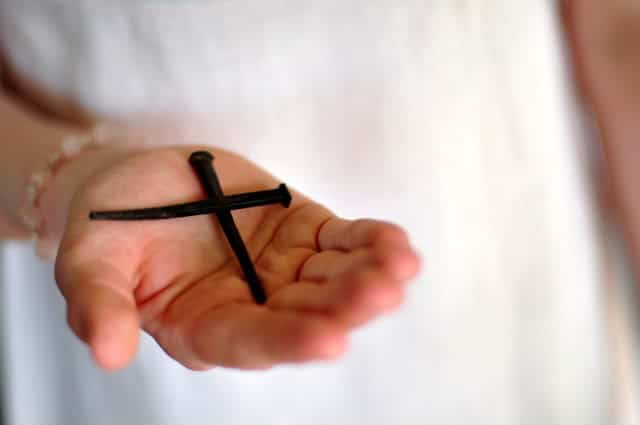
Which then means, as fullfillment of Old Testament prophecy: Christ on the Cross is our korban: Christ on the Cross is for more than paying the real penal cost of wrongs -– Christ on the Cross is ultimately about paving the way for the relational closeness of God.
Christ on the Cross is for more than a penal-law story – Christ on the Cross is ultimately a relational love story.
Christ on the Cross – is more than just about punishment — it’s about Christ being our ultimate korban – so we might ultimately draw near to God’s presence.
The Cross is Korban: Christ comes as a sacrifice, so that we get to come close.


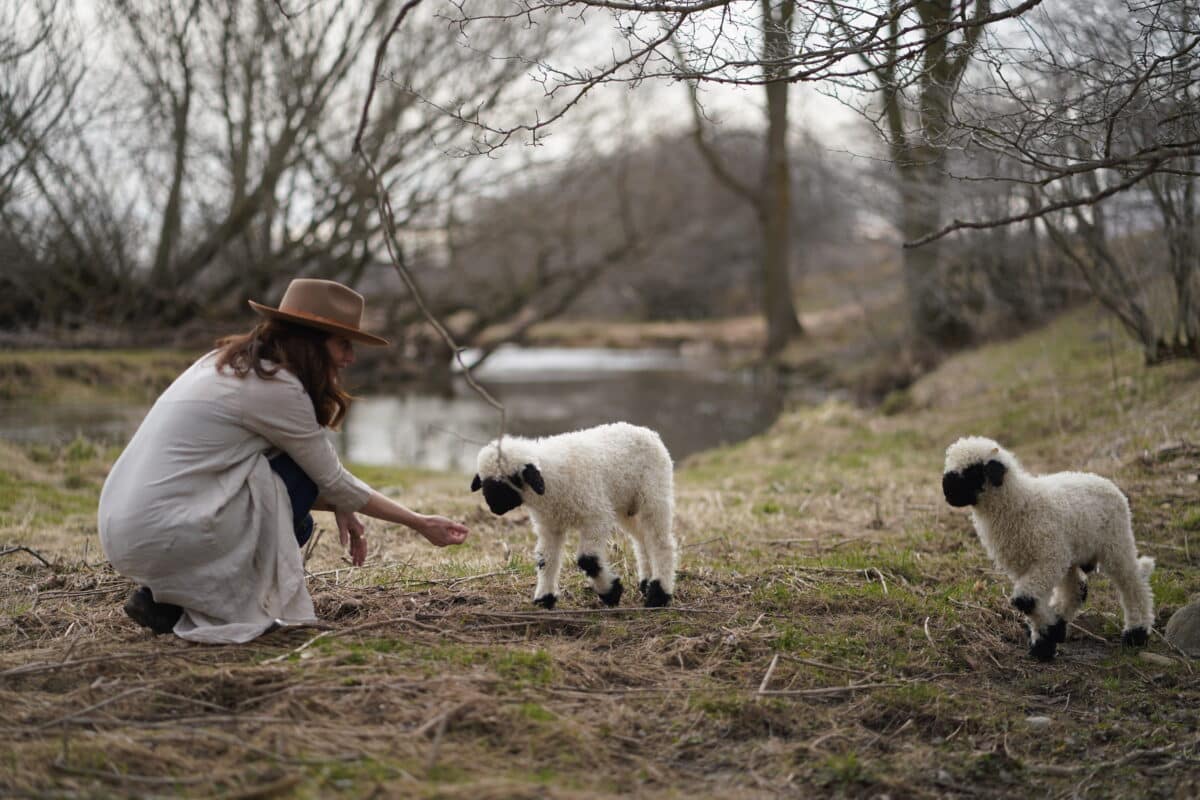
And I slowly kneel down, stroke the vulnerable neck of one of my lambs.
The Cross is more than only Penal Substitutionary Atonement — it is ultimately about Korban Relational At-one-ment.
And I can feel my lamb’s pulse, right there under my hand — its lifeblood coursing.
And I can feel it too, how Jesus is the fulfillment of all the countless Old Testament sacrifices, how Jesus was the sacrificial lamb who went to the Cross, to take the punishment for our sins, so the holiness of God was satisfied and the experience of freeing forgiveness could be ours. That’s the true story that penal substitutionary atonement tells about the Cross — but penal substitutionary atonement is but one chapter in the fuller, greater, richer story of the Cross.
The Cross is more than only Penal Substitutionary Atonement — it is ultimately about Korban Relational At-one-ment.
Is that the public service announcement about penal substitutionary atonement? The PSA about PSA — is that PSA, penal substitutionary atonement, is but part of what the cross is all about — the larger, fuller, complete story of the Cross is KRA: Korban Relational At-one-ment.
The Cross is more than penal payment — the Cross is korban for relational attachment. Korban Relational At-one-ment doesn’t replace the truth of penal substitutionary atonement — but it places it as only one chapter in a wider, Old Testament sacrifice story, that is completed in the New Testament sacrifice of Jesus. Because the Cross is more than justice satisfied, and the book of wrongs closed — the Cross is about Christ not satisfied until our names are written in the Book of Life, and all distance between us is closed.
The Cross is Korban where we are given more than forgiveness; we are ultimately given nearness.
The Cross is Korban where we are given more than forgiveness; we are ultimately given nearness.
“But now in Christ Jesus, you who once were far away have been brought near through the blood of Christ” (Ephesians 2:13)
The gospel good news is more than getting forgiveness, and getting a ticket to heaven – the gospel good news is that Jesus is the korban who ultimately gives us close intimacy with God, to experience a bit of heaven now. Korban Relational At-one-ment.
And there, kneeled before a lamb, the ground of the Holy Week, the ground at the foot of Cross begins to shift… begins to move me closer.
Whatever picture anyone draws of Jesus on the Cross – the reality is that the Cross is Jesus doing whatever it takes for us to draw nearer.
And one of my wee lambs moves nearer, unexpectedly lays its head there on my shoulder, all distance covered, and closed… and we just remain there in the moment…. close.
Come Holy Week, Walk with Jesus to the Cross & be Loved to Life

If you long to be closer to Jesus, close enough to actually feel loved— this is your personal invitation, to just 40 Days with Jesus — to be Loved to Life .
A deeply transforming 40-Day Pilgrimage with Jesus, through the book of John — right to the Cross and the empty tomb and new life — this is your invitation to come close right now, & touch the hem of Jesus — & to let Him touch your wounds, touch your tender places, touch your tears with His own gentle love that weeps with you — & touch you with His own healing and hope.
Come, your soul, & your year, will thank you: 40-Days with Jesus to be Loved to Life, & experience healing that only He can bring. Come be Loved to Life.