Dr. Rich Robinson was raised in a Jewish home that was more cultural than religious. His family celebrated Passover and Hanukkah at their home in Brooklyn, and they went to the temple on the High Holy Days. He even attended Hebrew school several afternoons a week. But God was only on the periphery of his life. It wasn’t until college that the idea of Jesus really started to consume his thoughts. When he gave his life to Christ, he also discovered a new connection to his Jewish heritage. That has put him on a lifelong mission to help others—Jews and non-Jews—understand the importance of the gospel in its Jewish context. It’s a joy to welcome Dr. Rich Robinson to the farm’s table today…
Guest Post by Dr. Rich Robinson
The irony was palpable.
I was involved in an evangelism campaign with Jews for Jesus in the midst of a sweltering New York City summer. A man walked up to me in the subway and said something I had heard often before, a line designed more to keep the gospel at a distance than to understand anything: “The reason you are Jewish and believe in Jesus is because you’re young and impressionable.”
I looked at him and asked his age. “Thirty-eight,” he responded.
I looked at him again and said, “Well, I’m forty-two.”


I was grieved to consider how my brother’s heart was so hardened. Like him, I, too, had drawn a line between the Jewish and Christian faiths. My childhood and young adult life had been all about my Jewish heritage, not the God who had created me. I didn’t understand a God who was active in the world, let alone one who wanted a personal relationship with me. I was far from alone in this.
As humans, we tend to want to create boundaries or division, even dividing the Bible into what’s important and what’s not. I’ve heard it said that the Old Testament is only for Jews or that Christians only need to focus on the New Testament. But what if people understood the connections between the Testaments? What if there was a Bible that could help readers explore the Jewish context in which the Bible was written and better understand many of the people who originally read it?
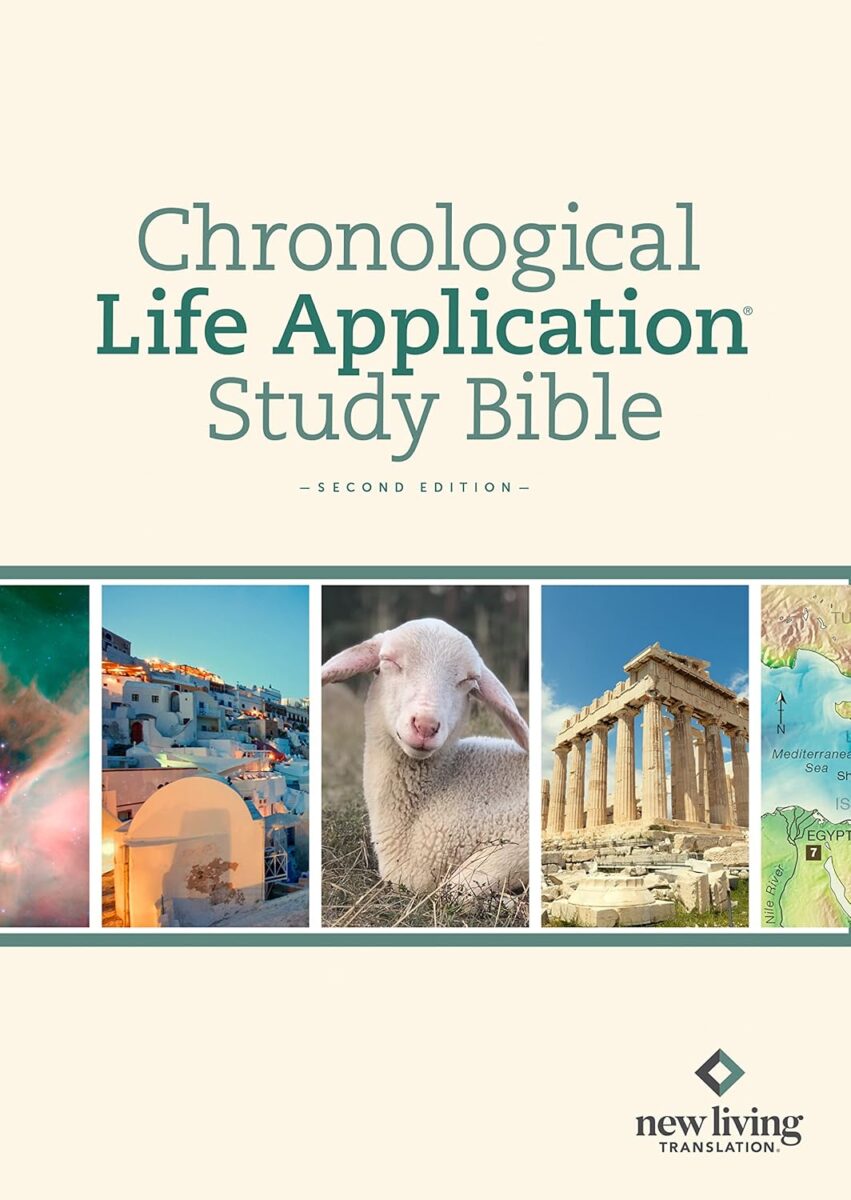
It was with these questions in our heads and a passion for people to see the Bible with fresh eyes that my colleagues and I set out to update the Chronological Life Application Study Bible. With the excellent work that was already in place, we embarked on a journey to write additional study notes focusing on ancient Jewish culture and context, to create new features highlighting important Bible people, and to craft articles unpacking ancient traditions such as the Jewish calendar. We wanted to reveal how the Bible is a unified story with Jewish roots—a story for both Jews and non-Jews.
“We wanted to reveal how the Bible is a unified story with Jewish roots—a story for both Jews and non-Jews.“
Why is this important? Because it helps us understand the Bible in its context. How different the conversation with my Jewish acquaintance in New York might have been if he had understood the significance of Jesus celebrating Jewish holidays!
For instance, reading John 7 with the understanding that it takes place during a Jewish festival called Sukkot—the Hebrew term for the Feast of Shelters or Tabernacles—is eye-opening. When Jesus spoke “on the last day, the climax of the festival” (John 7:37), a big water show was taking place at the Temple. Jesus described “living water” flowing from the hearts of the spiritually thirsty, and his audience would have connected this imagery with what was happening around them.
In John 8:12, Jesus proclaimed himself “the light of the world” when lights from special candelabras were burning during the holiday week. Throughout Jerusalem, these shining lights would have been visible to anyone looking at the Temple Mount.
These passages show how Jesus spoke and taught by listening to what those around him were interested in, what they were thinking about, and then segueing into the spiritual answers that God provides. We can follow Jesus’ example in our conversations with others, bringing his truth into their world.
See how John 7 comes to life when we have a more robust understanding of Sukkot? For Jewish people who still celebrate these festivals today, can you imagine how exciting it would be to connect Jesus’ teaching to a holiday they have known all their lives?
It’s extremely important for us to understand the history and ancient culture of the Bible, but Bible engagement is more than just lessons on Jewish traditions. We need to bring the truth of the Bible into the context of our lives today. How can God use what you are learning to bring his hope to so many who live in despair and fear?


As part of the Jewish community, it is frightening for me to see the dramatic increase of anti-Semitism in North America and Europe. I hear from many Jewish people in cities and on campuses who feel threatened and unsafe. Some are convinced that the gospel and the New Testament are the root of this evil.
“Christ’s Kingdom bridges the gap between Jews and non-Jews. We need each other to understand the fullness of the gospel message! “
For many Christians, the answer is “of course not!” But for people with Jewish heritage—a heritage marked by atrocities like the Crusades, resettlements, and the Holocaust—grief and fear may feel like perfectly justified responses to Christianity.
How do we counter the idea that the New Testament is anti-Semitic?
In the Chronological Life Application Study Bible, we walk through the six most common passages used to support this claim and explore how we can refute them.
Making sense of these passages in our modern day can be difficult. Sadly, many believers have been guilty of anti-Semitism, and at times, they still are. This “Christian anti-Semitism” is often the result of people using the institution of the church for their own selfish gain. We must grieve the atrocities that have been done in the name of Jesus, but we do not need to diminish our confidence in the words of the New Testament as a result. We need to understand the plight of our Jewish brothers and sisters, help them defeat the hate, and be a voice for change. Here are three things you can do right now:
1. Learn about the Jewish people.
Read a book like Anne Frank’s The Diary of a Young Girl. Watch a film like Exodus. Visit a Jewish museum. Or better yet, invite Jewish friends to share a meal and get to know them.
2. Identify anti-Semitism
Anti-Semitism takes many forms, but there are some telltale signs of its presence. Here are a few things to keep an eye out for: (1) claims that Jewish people control systems of finance, media, or politics; (2) portrayals of Jewish people with exaggerated features; and (3) suggestions that Jewish people are the cause of social ills.
3. Speak up
Remember the response of Martin Niemöller, a German pastor during the Second World War, to those who asked, “How could it happen?” He said, “First they came for the Communists, and I did not speak out, because I was not a Communist. Then they came for the trade unionists, and I did not speak out, because I was not a trade unionist. Then they came for the Jews, and I did not speak out, because I was not a Jew. Then they came for me—and there was no one left to speak for me.”
We all can benefit from understanding the Jewish contexts of Jesus’ life and the New Testament writings. When we realize that the New Testament is not anti-Semitic but instead affirms the Jewish origins of the gospel message, we break down those divides and better understand God and those made in his image. Knowing the Jewishness of the gospel can be a life-changing experience for Jews and non-Jews alike.
I’m convinced that as more and more Christians get to know the Jewish contexts of Jesus and the New Testament, they will be in a better place to reach their Jewish friends with the gospel and to enhance their own worship experience. And though I’m Jewish myself and came to faith in Jesus as a college student, I’m still learning Jewish aspects of the Bible that are new to me.
Christ’s Kingdom bridges the gap between Jews and non-Jews. We need each other to understand the fullness of the gospel message!
So instead of allowing these categories to separate us, there’s a way to keep learning together.
Rich Robinson, PhD, currently serves in San Francisco as senior researcher for Jews for Jesus, where he works on writing, editing, and researching the Bible, Jesus, and Jewish culture.
He is one of the scholars who worked on the Chronological Life Application Study Bible, Second Edition — a Bible I’m personally studying with this year, one of the best Bibles I’ve ever learned from.
Created in partnership with Jews for Jesus, this full-color Bible has thousands of notes, articles, maps, and other resources to help connect the Christian faith to its Jewish roots. Using the accurate and accessible New Living Translation, it includes every word of the 66 books of the Bible but arranges them in timeline order instead of by book.
See Scripture through the lens of ancient culture, and experience how it is woven together to display God’s amazing story!
{ Our humble thanks to Tyndale for their partnership in today’s devotional.}