There are some friends who don’t just write words — they write the ones you didn’t know you desperately needed. My dear friend Lysa TerKeurst has a gift for walking straight into the tender, tangled places of the heart and shining the kind of light that makes you feel seen rather than exposed. This one stopped me. Because if you’ve ever found yourself white-knuckling the illusion that if you just research enough, prepare enough, or worry enough, you can somehow keep the people you love safe from pain — Lysa is about to say the thing your soul has been needing to hear. She is one of the most honest, brave, and deeply grace-filled voices I know, and I couldn’t be more grateful she’s pulling up a chair at the farm table today…
Guest Post by Lysa TerKeurst
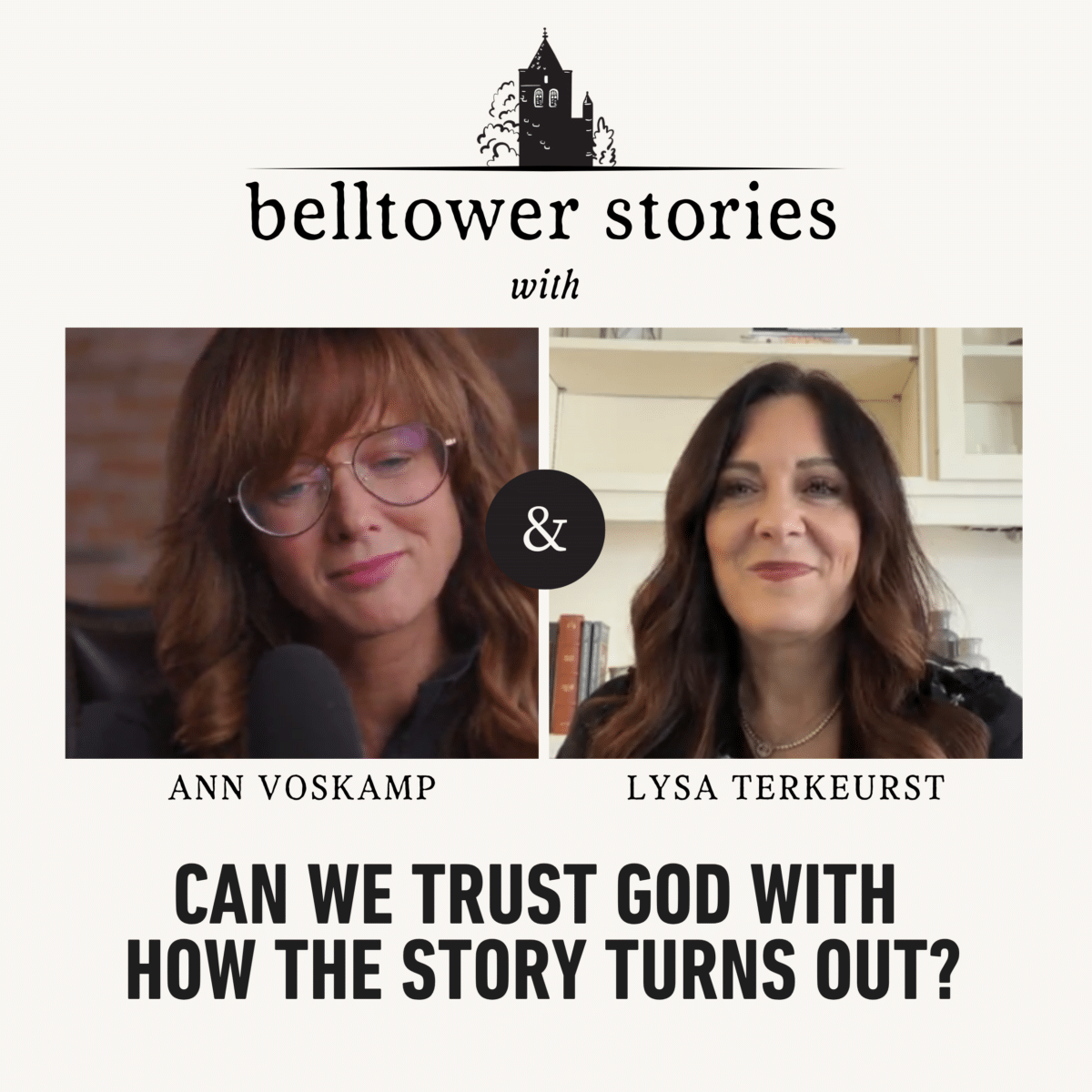
You can’t begin to imagine what a profound pleasure it was to sit down to talk with Lysa TerKeurst in the belltower of our 1896 old stone church — this is genuinely a NOT-TO-BE-MISSED-CONVERSATION…. Don’t miss our powerful video convo below…
Recently, I was having a conversation with my friend Leah.
The topic was one we’d processed for years: her dad passing away because of a brain tumor that left her on high alert about every potential danger with her kids. And as we were talking, a question came to me.
I asked it as gently as I could.
“Do you think there was a moment when your dad made what seemed like an insignificant decision—one that later became the catalyst for his brain tumor? Maybe he stood just a little too long breathing in bus fumes? Or ate something grown in toxic soil? Or held his phone near his head a few seconds too long? And something went wrong on a cellular level—the beginning of the tumor that eventually took his life?
“So now, on an ordinary day, you’re hyperaware that something small—an unwashed apple, a plastic water bottle, an everyday choice—could set off a catastrophic chain of events. You don’t know what caused his tumor. You don’t even know when it started. You don’t know where things went wrong. And because of that, these ordinary decisions feel incredibly weighty and potentially threatening. So now you’re trying to control what felt completely out of control in your dad’s life.“
She nodded and said, “Yes—that’s exactly where my brain goes.”








I admitted to her that this kind of thinking also sometimes haunts me.
And I feel all kinds of pressure not to miss moments of possible prevention in my own life. This is such a subtle slip into control that most of us miss the mental wear and tear this has on us.
I remember mentally backtracking, trying to figure out when I missed the first subtle changes in my ex-husband. When was the day he saw something or pondered something that cracked open the thought that having an affair might be justifiable? Was it something going on in him? Was it something I did or didn’t do? What part did I unknowingly play? What could have stopped those first thoughts, those first actions, or those first steps toward the destruction and devastation that played out?
I searched through pictures from just before it started happening and wept.
“But even good things, taken to an extreme, can sometimes turn into harmful obsessions and a weight you were never meant to carry.“
It all looked so normal. We looked happy. He looked happy.
So what was it?
My counselor, Jim, taught me not to go shopping for pain. But I guess I justified this painful exercise, because maybe if I could figure out what I missed back then, it would help me avoid future emotional catastrophes.
If I know more, I can prevent more, right?
I guess there’s some truth in that statement. But we have to stop and ask ourselves: What are we trying to prevent?
Prevention is often what I try to accomplish with my control. Maybe for you it’s a different word. Maybe you are using variations of control because you want to protect, pretend, prepare, perfect, perform, or predict.
- Prevent: I control because I want to stop what I fear may happen.
- Protect: I control because something is happening and I want to make sure it doesn’t get worse.
- Pretend: I control because, by sweeping things under the rug, I don’t have to acknowledge or deal with hard realities.
- Prepare: I control because I never want to get caught off guard and I want to have a plan for every bad thing that might happen.
- Perfect: I control because if I can keep everyone and everything in line by using the right words, doing the right things, and getting everyone else to have the same definition of “right” as me, then I can make sure we keep up the perfect image.
- Perform: I control because by performing my duties so well, I feel I can make things happen for myself.
- Predict: I control because overthinking, overprocessing, and overanalyzing give me a greater chance at predicting the future and this knowledge feels like power to me.
Take a moment and think about these variations of control.
You might be motivated by several of these. Then ask yourself:
What am I trying to prevent?
What or who am I trying to protect?
What am I trying to pretend is not happening or pretend is no big deal?
What am I trying to prepare myself for?
What do I feel must stay perfect in order to guard my image?
What areas of performance give me the illusion that I can handle it all myself?
What am I trying to predict about the future?
For me, prevention is often my motivation for trying to control.
“…if He’s my Lord, my job is to be obedient to Him — and His job is everything else.“
Even still, old thought patterns left over from my first marriage sometimes reemerge, and before I know it, fear starts getting factored into thoughts I have about our relationship. Instead of just thinking, We should go on a date, my thoughts shift into, If we don’t go on a date, then it could be the beginning of us growing apart. I better make sure to get this scheduled right away. Good thing I didn’t miss this. Good thing I’m thinking about all that could go wrong so I can get ahead of these things.
Do you see the sneaky way I shifted in my thinking from how fun it is to spend time with my husband to I better spend time with him or else ____________ might happen?
I think most of us can make this subtle shift from taking care to trying to control without even realizing it.
And once you know deep loss, it’s only understandable that you’ll do anything to never feel that again. But even good things, taken to an extreme, can sometimes turn into harmful obsessions and a weight you were never meant to carry.
There’s a story in the Bible that serves as a sobering example of someone who thought they knew the best outcome, so they took control to try to shift things in the direction they wanted. It’s the story of Judas Iscariot. Now, I am not saying we are villains in our stories — it’s often quite the opposite, where we are trying to be the hero who saves ourselves and others from impending peril. But the part that is relatable is Judas’s efforts to control an outcome.
Many believe that Judas was desperate for things to return to the time of the great King David. He wanted Jesus to be a military leader to help defeat Rome and become the reigning king over Israel. When Jesus didn’t take action in the way Judas thought He should, Judas took matters into his own hands.
We get a glimpse into his mindset at the Last Supper. When Jesus revealed that one of the disciples would betray Him, they all responded the same way — calling Him “Lord.” But when Judas spoke, he said something different: “Surely you don’t mean me, Rabbi?” (Matthew 26:25).
Why did Judas call Him “Rabbi” and not “Lord”?
A rabbi is a teacher. “Lord” means He is the master of your whole life. The Greek term kurios, which we translate “Lord,” has in mind a king. The problem with Judas is that he didn’t want “this” kind of king—he wanted a king like David from the past. So, by calling him “Rabbi” and not “Lord,” it is in a way a rejection of the kingship of Jesus.
There is such a big difference here between Jesus being a teacher and Jesus being Lord.
If He’s only a teacher, I stay in control. He has influence in my life, but I’m the one who still determines what I do and where I go. But if He’s my Lord, my job is to be obedient to Him — and His job is everything else.
This makes me pause. Do I consider Jesus a teacher in my life, or the Lord over my life?
In the end, Judas taking control didn’t lead him to the outcome he wanted. Instead, it led him to destruction and devastation. In my own life, I know what it’s like to push toward what I think is best in the way I think is best and in the timing I think is best. But I’m not equipped to be in full control of my future.
That’s a role that belongs to God.


I guess I’m a lot more like Judas than I’d ever care to admit.
Judas wanted Jesus to rescue him and those around him from what was causing them such turmoil. Me too.
When Jesus didn’t do what Judas thought He should do, Judas took charge. Me too.
“It’s very important for us to remember that our controlling efforts are costly.“
I think Judas convinced himself that what he was preventing justified the actions he deemed necessary. Again, I relate to this.
It cost him everything and didn’t deliver the future he wanted. Not even close.
Now, I want to be very tender here. There are legitimate reasons that most of us are afraid and slip into controlling efforts. It is reasonable that, because something awful happened in the past, we desperately want to prevent it from happening again. Of course you feel this way. Of course I feel this way. All of our prevention is so very understandable and should never be shamed in any way.
But I also know that, as my next step of healing, I need to address this fear that is pulling me away from trusting God. It’s very important for us to remember that our controlling efforts are costly.
The first baby step is opening our eyes to see where control is sneaking in — and opening our hearts to consider what it may be costing us as we remember that only God is equipped to be in control of our future. Only He knows best.
A Deeply Life-Giving Conversation: BellTower Stories
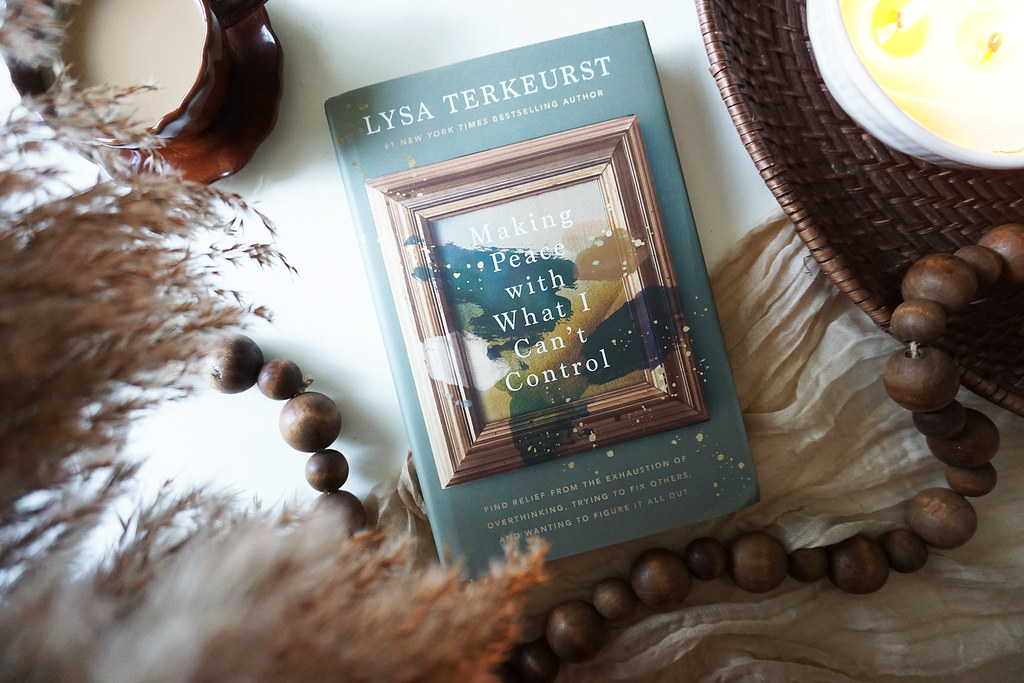
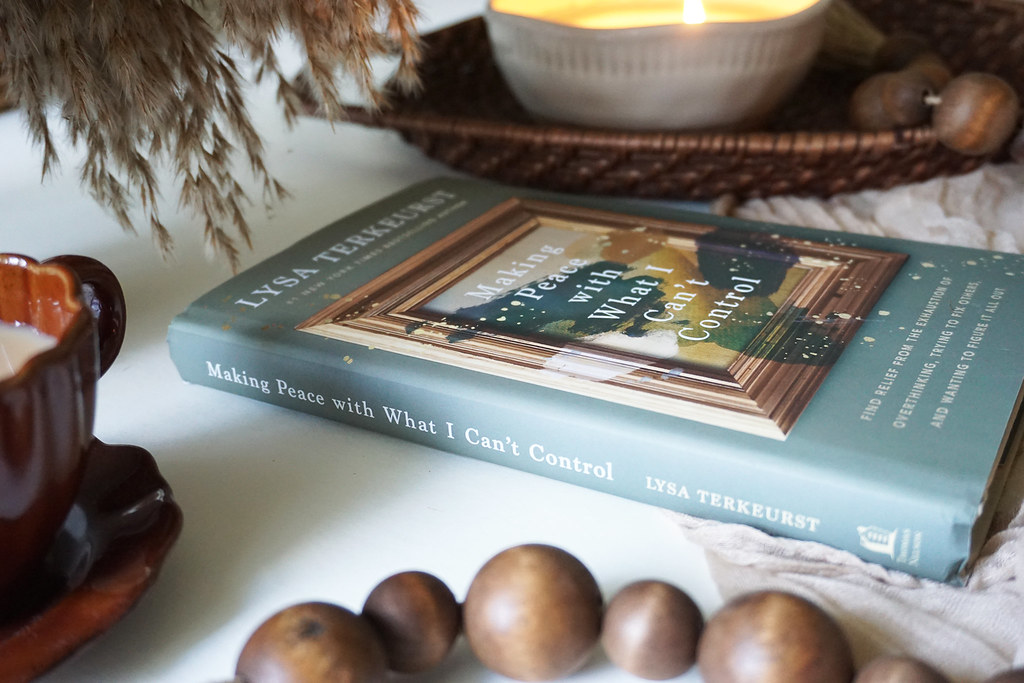
Can we trust God with how the story turns out? Ann Voskamp and Lysa TerKeurst discuss Lysa’s new book, Making Peace with What I Can’t Control. Come join us in BellTower Stories, up in the 1896 bell tower our little Village Table church, as “the bells are the voice of the church, with tones that touch and search.” (Longfellow)
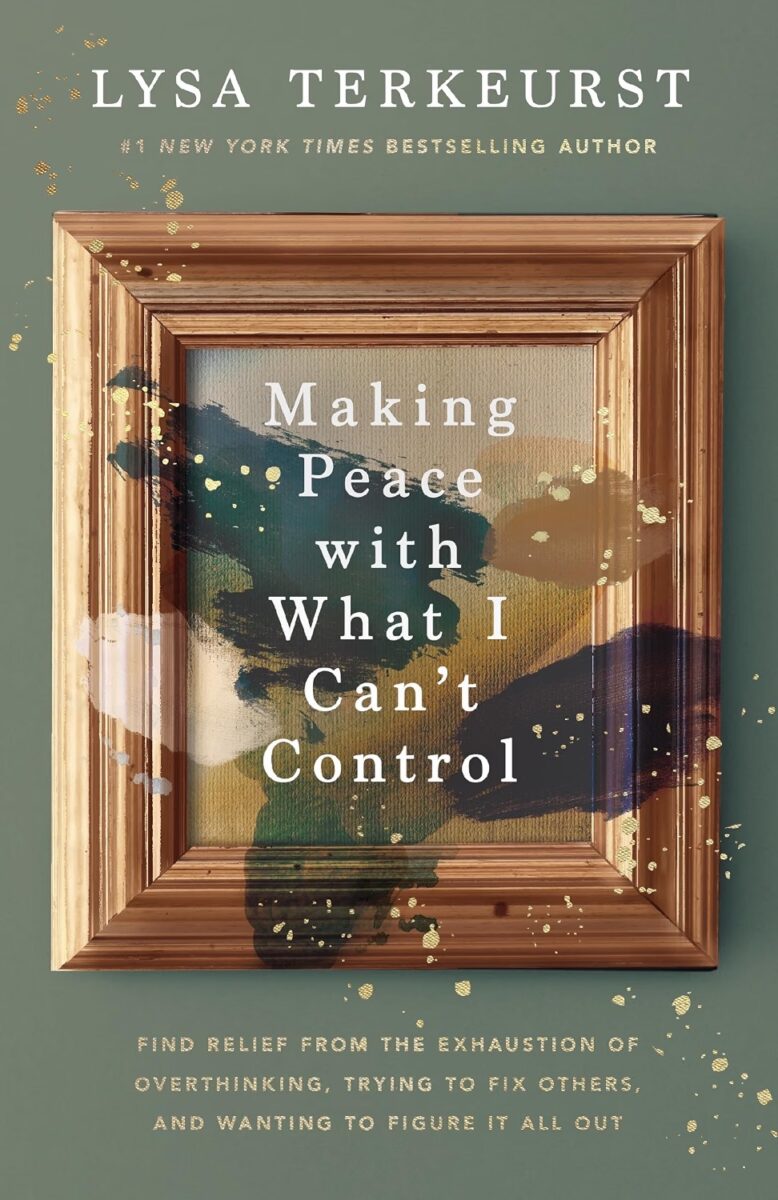
While we all know we can’t ultimately control things, so many of us still feel compelled by something deep down to keep trying. Because what if this time we actually can fix this, convince them, redirect the outcome, and prevent what we fear will happen?
Lysa Terkeurst understands this dysfunctional cycle all too well. But she’s also learned that it’s possible for us to stop rushing through each day with anxiety over what’s around the next corner or what someone else will choose. Through the pages of her newest book, Making Peace With What I Can’t Control, she shares the biblical wisdom she’s gained, practical tools that have helped her in her most desperate moments, ways to identify when the Enemy is at work, and so much more.
Lysa enjoys antiquing adventures, teaching God’s Word, and doing life with her husband Chaz and her kids and grandkids. Connect with her on social media @LysaTerKeurst and get your copy of Making Peace With What I Can’t Control here!
{Our humble thanks to Thomas Nelson for their partnership in today’s devotional.}