Some books ask to be read straight through. Others meet us more like a faithful friend—waiting on the nightstand, open to whatever page our hearts can bear that day. Laura Wifler‘s new poetry collection, This Side of the Sky: 101 Poems for the Hungry, Hopeful, and Homesick, is that kind of book. You can pick it up and put it down. Read one poem before the house wakes. Send one to a friend who needs words. Return to another when life feels too tender, too full, or too much. This is poetry for those who already love poetry—and for those who are fairly sure they don’t. With her rare gift for naming what women experience but often struggle to say, Laura writes about motherhood, friendship, grief, longing, ordinary days, and the quiet ache for a world being made whole. Laura has an uncanny knack for taking the small, familiar moments of a woman’s life and opening them into something larger and nearer to God. Her poems are honest and hopeful at the same time, helping us see the lives we are already living through the lens of redemption. I’m grateful to share Laura’s voice and this beautiful book with you today…
Guest post by Laura Wifler
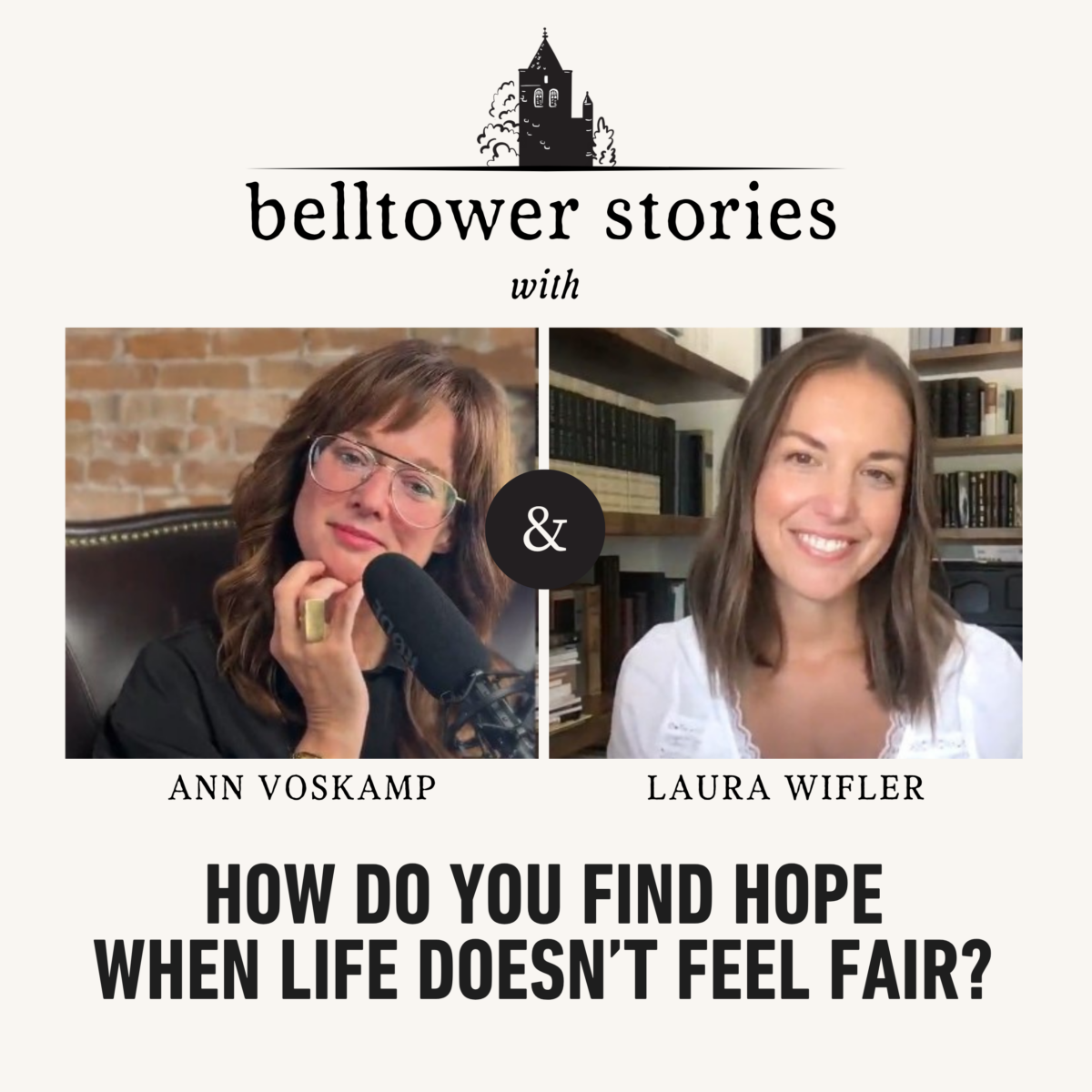
You can’t begin to imagine what a profound pleasure it was to sit down to talk with Laura Wifler in the belltower of our 1896 old stone church — this is genuinely a NOT-TO-BE-MISSED-CONVERSATION…. Don’t miss our powerful video convo below…
For most of my life, I believed I was too obtuse to understand poetry.
I was a student of English and journalism in college, so it wasn’t that I didn’t try. Book after book stumbled onto my nightstand, both required reading and random library pickups, as I tried desperately to love it.
I wanted to cradle a word, to feel time suspend while I chewed on a turn of phrase, to sigh after I clearly understood what meaning lay beyond a line.
But I never could.
It wasn’t that I didn’t love it. It was that I didn’t even like it.
I swore off poetry the same way I did glitter craft projects in the house, hanging my own wallpaper, or drinking oat milk.
Poetry wasn’t for me.
Until the year—the one and only year—I homeschooled my two oldest children.



That spring, the world went fragile and everyone was baking sourdough in sweatpants and opening neighborhood barber shops on their back decks. Normal life was a distant fog, and being in our own four walls for months on end made us all a little weird. But also a little bit brave. Including me.
Our homeschooling curriculum included a unit on poetry. My kids and I read selected passages aloud together, and we chose several of our favorites to memorize. Contrary to every experience I’d had with poetry in the past, I loved it.
These poems were straightforward but resonant, like a lemon cake or my favorite red lipstick. They said something in a way I could easily understand while being beautiful enough that I never wanted to forget.
Eventually, the curriculum had my children writing their own poetry, so I gathered my courage and started writing with them.
Almost at once, I felt like I had come home. I was spellbound by the practice, finally alive in my writing. As silly as it sounds, through a unit designed for kindergartners and second graders, I learned that I had a lot of misconceptions about poetry. It doesn’t have to rhyme or follow a strict pattern of syllables or be laid out in a specific meter or be hard to understand.
“The best poetry rightly reckons with the realities of the world you and I live in while also testifying to a believer’s divine home and the transcendent promises we have access to right now in Christ. “
And perhaps my biggest lightbulb: Poetry has no true rules.
After that year, homeschooling didn’t stick, but poetry did. As someone who had been freely offering her writing on the internet for more than 12 years, I unabashedly started to share some of my work online.
I preferred to label it “emotive microblogs,” still groping for the confidence to label my poetry what it was and scared that I might just like—and now be writing—poetry.
But readers could tell. Previously, most of my writing centered on nonfiction pieces, through microblogs, essays, articles, and traditional books. But as my writing changed, my readers left notes using the p- word.
“Thanks for this poem!” “I shared this poem with my friend.”
I was surprised by their declarations. It was lyrical! Heartfelt! Not actually poetry. I claimed it was just “tiny musical musings.” Joke’s on me—because being “musical” is exactly one of the defining traits of poetry.
Eventually, the term stacked up often enough from my readers that I had to admit I had become the very thing I thought wasn’t for me: I was a poet.
“Holy mystery haunts every surface of our lives, if we only know how to look.“
Over the years, I’ve heard hundreds of stories about people’s perceptions of poetry. Some love it. They regularly savor it, discuss it, and share it. Others, like the old me, feel that poetry is confusing, intimidating, or reserved for someone else— someone more intellectual or sophisticated. And some have never really given it much thought. It’s a literary category they’re not into, and that’s about it.
But no matter where you are, I encourage you to give it a chance. The best poetry rightly reckons with the realities of the world you and I live in while also testifying to a believer’s divine home and the transcendent promises we have access to right now in Christ.
This is what poetry, at its best, can do. It not only listens and names, but it also points us to the greater reality that sometimes feels just beyond reach. Like there is a veil or shroud, and for a moment, you see the edges flutter or a corner shimmer. Holy mystery haunts every surface of our lives, if we only know how to look.







“…poetry isn’t meant to be perfectly understood from every direction; it’s simply meant to be received with a grace-filled heart. “
As time has gone on, I’ve become more comfortable with the title poet. Though even now, it sometimes feels like it doesn’t quite fit—like wearing a fancy dress on a night out. A bit formal and tight for a woman who prefers sneakers and ponytails, even if it matches the dress code.
I think what finally made me a believer was realizing that poetry isn’t meant to be perfectly understood from every direction; it’s simply meant to be received with a grace-filled heart.
So come with your whole self to poetry. Aching. Soft. Open.
Let these words do the good work they can.
Let them pump you full.
A friend loves at all times. Proverbs 17:17
Instructions on Friendship
Promise me you’ll tell me when you need a can
of navy beans or black slacks in youth small for a
wedding. Promise me you’ll text me to watch your
goldendoodle and water your petunias while you’re
on vacation. Promise me you’ll tell me about the
ways you believe you fail as a mother while we sit
on the deck and I will tell you if you are right. (You
are wrong.) Promise me you’ll text me when you
get a promotion at work. We’ll order margaritas—
no, champagne—at that restaurant where we like
to celebrate. Promise me you’ll let me stay when
you don’t know why God does what He does, and I
promise I will not be afraid. Promise me you’ll call
me when you’re too overwhelmed to cook and we’ll
just add rice to make my dinner go further. Promise
me you’ll tell me when you have a lump and the
doctor orders a scan, and I will put one hand on
your knee and one hand on the throne of God and
beg, and beg, and beg.
A Deeply Life-Giving Conversation: BellTower Stories
How do you find hope when life doesn’t feel fair? Ann Voskamp and Laura Wifler discuss Laura’s new book, This Side of the Sky. Come join us in BellTower Stories, up in the 1896 bell tower our little Village Table church, as “the bells are the voice of the church, with tones that touch and search.” (Longfellow)
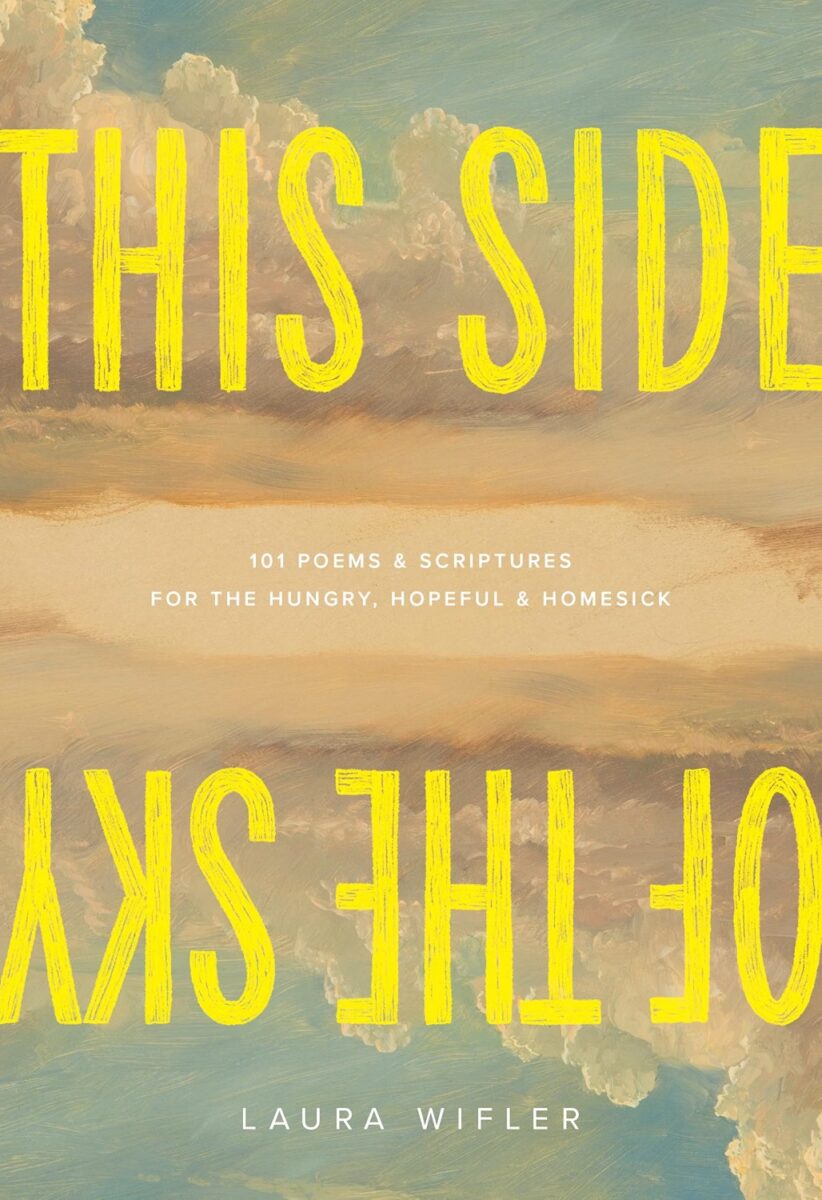
Known for giving language to what many women feel but struggle to name, Laura Wifler’s poetry is as riveting as it is relatable. And now, you can find her words in her debut poetry book, This Side of The Sky: 101 Poems for the Hungry, Hopeful and Homesick. Written with her signature timbre of startling honesty and unfaltering hope, Laura offers readers a new way to witness the life they’re living.
A trusted and authentic voice for modern Christian women, Laura’s poems grapple with the parts of us that know God is real but need reminders that He is moving in our lives, even now. Her compassionate words are ones to tape onto mirrors, tuck into Bibles, send to friends in crisis, and save for days when everyday life feels like too much.
Whether you adore poetry or you’re a skeptic of the craft, you’ll find her poems inviting you to notice the holy mystery woven through your ordinary days and trust that, even here on this side of the sky, you are held by a God who is both tender and present. Releasing on September 16, 2026, preorder This Side of the Sky anywhere books are sold.
Connect with Laura and find more of her poetry on laurawifler.com, Substack, or Instagram.
{Our humble thanks to Tyndale for their partnership in today’s devotional.}