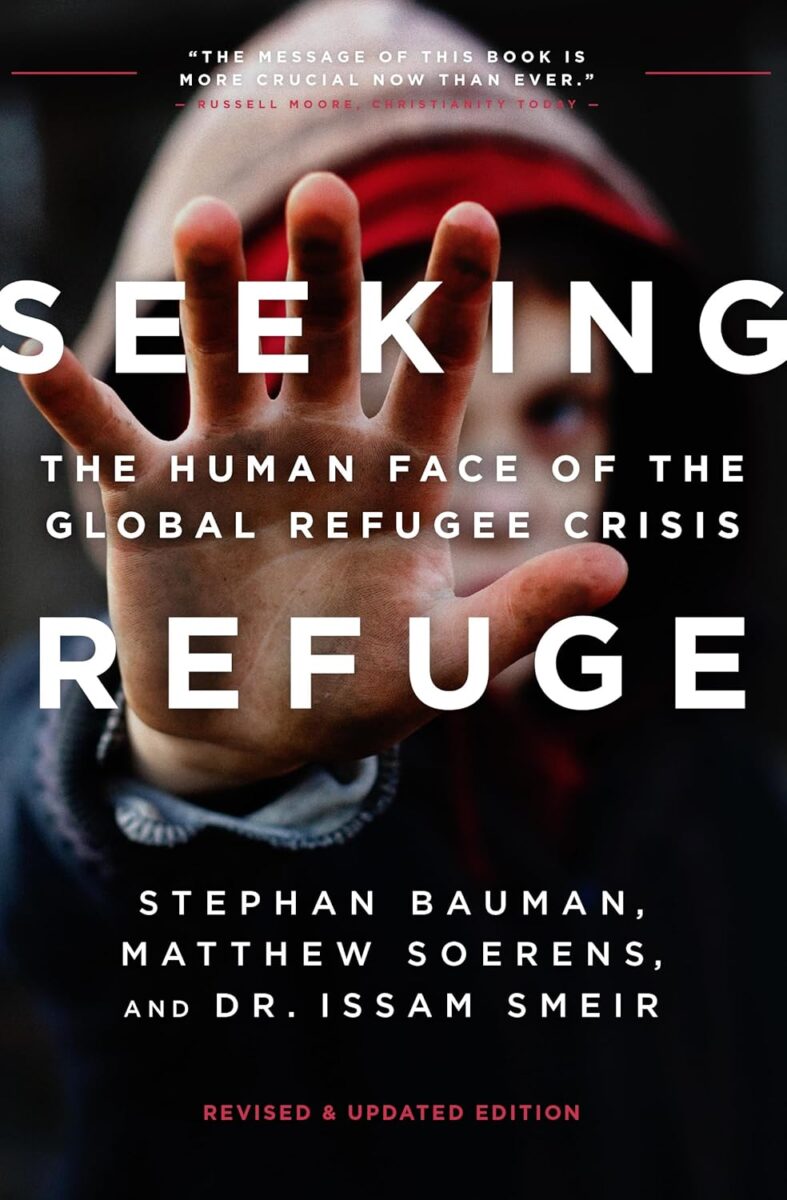
I’ll never forget it — when I saw a devastating image of a lifeless little Syrian boy washed ashore on a beach in Turkey, the tragic result of a failed attempt of a family just trying to seek refuge from being killed from a raging war, and I asked God: what are we who follow You, called to do, to be like Christ? My husband and I and our family prayed, and were led by Jesus to personally welcome several families fleeing here to our own community, around our own table, befriending them, supporting them, helping them. And as I began to share about our personal experience loving families fleeing war and violence, a global Christian humanitarian organization called World Relief was a huge help, including in this developing of a book by three of their staff called Seeking Refuge. Fast forward a decade, and the scale of the global refugee crisis has literally doubled, The need for a genuinely Christ-like response, rooted in the biblical call to hospitality – which I believe is the best expression of our theology – is greater than ever. And I deeply understand and appreciate how this issue brings up strong emotions and opinions and responses among faithful believers and it’s good for us to hear all kinds of different perspectives, and take the time listen to and learn from each other, as we think & pray through how to be like Christ in a broken world. That’s why I’m so grateful for a new, thoroughly revised edition of Seeking Refuge by Stephan Bauman, Matthew Soerens and Issam Smeir. As the updated subtitle of their book, “The Human Face of the Global Refugee Crisis,” suggests, this global crisis is ultimately about individual people, each individually made and loved by God — and leaning into this conversation is part of our call as God’s people, living in His kingdom.
It was a pleasure to sit down with Matthew Soerens and Dr. Issam Smeir in the belltower of our 1896 old stone church. Don’t miss our video conversation below…
This excerpt highlights one of many true stories from Seeking Refuge
Shamlo [a pseudonym, to protect his and his family’s safety] was born in Kabul, the capital of Afghanistan, in 1994, shortly before the Taliban first seized power.
His earliest years of life, growing up under the Taliban, were a nightmare.
Shamlo’s father was tortured for participating in a secret wedding celebration because the Islamist government banned all music.
Food and water became scarce.
Girls were not allowed to be educated.




When the US military came in 2001, responding to the Taliban’s support for 9/11 terrorist mastermind Osama bin Laden, things changed.
Shamlo had female classmates for the first time. He eventually was able to attend university, where he thrived. “Those were the golden days,” Shamlo reflects wistfully.
Shamlo encountered Jesus at university. Afghanistan is the only country in the world where less than 5 percent of people personally know a Christian. For Shamlo, meeting a follower of Jesus was improbable.
But when his English professor began presenting intriguing philosophical ideas—that we should love our neighbors and even strangers—Shamlo asked him where such philosophies came from. His professor secretly shared the story of Jesus. “That was the first time I heard Jesus’ name,” Shamlo recalls. In time, he began to read the Bible online and made a dangerous decision to follow Jesus.
Shamlo’s professor became his pastor in an underground church. Even under the American-backed government, Shamlo knew he could be jailed or even killed for converting from Islam to Christianity. He kept his faith very quiet, not wanting to put anyone else at risk.
But on one occasion, in a university class, he made a provocative statement. “We should love even those who are of a different ethnic group, or have different religious beliefs,” he said, mentioning the teachings belonged to a philosopher named Jesus.
A short time later, while returning from the university at night, several masked people on motorbikes assaulted Shamlo with a knife, almost severing his hand from his arm. Despite many surgeries, he still bears the scars of that attack.
After finishing college, Shamlo used the English language skills he acquired in college to find work with the US State Department for several years, then for a government-affiliated national electricity company. In August 2021, he saw a Facebook message saying the Taliban raised their flag in Kabul, toppling the American-backed government. “For one second, my eyes darkened and I couldn’t breathe,” Shamlo said, the stories of the Taliban’s rule flashing in his memory. He knew that he, his wife, and his brother—who had been trained by the US military and then served in the Afghan special forces—were at risk.
With his brother, Shamlo moved from Kabul to northern Afghanistan in the middle of the night. For weeks they hid, often unable to eat because of the stress. “I remember hearing the stories of the Nazis hunting down the Jews, and I thought we would experience the same thing,” Shamlo said.
By October 2021, Shamlo was able to escape to the United Arab Emirates, and his wife joined him there a few weeks later. Roughly 12,000 other Afghans were also there, waiting for news and longing for a permanent home. Shamlo and his wife spent almost three years in a cramped single room, fearful for his parents and siblings still in Afghanistan. In 2023, their daughter was born in the refugee camp.
And then came hopeful news: After many interviews and background checks, Shamlo and his family were approved for resettlement to the United States. They flew to the United States in July 2024, among more than 14,000 Afghans resettled as refugees that year.
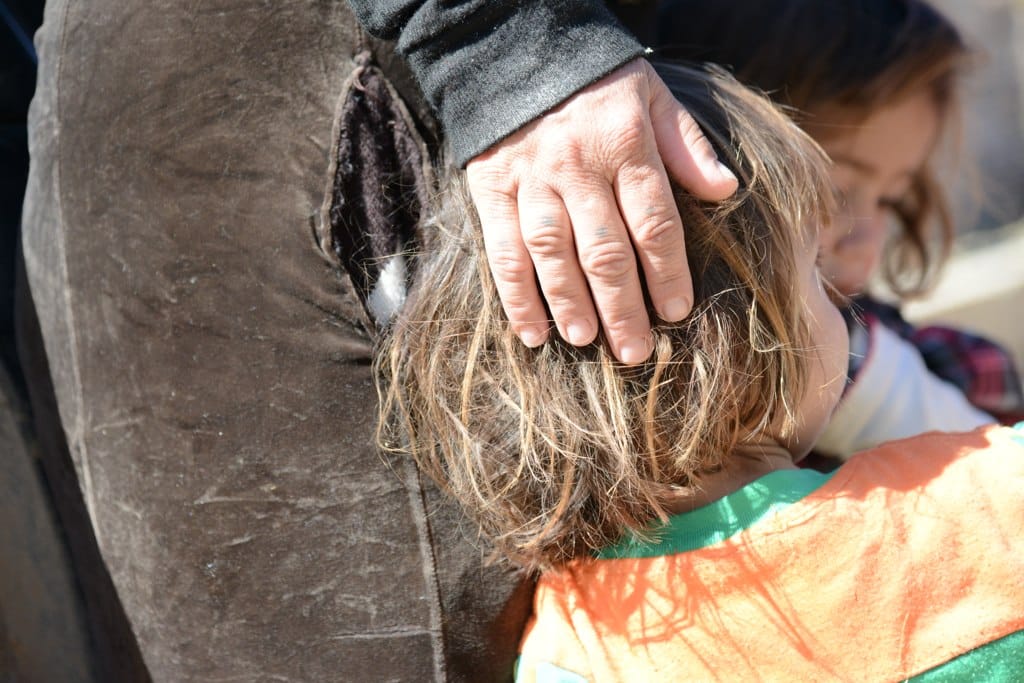



Shamlo is grateful for the many kind Americans who welcomed him and his family, and for the religious freedom he experienced in the United States.
But he still keeps his Christian faith discreet, fearing that word could spread to other Afghans who may implicate his extended family, now living under Taliban rule in Afghanistan, where the situation has continued to deteriorate.
A few months after Shamlo arrived safely in the United States, further refugee resettlement, even for persecuted Christians, was suspended altogether, which grieves him.
“If we are going to follow Jesus,” Shamlo said…
“…we should care about our brothers and sisters all across the world, anyone fleeing persecution to find protection and refuge.”
BellTower Stories
How can we, as faithful followers of Jesus, think Biblically, about those fleeing violence and war? What does that even look like? Ann Voskamp and World Relief’s Matthew Soerens and Dr. Issam Smeir discuss the new book, Seeking Refuge: The Human Face of the Global Refuge Crisis. Come join us in BellTower Stories as “the bells are the voice of the church, with tones that touch and search” —Longfellow
I know that many of us don’t know where to start when it comes to engaging a global crisis – with literally millions of stories of persecution and desperate flight, like Shamlo’s.
Like the families whom my family has become friends with here in our own community.
One great place to begin would be by just considering the conversation further by reading Seeking Refuge, in which Stephan, Issam and Matthew – who between the three of them have served at World Relief for more than half a century – provide not only stories, but also a clear biblical framework for why we need the church at the center of the refugee crisis and answers to many of the understandable questions that people have as they contemplate refugee issues.
Then, I’d also encourage you, as you consider what Jesus is calling us to, us who have been given so much, to then reach out with your understandable questions to World Relief to explore ways that you and your church might think through how Christians might love those fleeing war and violence in your community, how to perhaps think through this conversation in Scriptural ways or through compassionately caring.
{Our humble thanks to Moody for their partnership on today’s devotional}