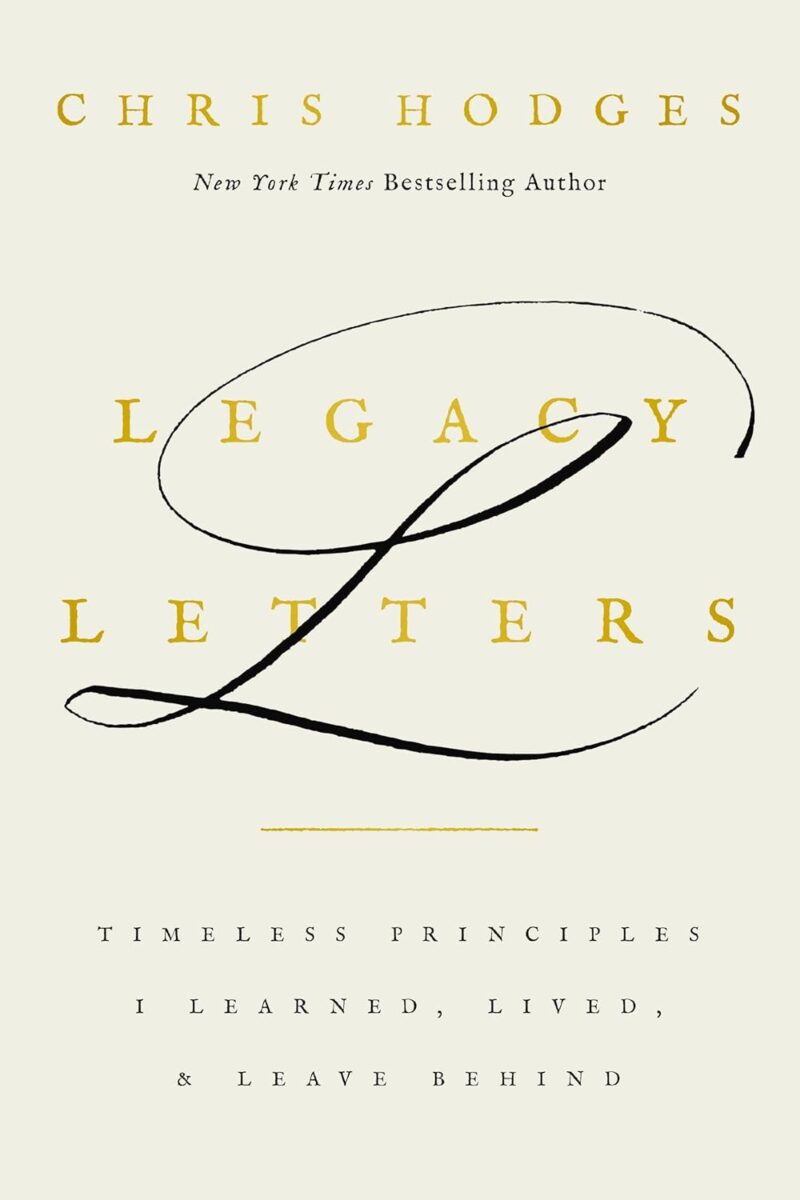
So, if you know anything about me, then you know how much paying attention to the little things each day matters to me. All around us we have little masterpieces from God reminding us of His love, His care, and His delight in beauty. Even when we know it’s important to still our restless hearts and busy minds before the Lord, we often overlook the daily opportunities in our own backyard. Which is why I’m delighted to welcome Chris Hodges to the farm’s front porch today. A pastor, leadership coach, mentor, and chancellor of Highlands College, Chris shares the wisdom he’s gleaned in Legacy Letters: Timeless Principles I Lived, Learned, and Leave Behind. I hope his reminder to feed the birds resonates with you as much as it does with me. It’s an absolute joy to welcome Christ to the farm table today.
Guest post by Chris Hodges
In the chaos of everyday obligations, it’s easy to miss the quiet invitations that life offers us—the ones that restore us, not drain us. We chase productivity, push through fatigue, and fill our calendars with meetings and momentum. But sometimes, the thing we need most isn’t more movement. It’s stillness.
That’s why I feed the birds.
It’s a simple practice, but it has become sacred to me.
Every day when I get home from work, I change clothes, head outside, and check the feeders in my backyard. I buy high-quality seed and keep them full. Sometimes I think the birds eat better than we do! I’ve learned the birds’ patterns, even the sounds they make. I can tell when they’re hungry, when they’re content, and when they’ve flown in for nothing more than a moment of peace.
I watch them, often in silence, and something in me… exhales.

What started as a casual habit has become a personal ritual.
I can see the feeders from my home office window. It’s like they call to me, offering a break from the urgent and an invitation to something slower, simpler, and more beautiful. The trees, the breeze, the roses I’ve planted near the feeders—it’s all part of the moment. And every time I step outside, I think to myself, I’m experiencing something most people miss.
I know it sounds simple. Maybe even odd.
But it feeds more than birds. It feeds my soul.
The world doesn’t need more hurried, hollow people. It needs rooted ones.
I’ve come to believe that every single one of us needs a “bird feeder moment”—a habit or rhythm that slows the noise and recenters the heart. Something that reminds you who you are outside your roles and responsibilities. Something that exists not to perform or prove but simply to restore. This is especially true if we’re tasked with leading or serving others—and let’s be honest, most of us are.
The world doesn’t need more hurried, hollow people. It needs rooted ones. The kind who know how to pause, reflect, listen. We need those who are able to delight in something that serves no purpose other than to be beautiful.
Simplicity isn’t weakness. It’s wisdom. When life gets chaotic, we frequently try to solve it with more complexity. But some of the best answers aren’t found in boardrooms or brainstorming sessions. They’re found in rose gardens, beside bird feeders, with the breeze in your face and your soul finally quiet.
Small things matter. Beauty matters. And every soul needs something that restores it without requiring anything in return. It’s not about birds, really. It’s about soul care. It’s about cultivating a rhythm of restoration.
Every soul needs something that restores it without requiring anything in return.
As I’ve reflected on why feeding the birds means so much to me, here’s what I’ve learned:
1. Restoration requires rhythm.
My bird-feeding time isn’t long, but it’s consistent. That consistency has a compounding effect. A few peaceful minutes daily does more than a full day off once a quarter. Frequency matters. Restoration doesn’t come through intensity; it comes through intentionality. You get filled a little at a time, and if you wait too long, you risk running on empty.
2. Simplicity gives clarity.
There’s something about doing something quiet, beautiful, and simple that clears the fog. When I’m stressed or overwhelmed, I’ve found that stepping outside to care for the birds recalibrates my perspective. I’m reminded that life is still good. That not everything is urgent. That peace is available.
Simplicity clears space for clarity.
3. Presence is the point.
There’s no scoreboard when I feed the birds. No productivity metrics. It’s simply about being there—present, still, engaged. That has trained me to bring the same kind of presence into my conversations, my leadership, and my relationships. I don’t just want to be around people. I want to be with them.
4. Beauty is never wasted.
It might feel unproductive to stop and enjoy something beautiful, but in those moments our souls breathe again. Beauty reconnects us with what’s real. It restores perspective, and it reminds us that life is more than deadlines and deliverables.
5. Small things can carry great meaning.
A bird feeder is a small object, but it carries great significance for me. In our growth and work, it’s often the small things that make the biggest difference—an encouraging word, an unexpected act of kindness, a moment of laughter. Never underestimate the power of the small.
A healthy culture is built on thousands of tiny deposits of care.

You might be surprised how restorative, relaxing, and comforting it can be to practice something simple each day. Mine is feeding the birds, but you can find yours if you pay attention to what brings you joy, what calms you soul, what gives you perspective.
You don’t have to escape your life to enjoy it. You just have to learn how to live it with intention and attention.
Maybe it’s journaling at sunrise.
Maybe it’s cooking without distractions.
Maybe it’s sitting by a lake, a fire pit, or a quiet window.
Maybe it’s walking through your neighborhood without headphones in.
Maybe it’s playing your guitar or sitting at a keyboard.
Whatever it is—find it. Protect it. And return to it often. You don’t have to escape your life to enjoy it. You just have to learn how to live it with intention and attention.
One of the greatest gifts you can give yourself is permission to slow down and notice the beauty that’s already around you. Life moves fast, and if you’re not careful, it will rush you past the very moments meant to restore you.
So much of the world tells us that hustle is everything. That busyness proves our value. That the next accomplishment will finally make us feel settled. I believed that for a long time. But the older I get, the more convinced I am that the richest lives are built on simplicity, not speed.
Your soul wasn’t made to live at the speed of your schedule. So, find a way to nourish your soul and feed it every day.
Let the little things lead you back to what matters most.
Chris Hodges is the founding pastor of Church of the Highlands.
Under his leadership, Church of the Highlands launched twenty-six locations across the states of Alabama and Georgia with seventy-five-plus weekly services. He cofounded a church-planting network called the Association of Related Churches, launched a coachYes,ing network called GrowLeader, and serves as chancellor of Highlands College, a four-year ministry training college. Chris is the author of several bestselling books, including Out of the Cave, Pray First, Breathe Again, and Jesus the High Road Leader with John C. Maxwell. Chris and his wife, Tammy, have five children and twelve grandchildren and live in Birmingham, Alabama.
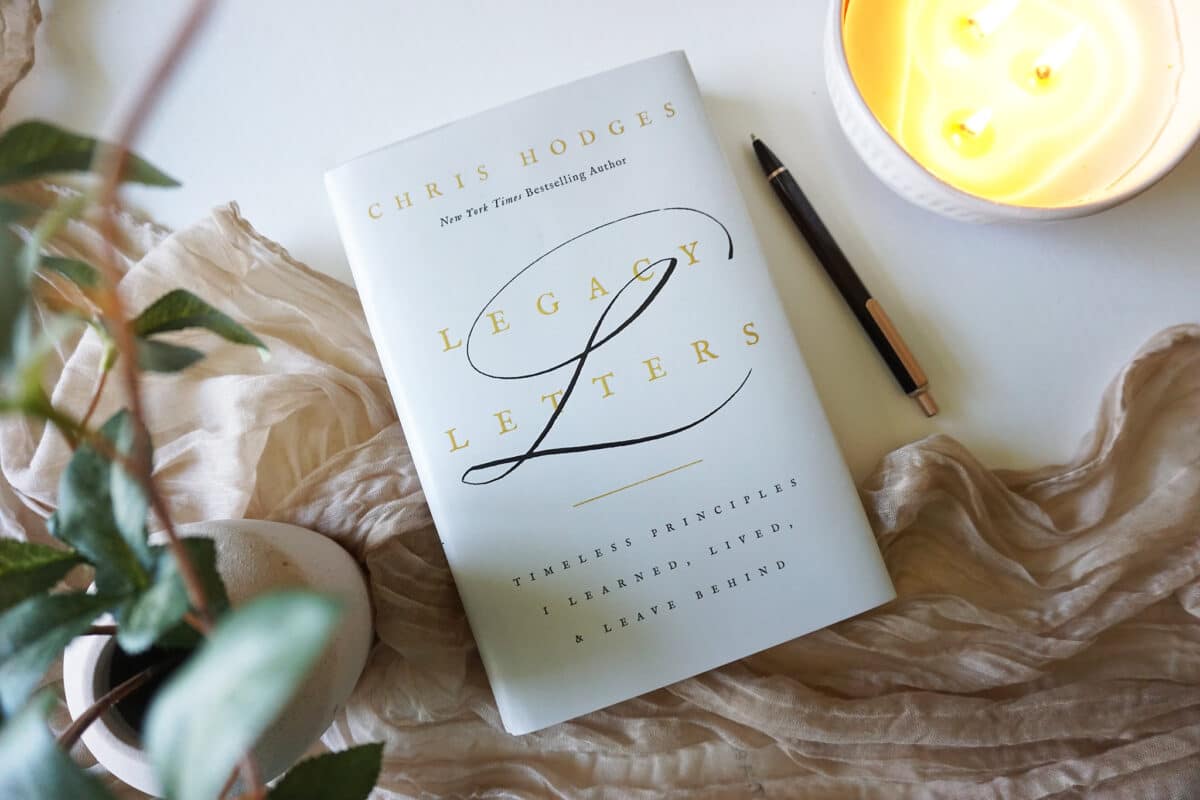
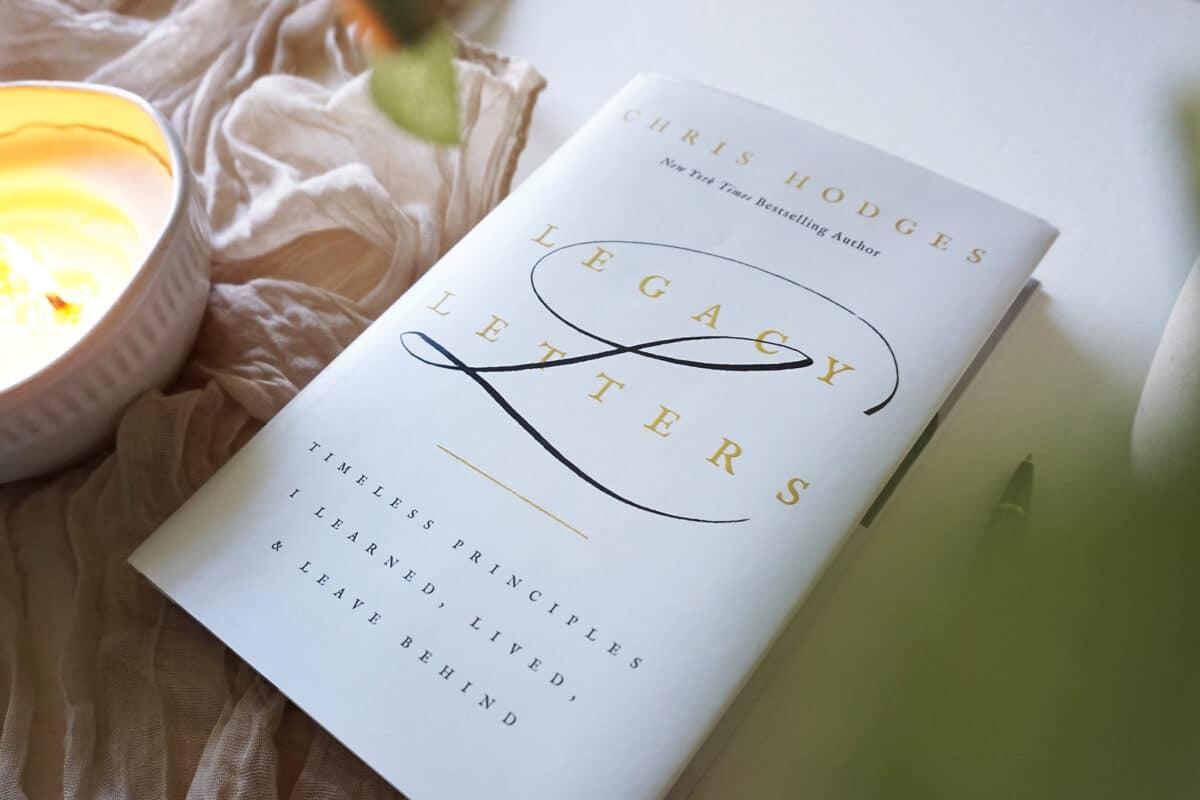
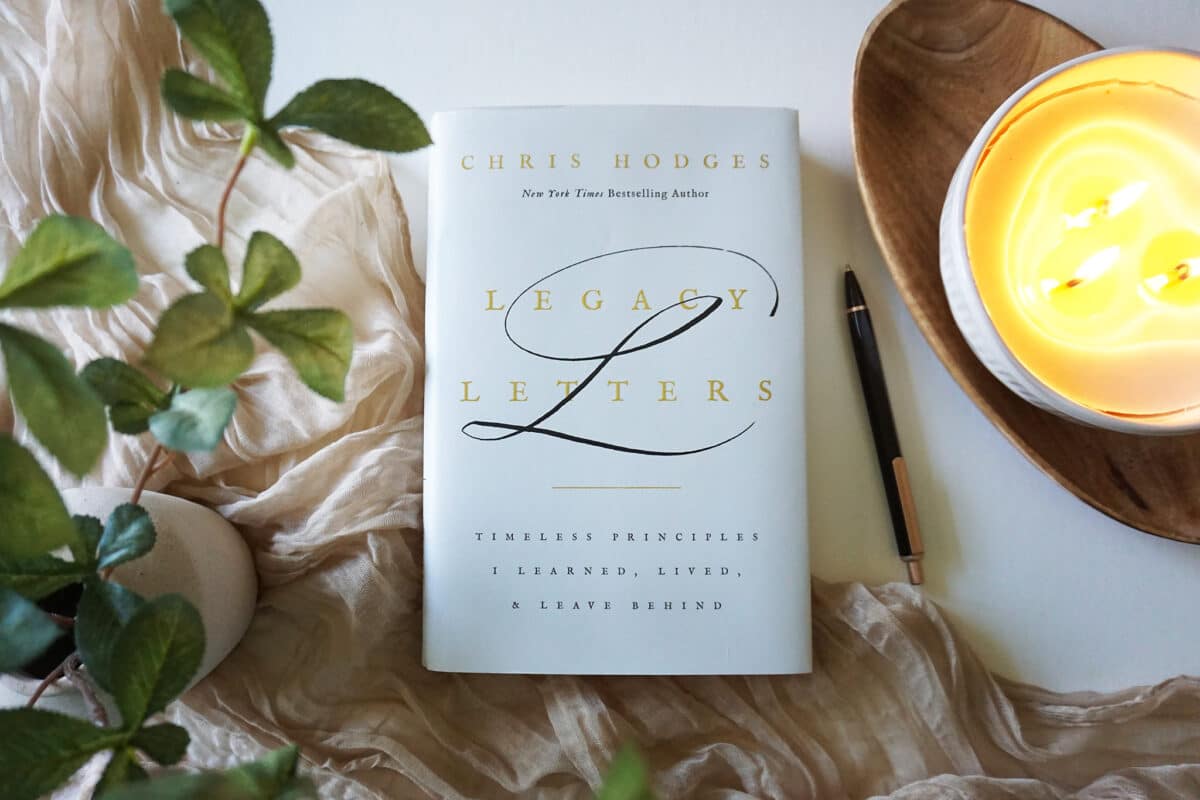
In his new book, Legacy Letters: Timeless Principles I Lived, Learned, and Leave Behind, Chris shares the life principles that have forged his leadership, relationships, and decisions over decades of experience.
This book is designed to be read one principle a day for 30 days, giving you a clear framework for building a better life. Then you’ll spend the rest of the year putting those principles into practice—because principles are not meant to be memorized, they are meant to be lived.
Inside, you’ll discover powerful principles such as:
• The Big Rocks Principle — start life right by putting first things first
• The Calendar Principle — take control of your schedule before something else does
• The Compounding Principle — small daily disciplines create extraordinary results over time
• The Margin Principle — create breathing room so pressure doesn’t control your life
Filled with memorable phrases, practical wisdom, and honest stories from a life of leadership, Legacy Letters will help you:
• Make wiser decisions
• Build stronger relationships
• Create margin and clarity in a crowded world
• Leave a legacy that lasts
With warmth, humility, and wisdom earned the hard way, Chris invites us to step off the treadmill of pressure-driven living and build a meaningful life anchored in what endures.
Written personally to meet you where you are, Legacy Letters offers timeless wisdom you will return to again and again—and ultimately pass on to others.
{Our humble thanks to Thomas Nelson for their partnership in today’s devotional}