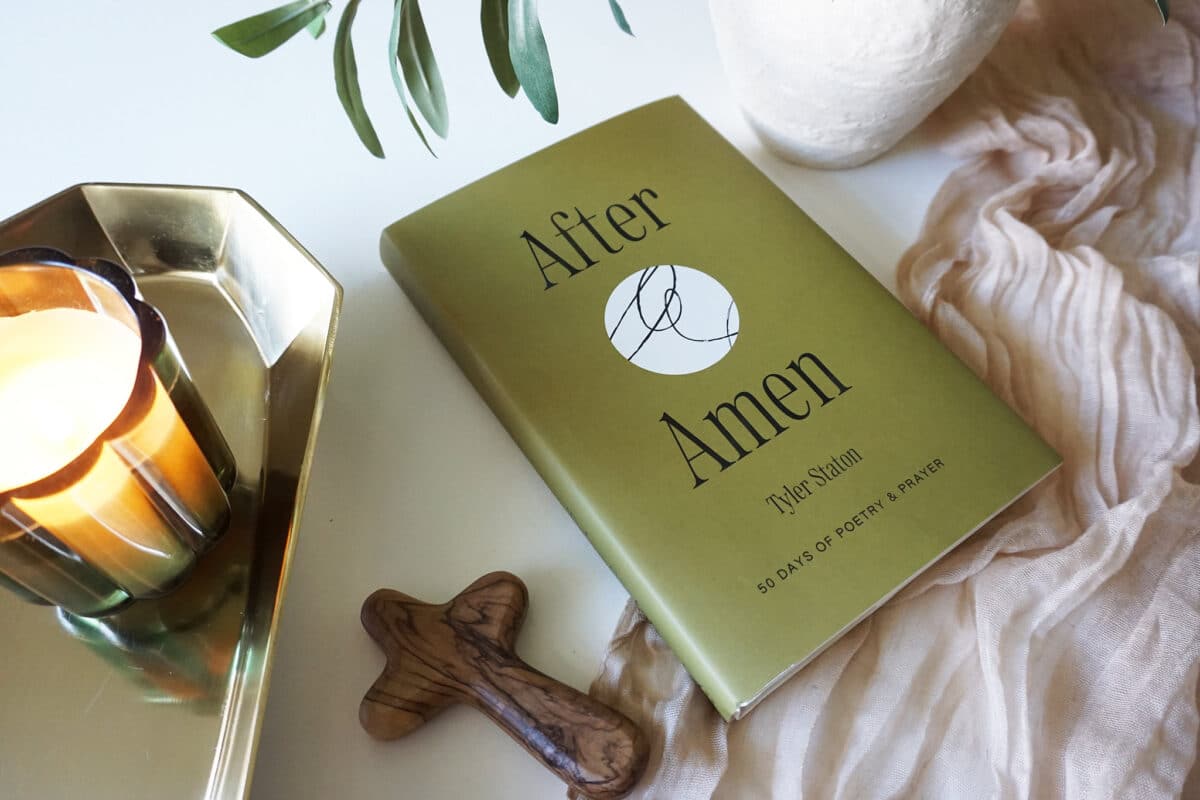
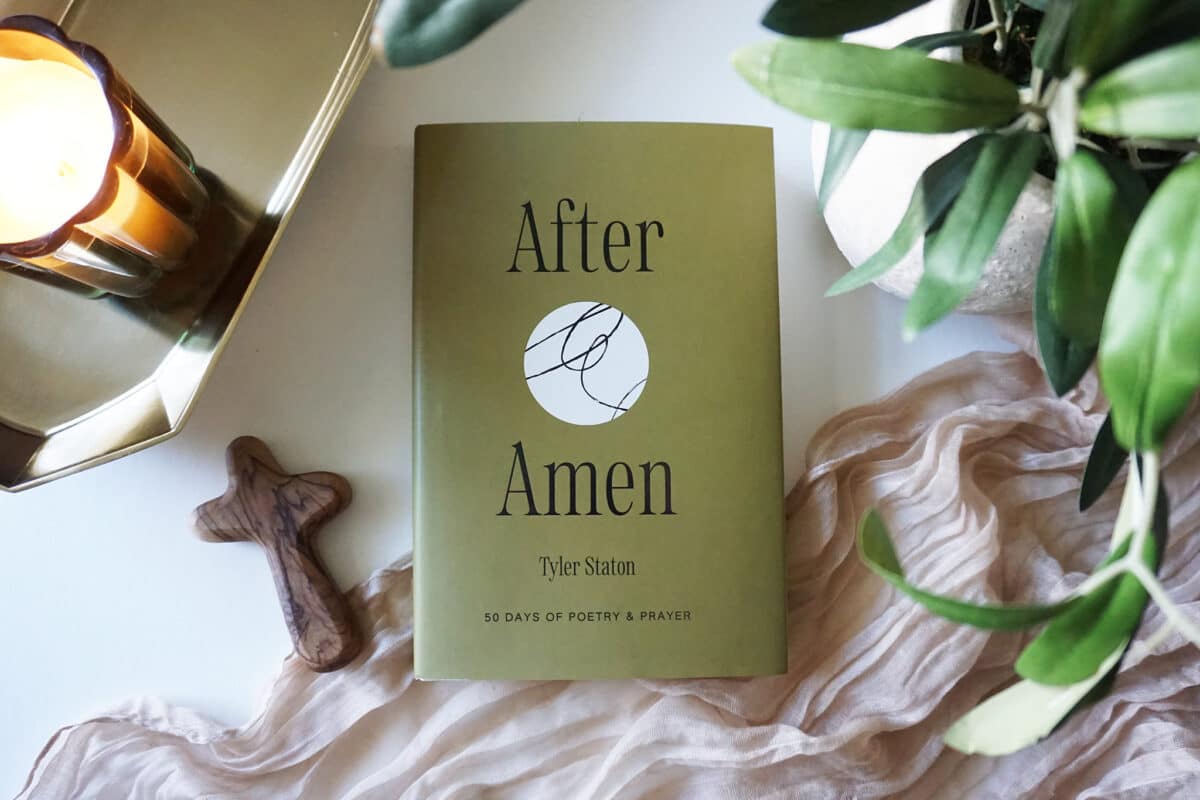
Some words have a way of stopping us long enough to notice what we almost missed — the holy tucked into ordinary moments, the way grace keeps meeting us in the middle of real life. Tyler Staton writes with that kind of honesty and clarity, helping us name what so many of us feel: how easy it is to encounter wonder in prayer, and how hard it can be to carry that wonder into the next ordinary interruption. His new book After Amen is an invitation to discover what prayer looks like not only in sacred moments, but in the living after them — when the candle is missing, the day is already demanding something of us, and God is still right there. I’m so glad to welcome Tyler to the farm’s table today.
It was a pleasure to sit down with Tyler in the belltower of our 1896 old stone church. Don’t miss our video conversation below…
Guest Post by Tyler Staton
One Monday morning in early spring, I was jogging on one of my usual routes along the Willamette River that slices through the heart of downtown Portland. The gray and steady rains that serve as the trademark of Pacific Northwestern winter had lifted, and this particular morning was unseasonably clear. The sun came up in such a dazzling display of orange, pink, and purple watercolor hues that I stopped in my tracks to drink it in.
Turning to continue my run, I was so enraptured by the natural beauty that I exclaimed crazily but with utter sincerity to a complete stranger, “Are you seeing this? Wow!”
We are formed by what and how we see.
I spent the rest of my run home in a prayerful stupor, staggered by the God who paints his masterpieces in hours most of us snooze away and even those of us awake tend to ignore, our faces fixed on the glow of a screen.
I arrived home and immediately walked out to my front porch, where my sacred space of prayer sits with my Bible, journal, and candle. Only, to my surprise, not all was as it should have been. My candle wasn’t there. My matches were strewn all over the place. The pen had been removed from my journal.
I knew right away what had happened. Amos, my (then) two-year-old son, had taken a recent fascination to his dad’s little outdoor prayer closet. I found the candle stuffed in the mailbox, half the beeswax peeled away. I picked up as many of the matches as I could and returned them to the box. Never recovered that perfectly smooth ballpoint pen, though.



Irritated, I went inside to ask Kirsten, who was just waking, how she could let this happen to my one space and gave little Amos a brief lecture about not touching Dad’s special things. As I returned to the porch to pray, the irony of it all occurred to me. The wonder of the sunrise, that awareness of the daily miracle, all washed away in an instant at something as small as a missing beeswax candle.
How does my life bear the fruit of prayer after I say, ‘Amen’?
It prompted a question for me. How do I pull the majesty of the sunrise down onto the front porch with me? How do I live in light of God’s beauty after the sunrise is long gone, the wonder and worship of that holy moment painting my parenting, my husbanding, my living, my relating by the same divine brush? The deepest question of the praying person goes something like, “How does my life bear the fruit of prayer after I say, ‘Amen’?”
We are formed by what and how we see. Living like Jesus in the real world begins with seeing like Jesus in the real world. To see like Jesus, in the plainest possible terms, is to recognize the transcendent in the incarnate.
The ninth chapter of John’s gospel is devoted entirely to Jesus healing a man born blind.It’s a complex, brilliant story revealing the depth of our human condition and the even greater depth of God’s healing power. For now, I simply want to point out the completely bizarre method Jesus uses to restore this man’s sight:
“[Jesus] spit on the ground, made some mud with the saliva, and put it on the man’s eyes. ‘Go,’ he told him, ‘wash in the Pool of Siloam’ (this word means ‘Sent’). So the man went and washed, and came home seeing.”
At first glance this miracle is breathtaking in result and strange—even gross—in method. Within the broader context of the biblical story, though— the story Jesus framed his entire life and ministry within, the story Jesus claimed is reality in a world of lies and deception—within the context of that story, the miracle and the method make perfect sense.


All the way back on the Bible’s first page, God created by his breath. He speaks all that is into being. “Let there be light!” And there’s light. “Let the water under the sky be gathered to one place, and let dry ground appear.” And there’s land and sea. “Let the land produce vegetation.” And there’s magnolia trees and wild ferns and rosebushes.
The transcendent — the very breath, even the saliva of God— incarnates the dirt of the earth,
And it keeps following that pattern the whole way through with one exception: when God creates human beings. “Then the Lord God formed a man from the dust of the ground and breathed into his nostrils the breath of life, and the man became a living being.”
Man and woman are set apart as the only aspect of creation bearing God’s image. And God made us by a different method than he made everything else. He scooped up some dirt, put his breath on it, and out came the fullest kind of life. The transcendent— the very breath of God— incarnates the dirt of the earth, and human beings are set in creation as the living, breathing, walking, talking, hearing, seeing overlap of heaven and earth. And it is precisely that which was stolen by our spiritual adversary in the serpent’s deception and exactly that which Jesus entered the bloodline of human history to redeem.
And how did Jesus redeem the man born blind? By the very method of creation:
He scooped up some dirt, put his breath on it, and out came the fullest kind of life.
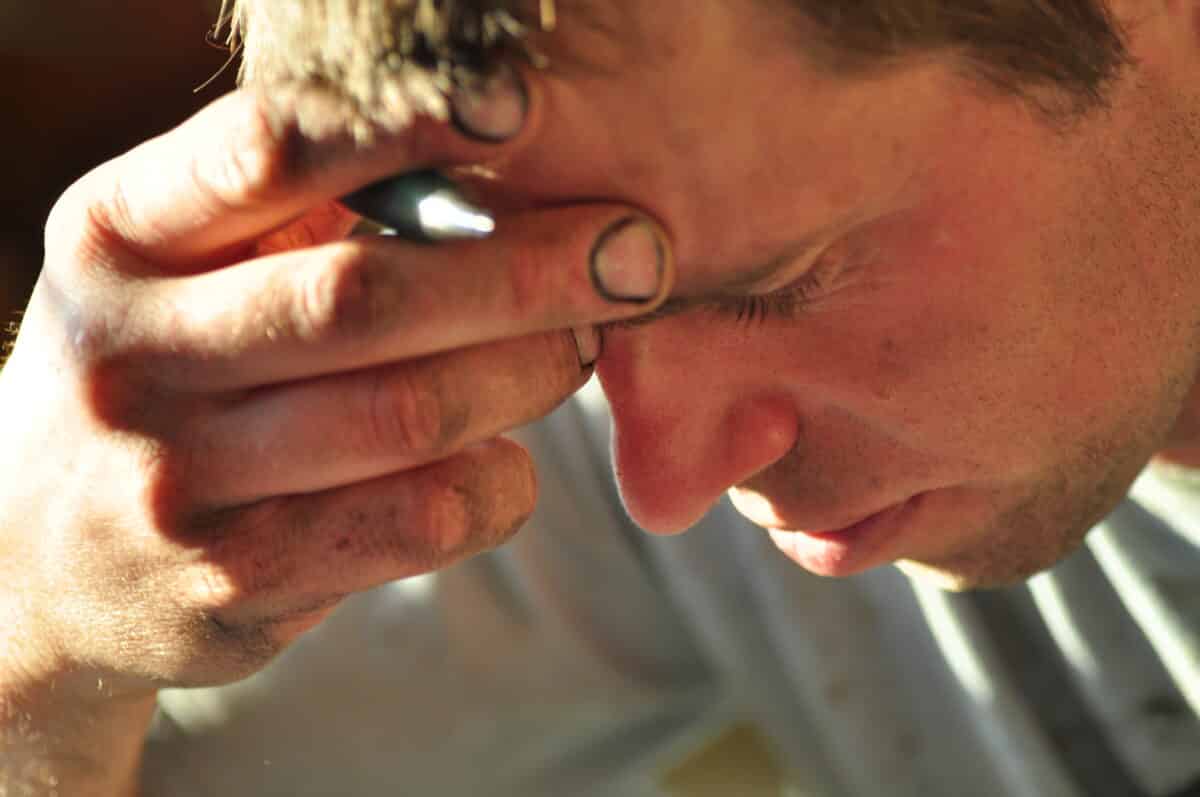
The transcendent — the very breath, even the saliva of God— incarnates the dirt of the earth, and a human being whose sight has been defined by the serpent’s deception is redefined by the Creator’s breath.
BellTower Stories
What a conversation about poetry and prayer and our heart cries to God. If it feels dark and prayer seems really hard — poetry prayers can be your lifeline. Join our beautiful conversation about After Amen. Come join us in BellTower Stories as “the bells are the voice of the church, with tones that touch and search” —Longfellow
I’m reading this book right now and I’m completely taken and undone — captivated and liberated!
Tyler Staton is the Lead Pastor of Bridgetown Church in Portland, Oregon, where he lives with his wife Kirsten, and their sons Hank, Simon, and Amos. He is passionate about living prayerfully and relationally.
After his shocking advanced-stage cancer diagnosis, Tyler found himself cast into a wilderness of emotion. Amid the struggle he found strength in the familiar solaces of prayer, solitude, and Scripture, but also through an unexpected source: writing carefully crafted poetry as a practice of prayer, like the biblical psalmists. Even after Tyler went into remission, this practice awakened in him a new appreciation for how God uses beauty and the ordinary to draw us to himself.
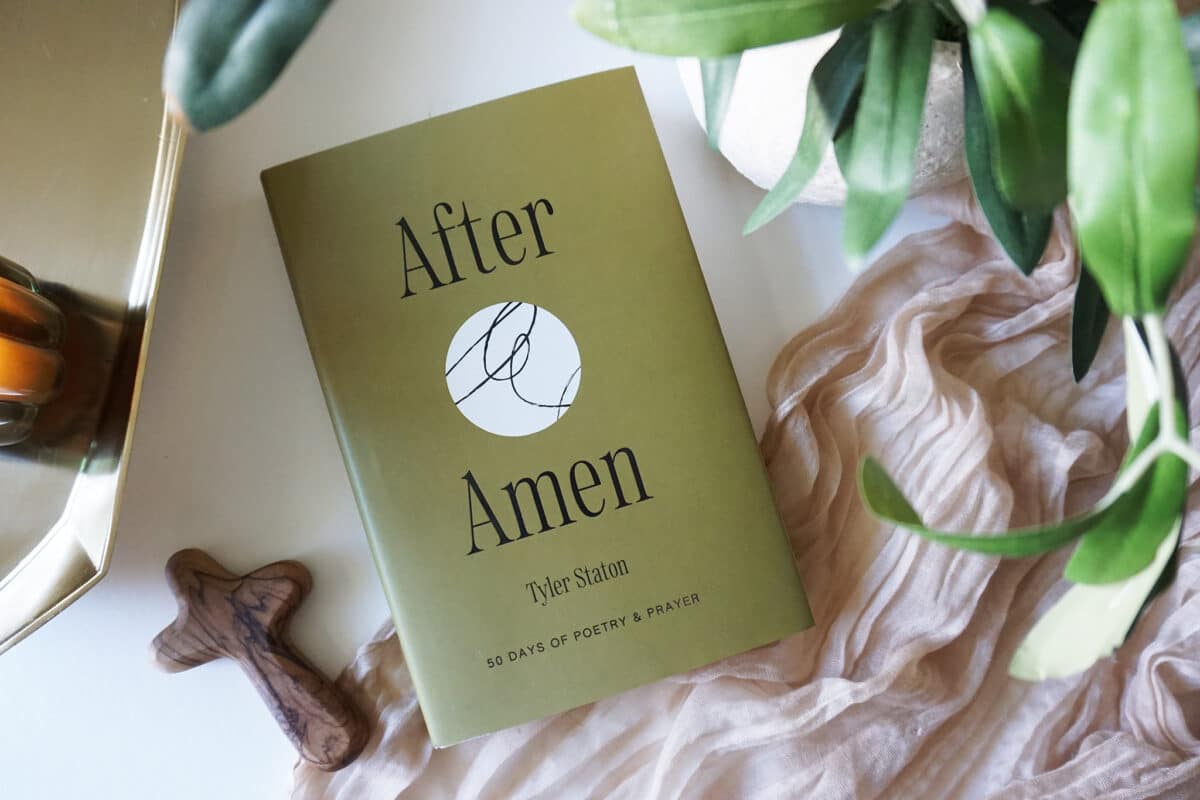
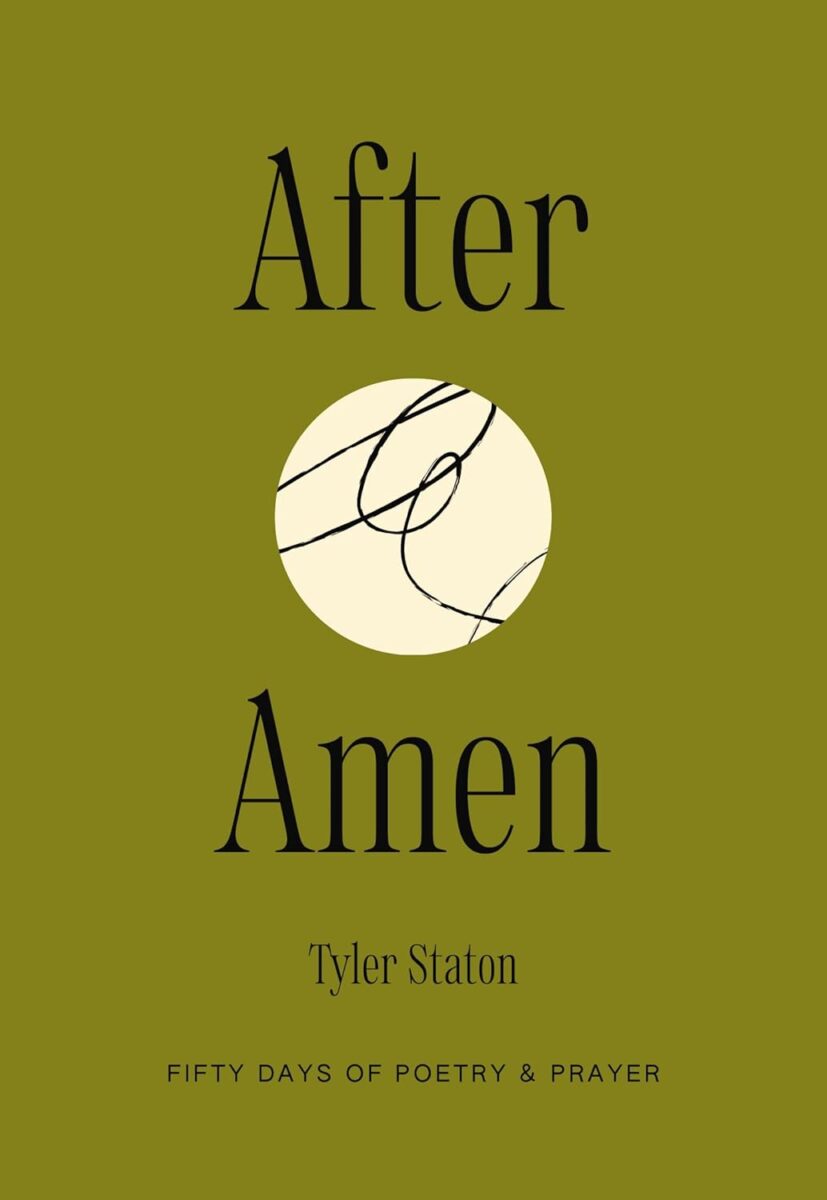
His latest book, After Amen, refocuses our attention on the role of wonder in the Christian life, presenting 50 devotional entries that feature biblical reflection, heartfelt prayer, and original poetry from Tyler. Through focusing on Jesus’s seven signs in the gospel of John, Tyler shows how all of life is an invitation to be formed into the image of Jesus. This exceptional book is a provocative and beautiful exploration of the way prayer reshapes us long after “amen.”
Let this beautiful book change your life — and the way you pray. Get your copy today.
{Our humble thanks to Thomas Nelson for their partnership in today’s devotional}