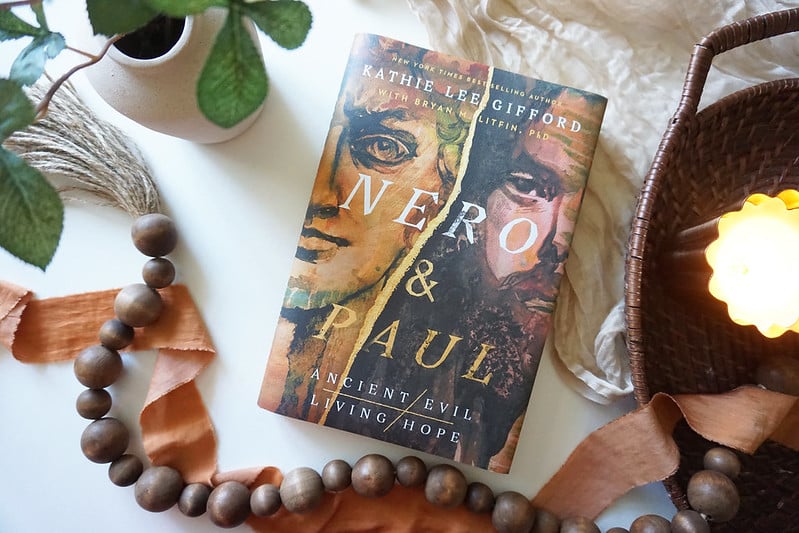
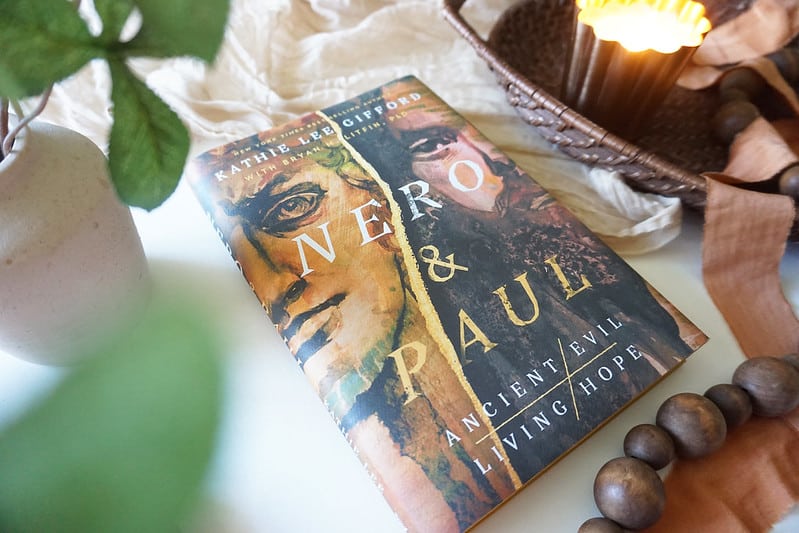
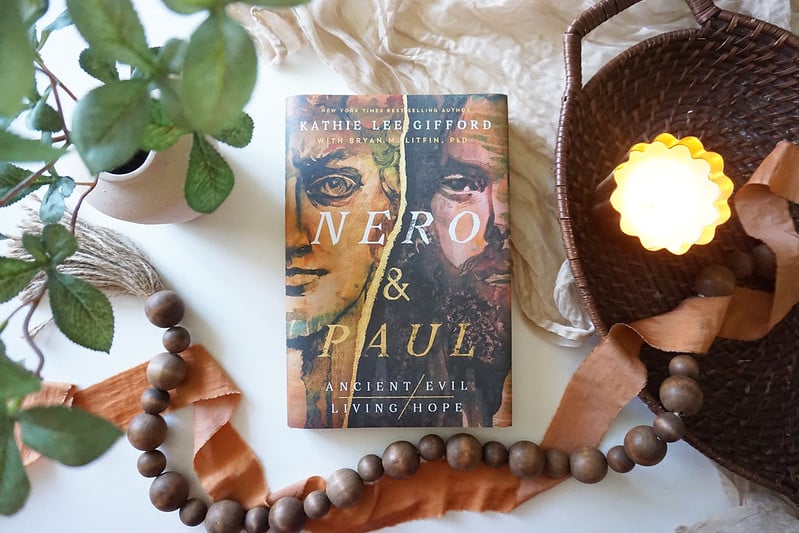
I’ve lingered over a long lunch with Kathie Lee Gifford and we’ve talked about it through all kinds of brimming: Every one of us will face moments that redefine everything we thought we knew—moments of profound loss that leave us searching for meaning in the midst of heartbreak. These moments carve deep lines in our lives, dividing time into “before” and “after,” and leaving us to wrestle with questions that seem too heavy to bear. And that’s where Nero and Paul by my friend Kathie Lee Gifford, and her co-writer Dr. Bryan Litfin, opens — with a powerful scene experienced through the eyes of Mary, the mother of Yeshua, as she endures the unthinkable: watching her beloved son suffer and die on a Roman cross. Through her eyes, we witness the depths of grief, the weight of unanswered questions, and the glimmers of hope that emerge in the midst of despair. At this point in Lent, I can’t encourage you more to come linger here, with these words that invite us to journey with Mary as she moves from heartbreak to revelation, discovering the extraordinary promise that Yeshua’s sacrifice holds—not just for her, but for all of humanity.
It was a pleasure to sit down with Kathie Lee in the belltower of our 1896 old stone church. Don’t miss our conversation.
Guest post by Kathie Lee Gifford
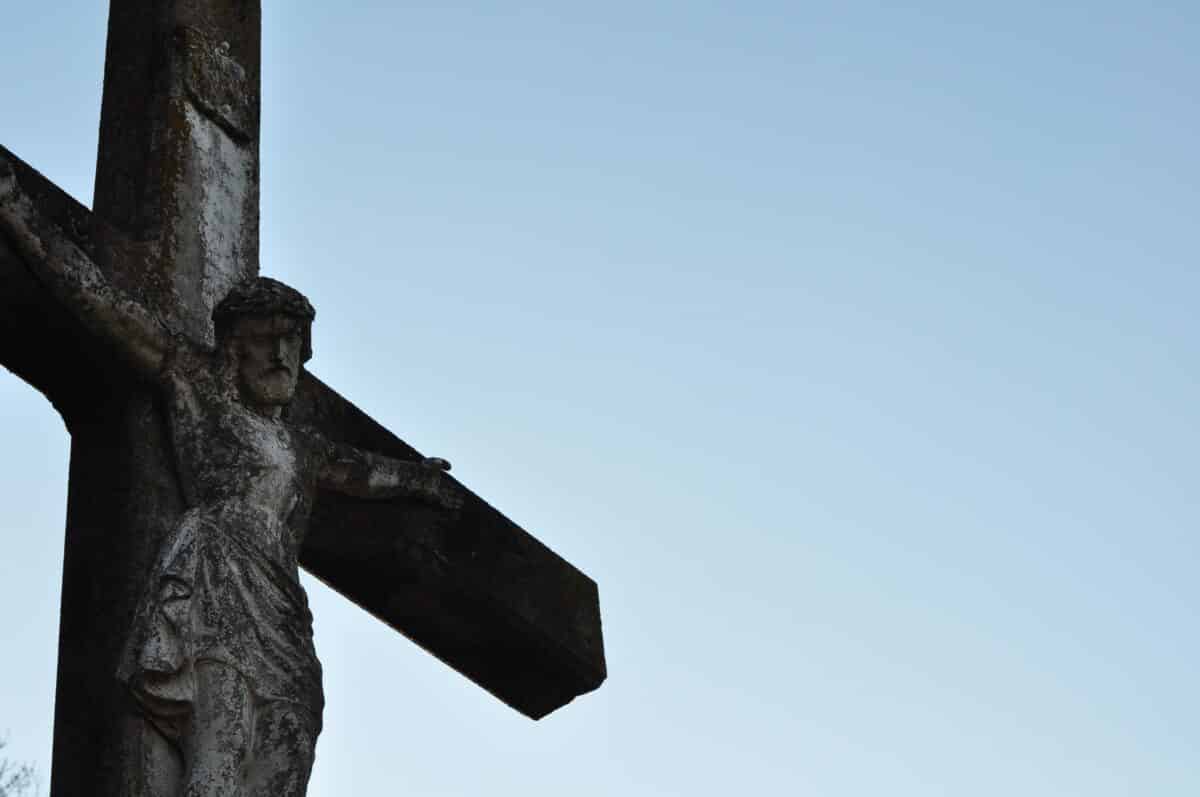
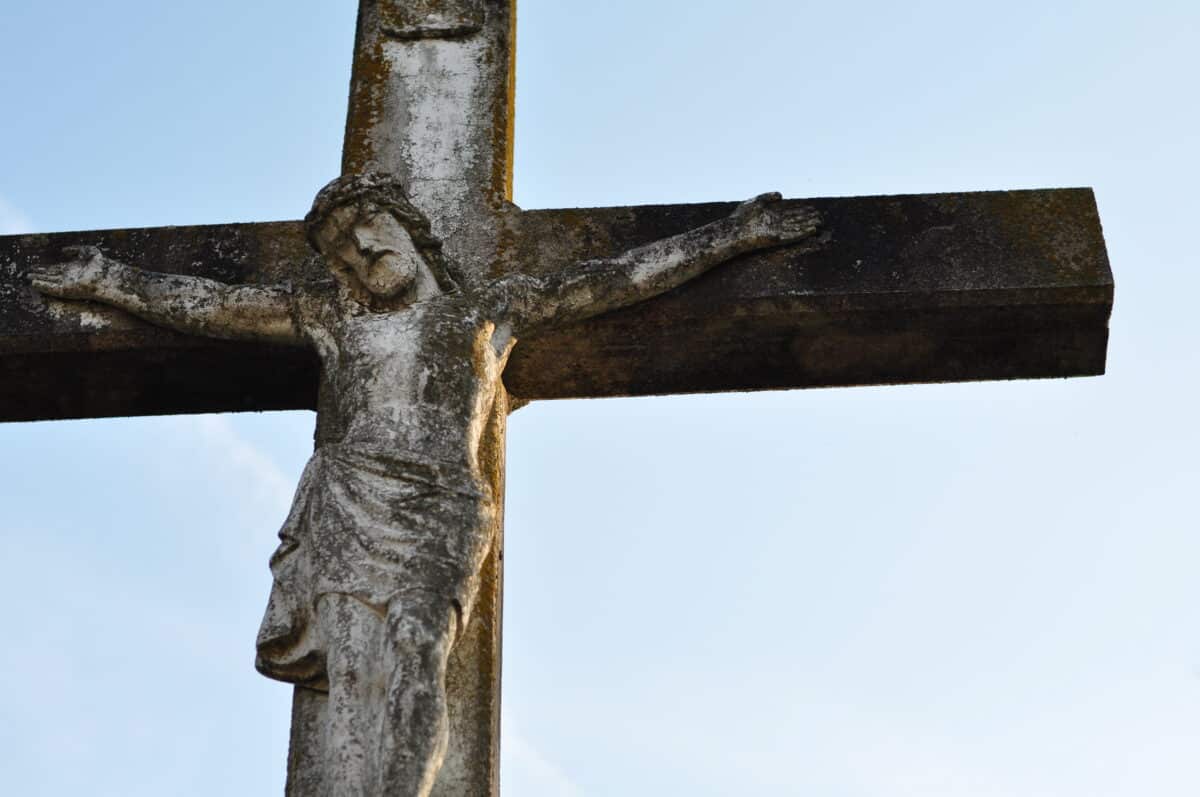
“It is finished,” declared the man whose broken body had been nailed to wooden beams. His gut- wrenching words tumbled from his lips along with his final gasps, “Father, into your hands I commit my spirit!” At that moment, his spirit left him.
The dead man’s friends called him Yeshua.
Today, most people know him as Jesus.
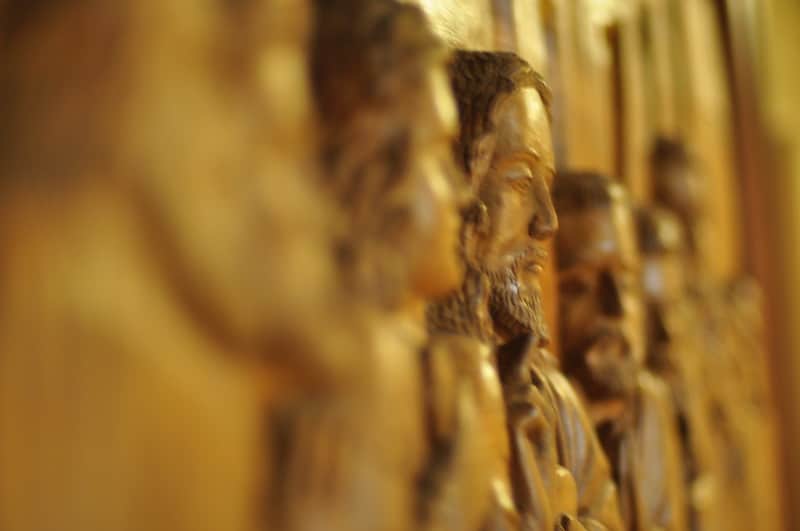

Was Yeshua alone when he finally perished on the Roman cross?
Certainly, in the extremity of his sufferings, he had felt abandoned. Hanging suspended by the nails, he had cried in his native tongue of Aramaic, Eli, Eli, lema sabach-thani? “My God, my God, why have you forsaken me?” (Mt. 27: 46). As Yeshua took upon himself the sins of the world, the Lamb of God felt the separation from his Father.
As Yeshua took upon himself the sins of the world, the Lamb of God felt the separation from his Father.
Yet some faithful companions had remained nearby. Glancing in their direction as his life ebbed away, Yeshua could discern through blood- drenched eyes the comforters who had stayed with him.
Among them was his mother, Miriam of Nazareth, known to us as Mary.
Two other women stood there as well, each also named Mary, along with a lone man, the apostle John. He later recorded in his gospel, “There stood by the cross of Jesus His mother, and His mother’s sister, Mary the wife of Clopas, and Mary Magdalene” (John 19:25). Yeshua called out to John, commanding his beloved disciple to take his mother into his care.
Then, after drinking sour wine in fulfillment of a Hebrew psalm, Yeshua gave up his spirit.
Because his suffering had been extreme, death came as a relief to the Savior’s battered body. Like any mother watching her child suffer, Mary wept at the agonizing death of her son, grieving from the depths of her soul.
She had pondered the meaning of Yeshua’s life even before he was born. She had suckled her infant with her breasts. She had seen the crimson blood of his circumcision, the sign of Moses’ covenant. Now her precious son had been brutally killed by a trio of enemies: the nation’s corrupt leaders, the cruel and domineering Romans, and the devilish serpent himself. Perhaps Mary struggled with deep despair at what she had just witnessed. If so, she can be forgiven. The other disciples suffered their own crises of faith.
Yet God was up to something big, something far greater than the forlorn disciples could have imagined.
He had a purpose behind the pain.
Yeshua was no helpless victim of Rome. “No one can take my life from me. I sacrifice it voluntarily,” the King of kings had declared. “For I have the authority to lay it down when I want to and also to take it up again.” That was why Yeshua exclaimed “It is finished!”— not a pitiful whimper of defeat but a victorious shout from a Son who had completed his Father’s task. His meaning was “It is accomplished! I have carried out what needed to be done!”
His meaning was “It is accomplished! I have carried out what needed to be done!”
When Yeshua exhaled his final breath upon the cross, inside the temple God demonstrated the power that had just been unleashed.
Its inner sanctum, the Most Holy Place, was guarded by a magnificent veil that hung from the ceiling to the floor.
As soon as the Savior uttered his final words and exhaled his last breath, the mighty hands of God ripped the temple’s veil in two. Clearly, this was God’s doing, for the veil was torn from top to bottom. Other divine miracles occurred as well.
The Mishnah, the first written collection of rabbinic literature, provides some details about the veil that hung in Herod’s temple. It recorded that the fabric’s thickness was a “handbreadth”—that is, the width of a man’s palm at the thumb, or about four inches— quite a hefty piece of cloth! The veil stood sixty feet high and thirty feet wide. Creating such an enormous curtain required eighty-two young girls to serve as weavers. Their duty was to make two new veils every year. Each one was so heavy that when it needed to be removed for cleaning, its transport required three hundred hardworking priests! But a job mere men found laborious presented no obstacle to the creator of the universe.
With a great rush of wind and a loud ripping sound, God himself tore the veil wide open.
Now the Spirit had come again— but this time his presence was permanent, never to depart.
And then a wonderful thing happened: The Spirit of God took up residence in a new Most Holy Place!
The Spirit’s mysterious and unexpected outpouring fulfilled what the temple’s torn veil had signified—the ripped opening wasn’t an entrance into God’s presence but an exit to let him out. No longer would God dwell in a golden room in Jerusalem.
Now his Holy Spirit had rushed out of the temple to fill the entire world!
Mary knew this feeling of empowerment better than any of the disciples because the Spirit of God had descended on her once before. At that time, God had overshadowed her womb and made her pregnant.
Now the Spirit had come again— but this time his presence was permanent, never to depart.
No longer is the temple the only place of God’s presence on earth. Now he dwells within people of all nations.
Mary could feel her Son’s warm love infusing her. Clearly, the Holy Spirit came from him. She knew Yeshua intimately, so she recognized his inner touch. “I am with you always,” he had promised, “even to the end of the age.” The Spirit of Yeshua was his gift, an abiding presence by which God energized his people.
Then Mary understood.
Many years before, she had brought her new-born infant to the temple for a dedication sacrifice. A prophet named Simeon had predicted her future pain— the sword- piercing agony of watching Yeshua writhe upon the cross. Yet Simeon had also spoken words of praise to God: “For my eyes have seen Your salvation, which You have prepared before the face of all peoples.” Mary had learned her precious Son would be “a light to bring revelation to the Gentiles, and the glory of Your people Israel.”
That’s it!
No longer is the temple the only place of God’s presence on earth. Now he dwells within people of all nations.
Mary marveled to think God had done such an amazing thing through her Son.
Because of Yeshua, people of every race can become the Most Holy Place of the Lord!
BellTower Stories: with Kathie Lee Gifford
Kathie Lee Gifford joined us in our 1896 bell tower of our old stone church for a moving conversation exploring her ongoing series that speaks to how deep evil meets living hope, as told in this edition, through Nero and Paul— and how their story speaks powerfully to us in this cultural moment now. Come join us in BellTower Stories as “the bells are the voice of the church, with tones that touch and search” -Longfellow
A celebrated television personality and four-time Emmy Award winner, Kathie Lee Gifford is best known for her 15-year run as co-host on the talk show Live! With Regis and Kathie Lee, and more recently, her 11-year run as co-host of the fourth hour of NBC’s TODAY alongside Hoda Kotb.
Since leaving TODAY in 2019, Gifford received a star on the Hollywood Walk of Fame for her significant contributions to the television industry and has pursued other creative endeavors as an actress, director, and producer.
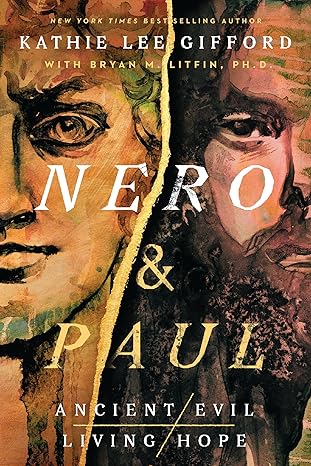
In her latest book, Nero and Paul, Kathie Lee and scholar Bryan Litfin bring the stories of Nero and Paul to life in a creative nonfiction tale by identifying how moral questions can be applied to modern Christian life. Combining historical accuracy with narrative imagination, Nero and Paul drops you into the drama of human pride and divine destiny that unfolded on the stage of imperial Rome. Don’t miss this ancient story with a timeless message that reverberates across the centuries and will light the fire of your faith today.
{Our humble thanks to Thomas Nelson for their partnership in today’s devotional.}
Adapted from “Nero and Paul” by Kathie Lee Gifford and Dr. Bryan Litfin. Copyright 2026 by Kathie Lee Gifford and Dr. Bryan Litfin. Used with permission from Thomas Nelson.