Ever feel like something is missing? In our lives? In our relationships? In our prayers? What if what we’re missing is the real Jesus? As we move through our days, we are tempted to embrace a Jesus of our own making—a life coach Jesus dedicated to our success, a therapist Jesus for our anxiety, an ally Jesus for our causes, a genie Jesus for our desires—and we end up overlooking the true Messiah, the only one who can rescue us from ourselves. Pastors Kyle Idleman and Mark E. Moore are on a search to rediscover the real Jesus that we’ve been missing. I hope you will feel encouraged to seek after the real Jesus, too, and find yourself changed in the process. It’s a joy to welcome Kyle and Mark to the farm’s table today…
Guest post by Kyle Idleman and Mark E. Moore
I walked into a class called “The Life of Christ” in my second year of seminary feeling pretty confident.
“He wasn’t primarily interested in filling our heads with more information about Jesus. He was determined to transform how we approached Jesus altogether.“
After all, I’d grown up in church, attended Christian schools, and won countless “sword drills” in youth group. I could discuss theological concepts like hypostatic union and debate the nuances of Christology.
If there was a pop quiz on Jesus trivia, I could crush it.
After the first day of class, I went back to my dorm room and spread the syllabus across my desk. I calculated the reading load: roughly a hundred pages per week. I was approaching the class as a student trying to get my mind around all the content I needed to learn and process.
By the second week, I was beginning to think that my professor had a different agenda entirely. He wasn’t primarily interested in filling our heads with more information about Jesus. He was determined to transform how we approached Jesus altogether.
I found myself walking out of class thinking less about what I was learning and more about how I was living.









When we studied Jesus touching the leper, he didn’t just ask us about the theological significance of ritual purity laws. He asked us, “Who are the ‘lepers’ in your community? The people society considers untouchable? When was the last time you had a meaningful conversation with someone most people avoid?”
“It’s entirely possible to become an expert on Jesus while remaining a practical stranger to His way of life.“
When we learned about Jesus’ conversation with the woman at the well, he challenged us to think about our own prejudices: “What groups of people do you instinctively look down on? How do your social circles reflect or contradict Jesus’ radical inclusion?”
When we read about Jesus’ teachings on money, he didn’t let us rationalize them as merely metaphorical. He asked pointed questions: “What does your bank statement say about your priorities? If someone examined your spending patterns, would they conclude that you follow Jesus or the American dream?”
When we studied the rich young ruler, he challenged us to consider what we might be unwilling to give up for the sake of following Jesus.
When he taught us what Jesus said about prayer and fasting, he didn’t just explain the historical and theological context—he also invited us to his house for an all-night prayer meeting. Suddenly, Jesus’ teachings about prayer weren’t just academic concepts to analyze but spiritual disciplines to practice.
When we read about Jesus eating with tax collectors and sinners, he asked us to examine our dinner invitation lists.
When we studied Jesus’ response to criticism from religious leaders, he challenged us to consider how we handle criticism of our own faith.
When we encountered Jesus’ teachings about forgiveness, he didn’t just expound on the theology, he asked us to identify the people in our lives we needed to forgive.
“The class was called “The Life of Christ,” but what I really learned was how to make Christ my life.“
He had a way of making every Gospel story personal.
Over the course of that semester, I began to understand that there’s a massive difference between studying Jesus and following Jesus.
That class put me on a journey of confronting an uncomfortable truth: It’s entirely possible to become an expert on Jesus while remaining a practical stranger to his way of life.
We can master Christian doctrine, excel in biblical exegesis, and even enter professional ministry without truly following him. The class was called “The Life of Christ,” but what I really learned was how to make Christ my life.
True discipleship operates more like a trade apprenticeship than a university education.
I think of my friend Jake, who decided he wanted to become an electrician. He spent two years studying electrical theory in community college, memorizing formulas and passing tests. But when he graduated and tried to find work, he quickly discovered that knowing about electricity isn’t the same as being an electrician. He needed an apprenticeship.
For the next four years, Jake worked alongside Master Electrician Rodriguez, watching how he diagnosed problems, learning his techniques for running wire, observing how he interacted with customers, and gradually developing the instincts that only come from walking alongside a mentor. By the time Jake earned his electrician’s license, people said he worked just like Rodriguez.
“True discipleship operates more like a trade apprenticeship than a university education“
If we switched from Jake and Rodriguez to you and Jesus, would your friends and family say that about you? Would they say you work just like Jesus? That you treat people like he does? That you diagnose problems and come up with solutions in a way that reminds them of Jesus?
This is how rabbi-disciple relationships functioned in Jesus’ day. The relationship was intensely personal.
Disciples didn’t just study their rabbi’s teachings; they observed how he ate, how he prayed, how he treated his family, how he handled money, how he responded to criticism, and how he interacted with both the powerful and the powerless. Nothing about the rabbi’s life was considered irrelevant to the disciple’s formation.










This understanding makes Jesus’ invitation more radical than we recognize. When he said, “Follow me,” he wasn’t recruiting students for a religious studies program. He was calling apprentices into Kingdom living. He was inviting them to pattern their entire existence after his.
“Making Jesus our Rabbi isn’t about adding religious activities; it’s about dying to ourselves.“
Jesus was honest about the cost of this discipleship: “Whoever wants to be my disciple must deny themselves and take up their cross daily and follow me” (Luke 9:23, NIV).
Making Jesus our Rabbi isn’t about adding religious activities; it’s about dying to ourselves. This death is more literal than you might think. It involves dying to our need to be right, our desire for comfort, our pursuit of status, and our illusion of control. It means allowing Jesus’ priorities to override our preferences, his mission to redirect our ambitions, and his way of life to transform our habits.
But here’s the irony: This kind of death leads to resurrection.
Jesus promised, “Whoever loses their life for me will find it” (Matthew 16:25, NIV). In dying to our false selves, we discover our true selves—the people God created us to be.
In submitting to Jesus’ authority, we find genuine freedom.
In embracing his mission, we finally discover deep and fulfilling purpose.
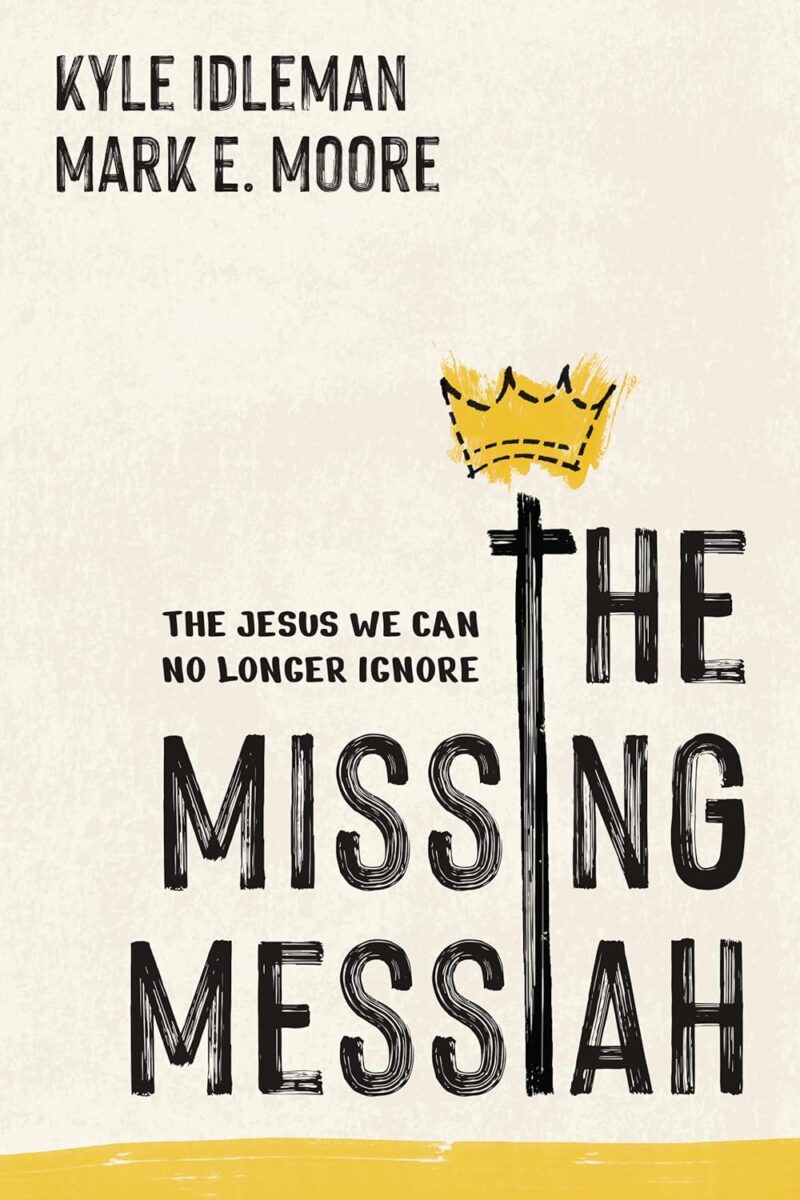
Kyle Idleman is a bestselling author and the senior pastor at Southeast Christian Church in Louisville, Kentucky, one of the largest churches in America. Kyle is the author of Not a Fan, One at a Time, The End of Me, Gods at War, Grace Is Greater, and Don’t Give Up.
Mark E. Moore is the bestselling author of Core 52 and the teaching pastor at Christ’s Church of the Valley in Peoria, Arizona, one of the fastest growing and most dynamic churches in America. He previously spent two decades as a New Testament professor at Ozark Christian College.
Are you tired of superficial Christianity?
Do you desire to know Jesus more fully?
In their new book, The Missing Messiah: The Jesus We Can No Longer Ignore, Kyle and Mark will help you move from a transactional relationship with Jesus to a deep and intimate one, one that will penetrate every depth and breadth of your life. Experience the true Jesus that you’ve been missing. Learn more at www.missingmessiah.com.
{Our humble thanks to Tyndale for their partnership in today’s devotional.}