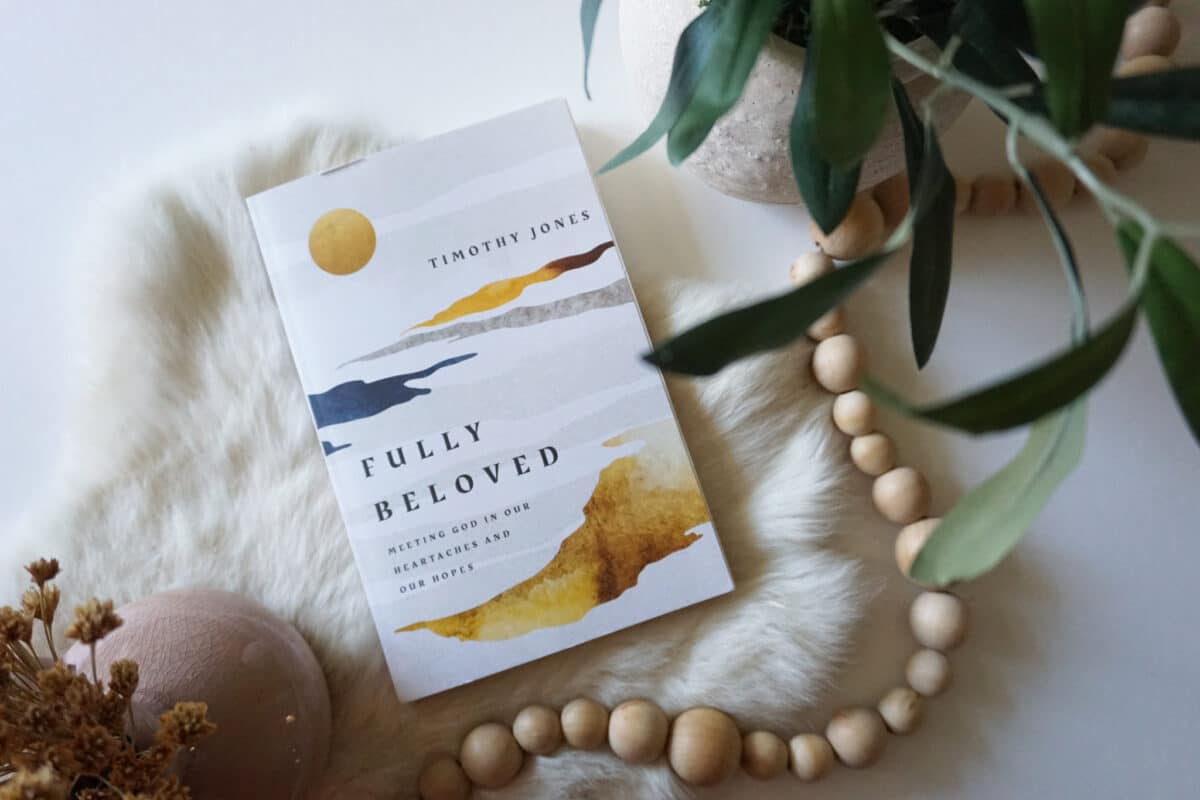
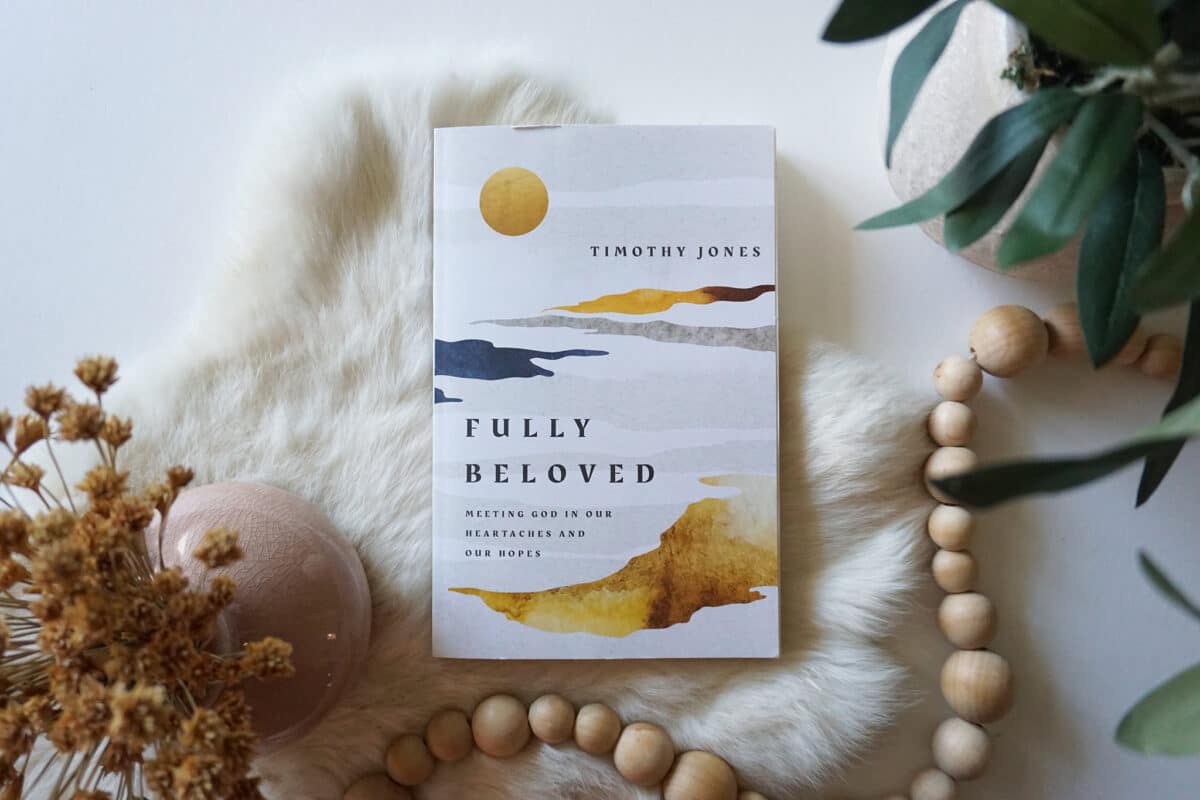
How we can know deep down that we are not just tolerated, but beloved by God? Timothy Jones is a pastor and author known for helping people encounter greater warmth and closeness in their relationship with God, and in his new book, Fully Beloved, he’s not afraid to name our brokenness and explore how it can be healed— Timothy believes knowing God as Father, Son, and Holy Spirit vividly answers the secret ache beneath our daily aches — that the vibrant truth of the trinity offers an extravagant invitation. It’s a joy to welcome Timothy to the farm table.
Guest post by Timothy Jones
Am I loved? Just three words, but perhaps no question aches more deeply within us. Maybe no question matters as much.
We need connection with others, now more than ever, when loneliness is epic, when, as a public health official said, it’s epidemic, when the world seems fractured. When relationships feel fragile or even brittle.
“The single desire that dominated my search for delight,” St. Augustine wrote centuries ago, “was simply to love and to be loved.”
I can identify.



Sometimes, answering “Are we loved?” gets complicated.
Some of us grew up hearing voices that said, “You don’t measure up.” A remembered cruel comment leaves us achy for assurance. Maybe someone you love rejects you—ghosts you—even writes you out of their life, as happened to me. No one escapes heartache.
Moments like these can make us question our worth. Or forget that healing happens, that broken things mend. What a gift it would be to truly recover a renewed conviction here!
We can easily move into the territory of cliché, of course. Or overdone sentiment. I don’t mean by love just a cozy emotional feeling, as Frederick Buechner once put it.
Human tenderness alone will not—cannot—satisfy our deepest longings.
And while the affection others give matters profoundly, it will only meet us partway. Human tenderness alone will not—cannot—satisfy our deepest longings.
I’ve been discovering a surprising source that helps me, grounds me. I mean an ancient, poignant portrait of God: The God known to us as Father, Son, Holy Spirit.
We may not realize that our deep need to know we are loved is answered in this vision of a God who has always existed in relationship and love. But here I find depth and grit and richness—and, above all, tenderness.
And I can’t help noticing: my three-word question — Am I loved? — has a three-named answer.
We might, I know, find the Trinity confusing, even intimidating. There are mysteries here. But I’ve long suspected that this picturing of God in Scripture and Christian tradition could lead to more joy. Lend more vitality to our praying. Plant within us a settled conviction that we are beloved.
Even when—especially when—that good news navigates a challenge.
I can’t recall where I was when I opened my mother’s letter—my grad school dorm on Alexander Street, maybe—but I’m sure that by the second paragraph I’d sat down.
“Send us back your house key,” her neat handwriting read.
So, I thought, she’s speaking for both her and my dad. The return address on the envelope was my childhood home in coastal California.
“You are not,” she went on, “welcome in our house.”
Telling them my plans to marry had prompted a stream of letters, all in my mom’s unhesitating script, letters that told of their vision of me finishing at Princeton and then, and only then, thinking about a serious relationship. Their letters came to me, their youngest son—an overprotected young person who lived at home while at college—convinced that surely I couldn’t be ready for a lifelong commitment. And yes, I was young. I understood they might have a question or two.
But to have my parents write me out of the family? Refuse even to meet Jill, the person I cherished and wanted to marry? The request for my key was for effect, I realize; they didn’t need my little slab of door-lock-shaped metal, and they knew where I lived—the Princeton street where they’d sent the letter. But the words hit their mark.
Another letter followed, hinting they’d write me out of their will. The message: Maybe you aren’t one of us after all.
Was I not loved—by them?




Life-changing letters like those force tough choices. Whatever path I went down, life would be forever different.
I never sent the key. I could feel the loss I was facing, to be sure, but my heart was racing ahead to the gleaming chance to spend a lifetime of companionship with my best friend. I could brave their rejection. (There was, as people often ask me, eventual reconciliation.) But once again I had to ask what love meant, where we find it.
And in such hard moments, I now see how I was being readied for a deeper connection, for a closer relationship with the One who made the world—and us. We long for a love more lasting than any human version—one that comes from our Maker and Keeper, a God we yearn to know overflows in kindness.
I am more beloved than I thought. I’m less lonesome than I feared.
Seeing others experience that kind of life-giving love—and feeling it grow in me—has triggered a seismic shift: from feeling underloved to discovering new joy. “The glory of God is a person fully alive,” as the ancient sage Irenaeus put it. It’s clearer to me than ever that such aliveness comes from knowing I am more beloved than I thought. I’m less lonesome than I feared.
This means that grace will meet me in the lacks and gaps. A God of boundless love shows up right where I live.
All three persons—Father, Son, and Holy Spirit—come close. Through decades of pastoring and praying, grieving and wrestling, I realize that love is the startling invitation of the Trinity.
For this venerable belief points to a God whose very nature has to do with loving relationship.
There’s a surprising intimacy when you look closely. Father, Son, and Holy Spirit radiate and overflow with splendor and kindness to each other. They converse and commune with one another.
Such a picture, I’m convinced, will warm our times with God, not complicate them.
In our brokenness and loneliness, God—whose nature is love—knows and cares for us. T
he love of God, the self-sacrificial mercy of Christ, an assurance from the Spirit: Such glimpses awaken in our human, broken hearts a new delight, a staggering conviction that we, too, are invited close, and held.
Which leads to our answer to my opening three-word question: You are loved—
God’s beloved.
People generally do okay with naming Father, Son, and Holy Spirit.
But the Trinity? That’s where things start to feel intimidating. Maybe it’s a puzzle, some folks assume, for pastors, professors, and the occasional brave soul with a diagram.
But what if this portrait of God is not ultimately confusing, but life-changing? Could it become a conviction that doesn’t complicate our experience of God but rather warms it?
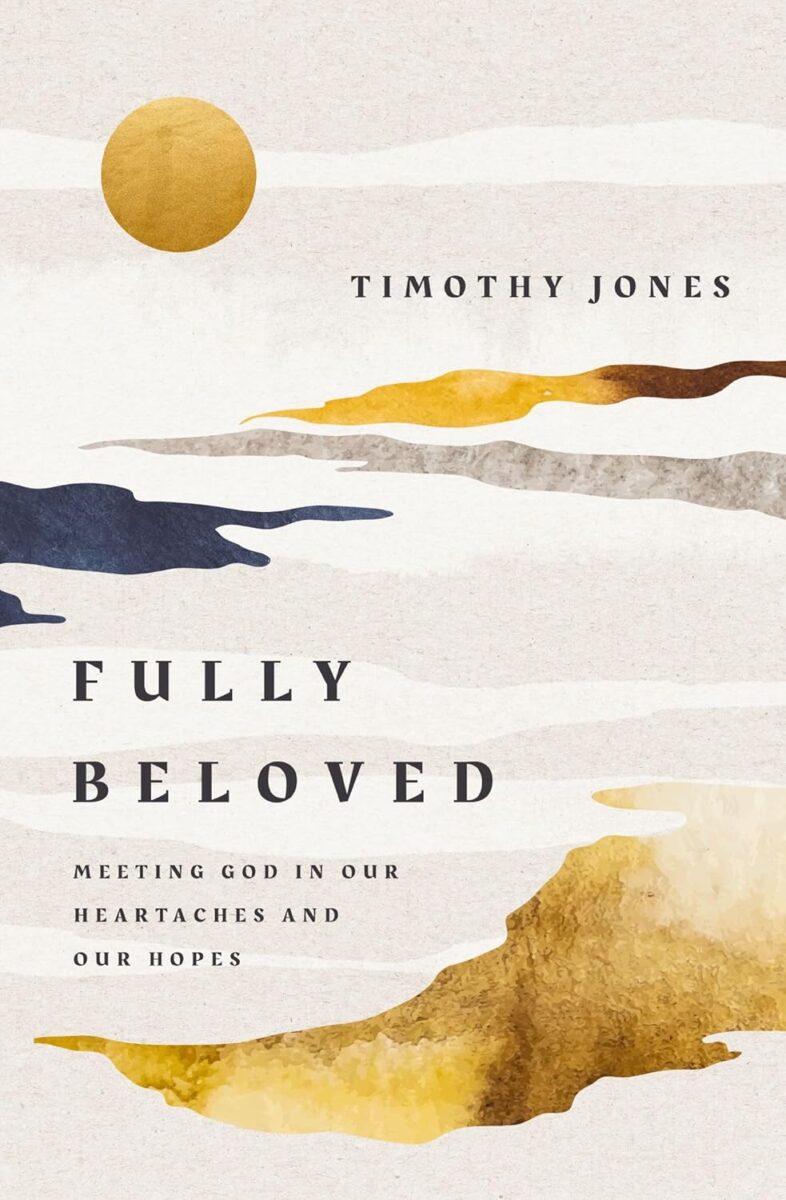
Timothy believes knowing God as Father, Son, and Holy Spirit vividly answers the secret ache beneath our daily aches. That vibrant truth offers an extravagant invitation. His latest book, Fully Beloved: Meeting God in Our Heartaches and Our Hopes, explores God’s triune love set amid our human woundedness.
Tim is pastor, retreat leader, and author. He blogs at www.revtimothyjones.com and has written regularly for the Rabbit Room, Inkwell, Mockingbird, Fathom and other publications. Tim has appeared at Inkwell, Hutchmoot, and, this spring, the Mockingbird conference in NYC. His books include Awake My Soul and The Art of Prayer: A Simple Guide to Conversation with God. You can track with him on Instagram, Threads, Substack, and Facebook.
And immersing yourself in his latest book, Fully Beloved: Meeting God in Our Heartaches and Our Hopes — might heal you in ways you’ve deeply longed for… in your yearning to feel how you’re fully loved.
{Our humble thanks to Thomas Nelson for their partnership in today’s devotional}