I’ve hiked more than a trail or two with my dearest, brilliant friend, Christine Caine, and together we have stood in awe at the beauty of creation time and time again. With every view we have marvelled at our awesome God, who is the ultimate artist and creator. In her latest book, The Faith to Flourish, God’s design for a rooted, resilient and fruitful life, Chris shares how God captivated her attention after hiking to the top of the Acropolis in Greece where she found a lone olive tree flourishing despite dry and rocky soil in which it grew. That encounter sparked a year-long adventure through Scripture, researching more than 200 references to olives and olive trees. It led her from one olive grove to another in countries around the world where she learned everything to do with olive trees and their fruitfulness. And out of her journey came this book filled with lessons from God and the olive tree. It’s an absolute honour to welcome Chris to the farm’s table today…
Guest Post by Christine Caine
Seeing and experiencing God’s beauty has the power to give us life in so many ways.
“God’s beauty on display in nature is a sign that points beyond itself, because it captivates our attention and directs our gaze from the creation to the Creator.“
Whether we’re taking in a field of wildflowers, sunlight glistening on a lake, or the greenspace of a park, all of these environments can affect us—mentally, emotionally and physically. They even have the power to reduce our stress, to lower our blood pressure and our heart rate, all by bringing us a sense of calm.
Study after study shows that spending time outdoors can help us focus on more positive emotions, improve our memory and our ability to multitask.4 Such experiences can even improve our sleep and increase our Vitamin D levels, an essential nutrient for our health and well-being.5
Knowing all this, it’s no wonder people are so captivated by God’s beauty on display in creation.
It has so many benefits! But while such physiological benefits are good, they are not the primary purpose.
God’s beauty on display in nature is a sign that points beyond itself, because it captivates our attention and directs our gaze from the creation to the Creator.
In Psalm 19, we read, “The heavens declare the glory of God, and the expanse proclaims the work of his hands.”6 And we are told in the book of Romans,“For his invisible attributes, that is, his eternal power and divine nature, have been clearly seen since the creation of the world, being understood through what he has made.”7
If you’ve ever stood on the beach and watched the waves crash powerfully onto the shore, or marveled at the vastness of a mountain range, and wondered about the one who is infinitely greater—the one who created all that you’re seeing—then you know the captivating nature of the beauty of God. It draws our attention so that we will look to God.
And when we do, we find one who is like no other. One who captivates our attention to capture our hearts.









Turn Your Gaze Toward God
As much as I love gazing at the beauty of God’s creation, I have to admit that there is nothing more beautiful than gazing at the beauty of the actual creator himself.
“Therefore, gazing is not glancing. It’s not casually looking. It’s not stealing a glimpse. It’s being fully focused on beholding the transcendent beauty of God. It’s steadily and intently admiring God.“
David expressed this sentiment in Psalm 27:4-6 when he wrote, “I have asked one thing from the Lord, it is what I desire: to dwell in the house of the Lordall the days of my life, gazing on the beauty of the Lordand seeking him in his temple.”8
When David penned these words, he was fleeing from his son Absalom, who was conspiring to take his throne, and in the midst of the chaos, he took time to gaze upon the beauty of God.
The word gaze comes from the Hebrew word chazah, which means “to see, perceive, to contemplate with pleasure; to look, to behold.”9 Therefore, gazing is not glancing. It’s not casually looking. It’s not stealing a glimpse. It’s being fully focused on beholding the transcendent beauty of God. It’s steadily and intently admiring God.10 That’s what David did.
Have you ever caught yourself gazing at something beautiful? Perhaps you love gazing at the stars, or at a beautiful painting or an eagle soaring. I know it’s no surprise, but for me, it is likely to be the waves on an ocean, the view from a mountaintop, or a sunset.
Gazing at the beauty of creation or art is something we can readily understand because we can physically see those things with our natural eyes, but gazing upon the beauty of an invisible God can seem impossible to comprehend—precisely because we cannot see him.
“True beauty really is below the surface, not observed with physical eyes, but perceived with spiritual eyes or the eyes of the heart. The beauty of the Lord is seen in his attributes. In his holiness, majesty and glory. In his sovereignty, power and might. “
Of course, when Jesus walked on the earth, he was the image of the invisible God, (Col 1:15) but even when he did, the Scriptures make clear that, physically speaking, he looked like a typical, ordinary person: “he did not have an impressive form or majesty that we should look at him, no appearance that we should desire him.”11
We live in a world where we tend equate beauty with whatever we consider to be attractive physical features. We have been conditioned by culture and the media alike to look at people’s external attributes to determine whether or not they are beautiful. There are entire industries that foster this perspective, and in the process, inadvertently skew ours. When we scroll through social media or peruse a fashion magazine, we can see the world has clearly established who is deemed to be one of the “beautiful people” and who is not.
But when David gazed upon the beauty of God, he wasn’t looking at any physical features because the Hebrew word used for beauty means the “kindness, pleasantness or delightfulness” of God.12
True beauty really is below the surface, not observed with physical eyes, but perceived with spiritual eyes or the eyes of the heart. The beauty of the Lord is seen in his attributes. In his holiness, majesty and glory. In his sovereignty, power and might.









When we take the time to turn our gaze toward God, to linger in our gazing, we see his beauty.
“When we comprehend clearly how all the good that God has done for us—every single thing—has been an act of mercy and grace that is undue and undeserved—it changes us.“
And when we see his beauty, we are transformed.13
When we remember how he has faithfully acted out of who he is in our lives—loving us, forgiving us, redeeming us, transforming us, and tending to our broken hearts. When we reflect on the times when he graciously has pulled us out of situations that we got ourselves into; when he has mercifully forgiven us for the same sin we committed yesterday and the day before and the day before that; when he has lovingly accepted us in the midst of others rejecting us.
When we comprehend clearly how all the good that God has done for us—every single thing—has been an act of mercy and grace that is undue and undeserved—it changes us.
And when we are transformed then we can reflect God’s beauty—His kindness, pleasantness and delightfulness to our world.
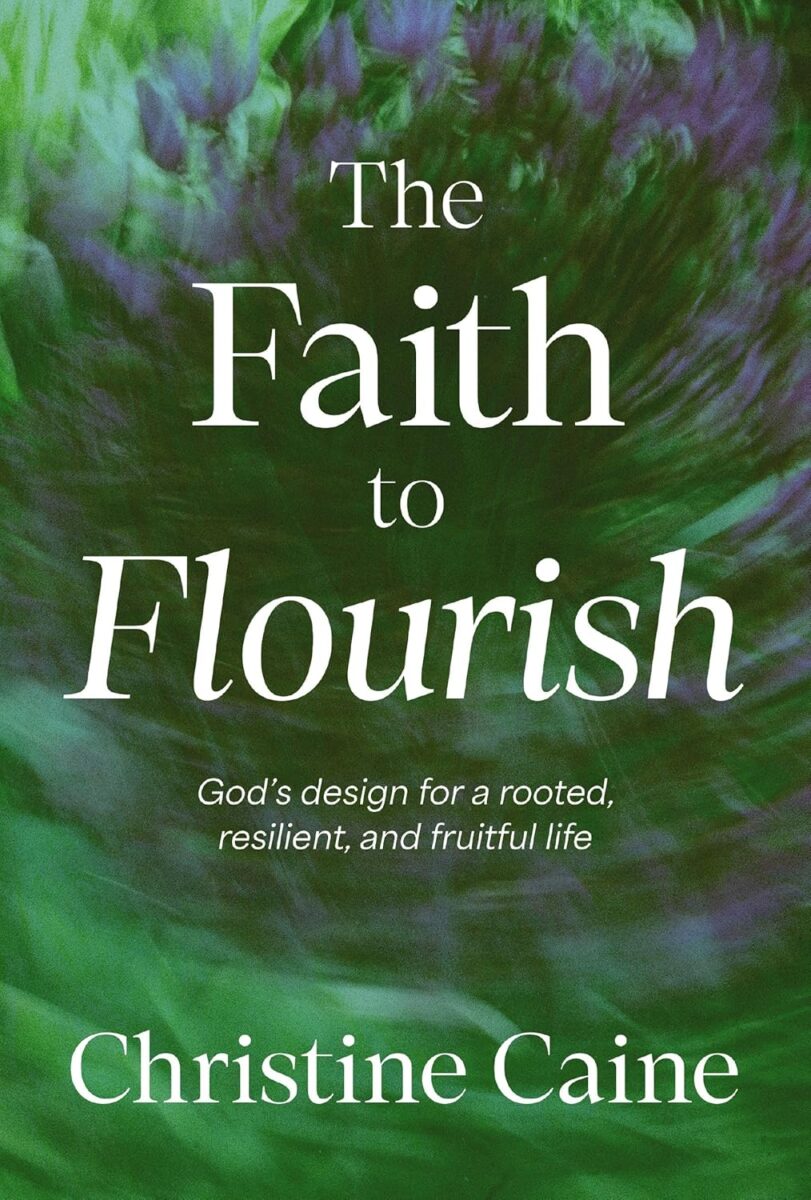
I’ve been waiting to get my hands on this book! Whatever Christine Caine writes, I want to read every word, learn fresh, powerful insights, and be deeply changed! This book goes to the top of my stack!
Christine Caine is a speaker, activist, and bestselling author who awakens people globally to discover their God-given purpose and live transformed lives for Jesus. Christine and her husband, Nick, have two daughters, Catherine and Sophia. Together, they founded A21, a global anti-human trafficking organization that prevents exploitation, recovers victims, and empowers survivors to rebuild their lives. She also founded Propel Women, an initiative that activates women to follow Jesus wholeheartedly and live confidently in their God-given purpose. You can tune into Christine’s Equip & Empower podcast for practical insights and encouragement, drawing hope from Jesus wherever you are. To learn more about Christine and her resources, visit www.christinecaine.com.
In her latest book, The Faith to Flourish, God’s design for a rooted, resilient and fruitful life, Christine shows you that it’s possible to thrive in every season of life—including the hardest ones—by grounding yourself in God’s truth and activating the peace, resilience, and purpose he gives you. Using the biblical symbolism of the olive tree in Psalm 52:8, Christine unpacks how you can develop deep spiritual roots that anchor you to withstand life’s storms; identify spiritual stagnation and experience renewed vitality and purpose; behold the beauty of God and cultivate a heart of wonder; nourish inner peace and joy through intentional shifts in perspective; foster reconciliation and build stronger, more fulling relationships; and embrace God’s plans and purpose for your life, while bearing fruit that impacts others. No matter the challenges you face, God’s design for your life has not changed—to have the faith to flourish and be fruitful!
{Our humble thanks to Thomas Nelson for their partnership in today’s devotional. }