How long, Lord, how long? You know when you want to pound on God’s chest and ask, “Do you hear me? Will you heal me?” Glenna Marshall, whose book, Praying in Pain, helps answer some of the most challenging questions pain makes us ask. With every page, Praying in Pain brings us into God’s Presence, reveals how He works in suffering, and shows us how to pray while we wait for Him. It’s a joy to welcome Glenna to the farm’s table today…
Guest Post by Glenna Marshall
It was a pleasure to sit down to talk with Glenna Marshall in the belltower of our 1896 old stone church. Don’t miss our powerful video conversation below…
All of my grandparents lived through the Depression of the 1930s.
If you’d met my maternal grandmother when she was still living, you’d have quickly understood that she grew up in that infamous era of scarcity and poverty.
It wasn’t her age or her stories that gave her away, though. It was her pantry.




One Christmas, my siblings and cousins and I were gathered in my grandmother’s kitchen looking for snacks in her pantry.
Laughing incredulously, we sifted through more shelf-stable items than any one person ought to have in their house. Boxes of Jell-O mix from the 80s brought peals of laughter as we tried to convince our grandmother to throw out these long-expired items. We’d just entered the twenty-first century at the time, and my grandmother was holding on to twenty-year-old boxes of Jell-O. And cans of soup decades past their prime. And jars of seasoning that are older than I am now.
My grandmother was a coupon shopper, often leaving a store either having spent nothing or having the cashier pay her for her purchases. She was a wonder when it came to making a dollar stretch, but growing up poor in a large family in the final days of the Depression left her with a scarcity mindset that encouraged both stockpiling and never throwing things away. She was a bit of a hoarder, and when she died, my mother and aunt spent months combing through her “just in case” collections of necessities.
We have a similar scarcity mindset when it comes to living with pain and chronic conditions.
“there is nothing that will plunge a person into despair more quickly than to suppose what could happen. This was another example of the worries of tomorrow that never come, robbing us of the joys of today.”
I want a basement full of grace that I can draw on when, inevitably, a flare up comes around that I currently don’t have the stamina to endure.
But the problem with trying to live on borrowed grace is that we’re worrying about a future that hasn’t come about yet. As my grandmother wanted to be prepared for a gap in provision, we want to stockpile endurance for the day we wake up without any. There’s nothing wrong with wise preparedness, but continual anxiety and worry for a future gap in care that hasn’t happened yet is like trying to grasp oil with your hands. You can’t hold on to it.
In her memoir about her years in a POW camp during WWII, missionary Darlene Deibler Rose struggled with the “what-if” scenarios down the road in her imprisonment. When sent to suffer horrific, inhumane conditions in solitary confinement, she noted that “there is nothing that will plunge a person into despair more quickly than to suppose what could happen. This was another example of the worries of tomorrow that never come, robbing us of the joys of today.” God’s sufficient grace is present-tense grace. It’s what we need now, today, and it’s the exact right amount.
Darlene’s imprisonment had led to severe malnutrition, dysentery, and malaria. Her body wasted away as she wrestled with being imprisoned until she died and losing her husband who was also imprisoned at another encampment.
After standing firm through repeated sessions of interrogation, attempted brainwashing, and abuse, Darlene would return to her insect-infested cell and cry buckets of tears, crying out to the Lord, the only One who could hear her: “Oh Lord, I just can’t go through another one. I can’t, Lord, I just can’t. Please, no more, Lord.”
But the Lord did not remove the thorns of her physical or emotional suffering right away. Rather, Darlene recounts what He did do for her. “When there were no more tears to cry, I would hear Him whisper,
‘But my child, my grace is sufficient for thee. Not was nor shall be, but it is sufficient.’ Oh, the eternal, ever-present, undiminished supply of God’s glorious grace!”



God’s sufficient grace is present-tense grace.
It’s what we need now, today, and it’s the exact right amount.
God’s present-tense grace gives us the internal fortitude to believe that if He does not heal our pain in this life, then He will give us what we need to endure our pain in this life. That’s His present-tense grace. You can’t worry about tomorrow or next year or twenty years from now because all you need today is today’s grace. You can’t hoard it or store it up.
“He will give us what we need to endure our pain in this life. That’s His present-tense grace.”
When Israel began their new life freed from slavery in Egypt, they asked Moses for food when they were hungry. So God provided manna. Every morning, the people would go outside and find a wafer-like substance on the ground, and they could gather up what they needed for that day only. The one exception was in preparation for the Sabbath. They could gather extra for their day of rest, but at any other point in the week, stockpiled manna would rot with worms. God’s provision of daily food put Israel’s faith to the test. They had to learn in real time to trust God to provide what they needed when they needed it.
Every morning was an exercise of faith in God’s character. Would the food be there when they woke up? They had to go to sleep every night resisting the urge to hoard what would not sustain them while trusting God to supply anew what would.
We must exercise the same kind of faith each day. God’s grace is sufficient for us, but it will require that we get up every single pain-soaked morning believing that the present tense grace of God will be enough for today, for this one day. We don’t need to hoard…
His grace or live on a future, borrowed version of it. He is faithful to carry us through today.
He will be faithful to carry us tomorrow and forty years from now. He will give us what we need “in the time of need.”
BellTower Stories
Can you still believe God is good when healing doesn’t come? If you’ve been carrying chronic pain, uncertainty, or fear about the future, these words from Glenna Marshall feel like a deep breath, as Ann and Glenna discuss Glenna’s new book, Praying in Pain. Come join us in BellTower Stories, up in the 1896 bell tower our little Village Table church, as “the bells are the voice of the church, with tones that touch and search.” (Longfellow)
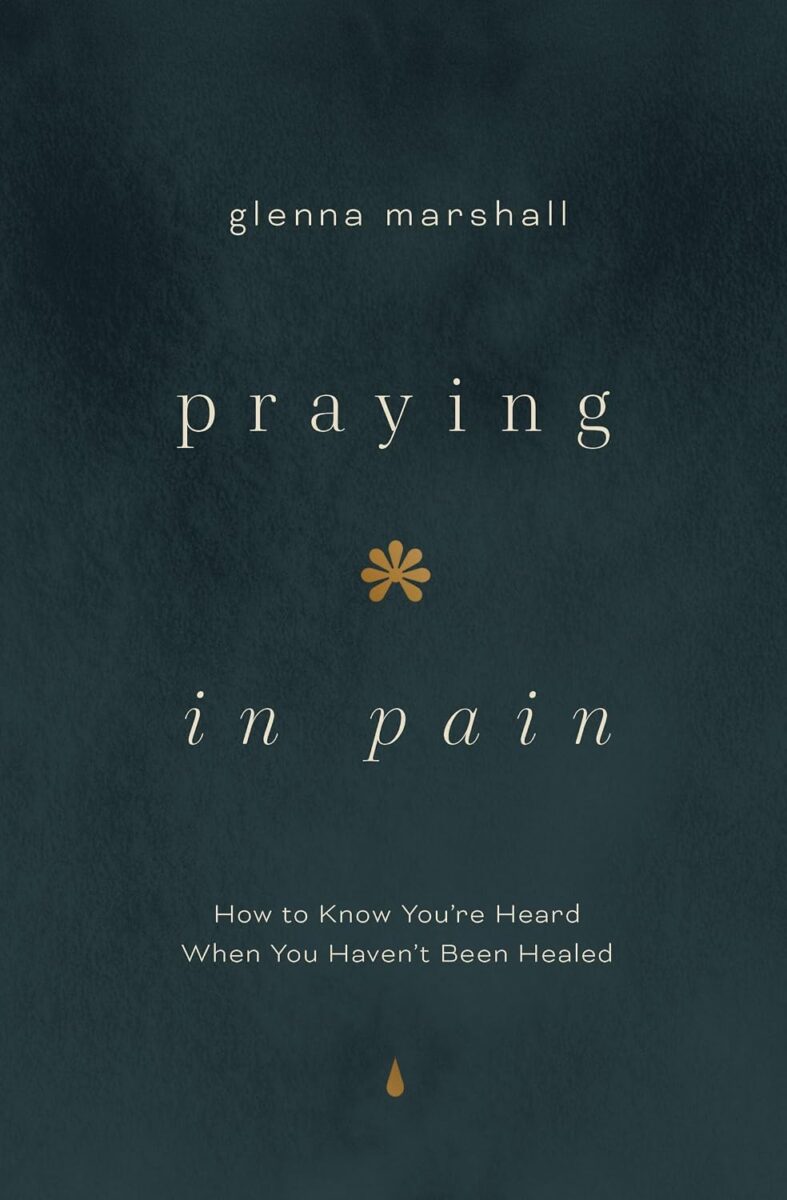
If you or someone you love lives with chronic pain, you know how invisible suffering can feel. The sleepless nights. The endless appointments. The quiet questions you carry before God: How long, O Lord? Will You hear me?
In Praying in Pain, Glenna Marshall reminds readers that these are not faithless questions. They are biblical ones. Drawing from the Psalms and Scripture’s own language for suffering, she helps Christians bring honest prayers to God, even when prayer feels impossible.
Whether you’re walking through chronic pain yourself or caring for someone who is, Praying in Pain offers biblical hope in the middle of suffering. Pick up your copy here today.
{Our humble thanks to Moody Publishers for their partnership in today’s devotional.}