How do you begin to move forward when your heart is broken in grief? Lisa Appelo understands the raw emotions and fearful uncertainty that come in life after loss. Lisa went to bed happily married and woke up a widow and single mom to seven children. Wrestling through deep pain and paralyzing overwhelm, Lisa found the way through grief isn’t a method of prescription. The way through grief is a person: the God of all comfort. It’s a grace to welcome Lisa to the farm’s table today…
Guest Post by Lisa Appelo
There’s a struggle in grief that isn’t popular to confess in Christian circles: being disappointed with God.
Maybe you’re more than disappointed.
Maybe you’re angry because God didn’t answer your prayer the way you wanted. God could have done something, and he didn’t.
One of the biggest obstacles in grief may not be the pain and sadness but trusting God with our whole heart when our whole heart got broken.




“Surrender happens in excruciating moments alone, on knees bloodied in prayer, begging God to come through for us—and then releasing the answer we want most to God’s sovereign will.“
Two years after my husband Dan unexpectedly took his last breaths in the dark early morning hours on the pillow next to mine, I read a viral news story eerily similar to my own. A wife woke to her husband’s irregular breathing and began doing CPR until paramedics arrived and took him to the emergency room. He went into cardiac arrest, and when the medical team couldn’t revive him after forty-five minutes, they pronounced him dead. Doctors removed the life-saving equipment and told the family there was nothing they could do.
As the hospital team prepared his body for the morgue, his son stood next to his dad’s body and told him he would not die that day. Minutes later, the father’s heart began to beat, and ultimately this husband and father made a complete recovery.
It was the exact miracle I’d begged God for, that never came.
I’d prayed my guts out too. I’d cried out for God’s mercy too. And I’d never once believed that would be the day Dan would die.
Did God give someone else the miracle you desperately wanted? You’re glad for them, but you prayed too and you believed God could do it. Maybe you prayed for months, had people praying around the world, and even had hints that God was moving the way you wanted, but the miracle never came. Though you stormed the gates of heaven, you’re now walking the deep sorrow of your loved one in heaven.
You’re left holding the remnants of the life you longed for with a faith frayed by disappointment. God could have done something, and he didn’t.
“God will never ask from us what he hasn’t already done.“
“I surrender all,” we sing with a heart full of intention. And we think we really have surrendered everything—or that we will when God asks it of us. But surrender isn’t just the mountaintop declaration that Jesus is our Lord who saves us. Surrender happens in excruciating moments alone, on knees bloodied in prayer, begging God to come through for us—and then releasing the answer we want most to God’s sovereign will.
God will never ask from us what he hasn’t already done. Jesus wrestled with agonizing surrender before going to the cross. On the night before his arrest, Jesus begged his Father to keep him from crucifixion. Jesus knew God had the power to keep him from suffering. “Abba, Father, all things are possible for you…” (Mark 14:36)
And Jesus poured his heart out in prayer. He was deeply troubled to the point of death and his sweat became like drops of blood. Three times, he got face down on the ground, praying “with loud cries and tears to him who was able to save him from death.” (Hebrews 5:7). But each time Jesus contended in prayer, he also surrendered in prayer. “Yet not what I will, but what you will.” (Mark 14:36)
It’s not that you didn’t pray hard enough or often enough. It’s not that God turned a deaf ear to your pleas. Jesus, God’s very Son, prayed three times in deep agony and God heard his prayers but did not spare Jesus from suffering.
“The cross means we can trust God with our whole heart when our heart is broken.“
But when God said no to Jesus, he said yes to you and me. The reason we can still trust God when someone else gets our miracle is because God has already given us the miracle of eternal life when we deserved impending death.
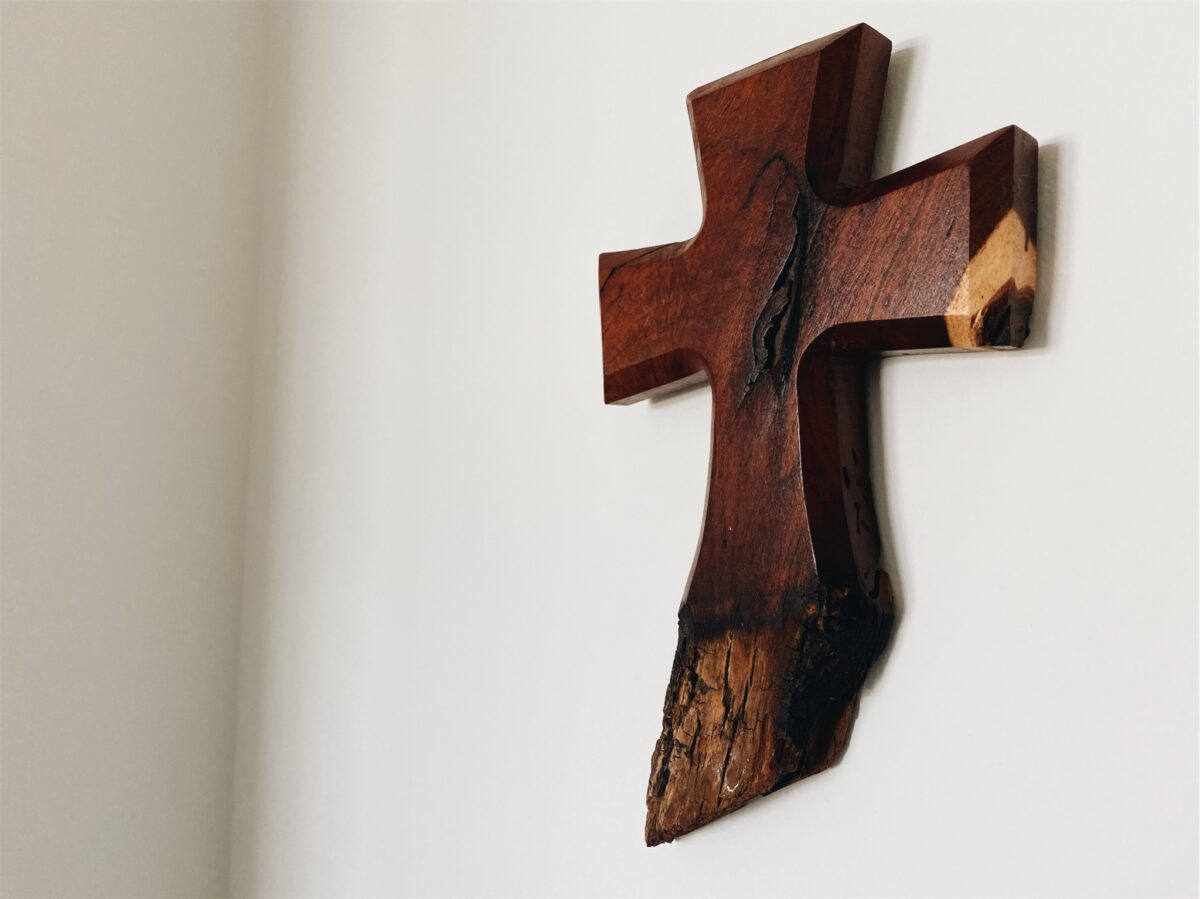
In the pain and disappointment and even anger of grief, we throw up our arms and say God could have done something and he didn’t. Jesus’ outstretched arms on the cross prove that God could have done something and he did.
The jaw-dropping miracle is that God loves you and me so much that he didn’t spare even his own Son but gave him up to be crucified in our place so that you and I could be forgiven and receive the hope of heaven.
God knows the cost of saying no to a prayer. Jesus knows the agony of a broken heart. The cross means we can trust God with our whole heart when our heart is broken.




The grief after my husband’s death made me realize that if I said God was Lord of my life, I couldn’t put conditions on him like “if you answer my prayers the way I want” or “if you keep me from pain.”
“If Jesus isn’t Lord of all, then he isn’t Lord at all,” said missionary Samuel Zwemer. As we contend in prayer, we’re also called to surrender in prayer. So with knees calloused from prayer and cheeks hot with tears, we can honestly surrender all and declare, I wish this was different, Lord, but I trust you.

Finding your way through grief isn’t about how, but who: the God of all comfort. In Lisa Appelo’s new book, God of Comfort: A Devotional Journal for the Grieving Heart, move your eyes from looking at your circumstances, looking back, or looking around at others, to fix your eyes on God over your circumstance.
Each devotion in God of Comfort points to the character of God who’s with you in grief, along with guided prayers, journal prompts, reflection space, and original poems. Because He’s where the healing is.
Connect with Lisa at www.LisaAppelo.com and for near daily Instagram encouragement at @LisaAppelo
{Our humble thanks to Baker Publishing Group for their partnership in today’s devotional.}