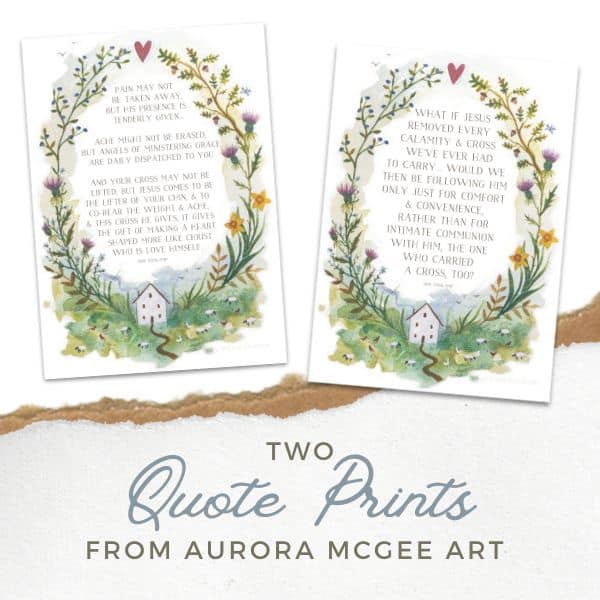
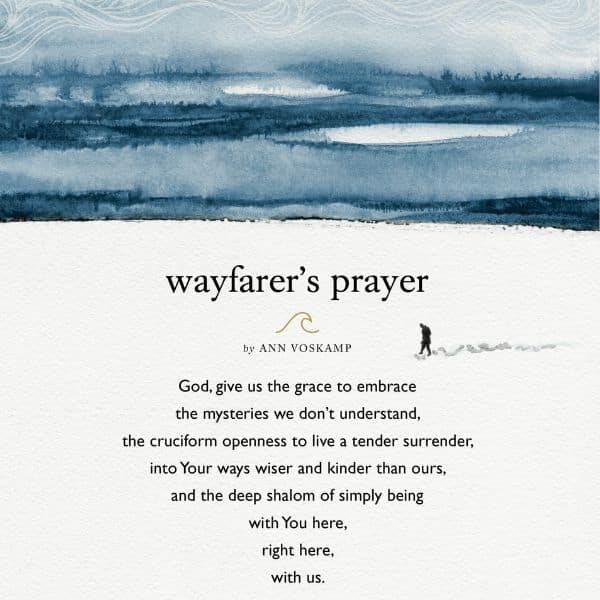
It’s not that each of us aren’t going to get things wrong — it’s what each of us do with it afterward.
Honestly — somedays, I want to go back.
I want to go back to when our 7 kids were little enough and I could stroke their flushed cheeks at the end of the day, till they fell asleep here under our roof; I want to go back to when they’d tumble out of their mess of sheets and tangled quilts with wild bedheads every morning, and come padding barefoot in their worn pajamas into the kitchen, and I’d scoop them up and they’d nestle their drowsy warmth into my neck, and I’d rock them and we’d be at home in each other’s arms.
I want to go back and restore the broken parts of our family’s story…. go back and change some of my lines in the story with our children – say the right thing at the right time, not say the wrong thing at the worst time — so maybe there would be an even different story, a better story, for each of them.
What mother doesn’t really want that most?




Because there are nights I lay in bed reflecting on the story of our family, that time and perspective and refining, now let me see how I didn’t get it right. Reflection is always part of the journey toward responsibility.
Like my own mama’s always said, one of the most formative truths she ever instilled in me: “It’s not that each of us aren’t going to get things wrong — it’s what each of us do with it afterward.”
Reflection leads to repentance. Reflection is key to repentance, which is key to relationship repair, which is key to relationship reconnection.
It’s true and direly needful in every relationship and work of restoration: Reflection leads to repentance. Reflection is key to repentance, which is key to relationship repair, which is key to relationship reconnection.
We get to practice this like we practice our faith:
Only those who recognize what went wrong, and apologize for what they got wrong, have any hope of their dreams of right relationships realized.
I’ve been in the midst of my own interior restoration work, and ask another mother just last week, “What if I am getting this wrong even now?”
She smiles and whispers: “But it won’t only be one thing you get wrong; you’re getting all kinds of things wrong – we all are.”
Only those who recognize what went wrong, & apologize for what they got wrong, have any hope of their dreams of right relationships realized.
And I exhale and remember: It’s not like anyone gets most of parenting right, with only a risk of getting one thing wrong; parenting – like all of life – is about getting all kinds of things kind of right, and getting all kinds of things more than kind of wrong.
But that’s where the good news of the gospel meets us, that literally never stops being the best news: You get things wrong, you get so much wrong, but Jesus gives you all of His rightness, and more than enough grace to cover it all.
Sometimes when our youngest son — now a 6ft 5 inch, married father of two little boys — walks in to the kitchen and gives his mama a long hug — I brim a bit and smile: how much he looks a bit like his dad, a bit like his mom — and how his own little sons look a bit like him too, and I can feel all the nuance of all of it:
Your children are in some ways a reflection of you.
And in some ways, it’s beyond true:
Sometimes you need the mirror of your child to see your own reflection, and make changes to improve.
I see how wholehearted my son and his wife are humbly and earnestly seeking the Lord, powerfully and sacrificially serving the Lord, are completely sold out for the Lord — and their spiritual hunger convicts you, and spurs you on in your own journey, stirring more of your heart’s affection for more of Jesus…
Because children are, in some ways, a reflection of us — you can see how you’re called to pray more, confess more, repent more, trust more, stay hidden in Christ more.





But that’s the good news of the gospel, that literally never stops being the best news: You get things wrong, you get so much wrong, but Jesus gives you all of His rightness, and more than enough grace to cover it all.
But in other critical ways, our children are not a reflection of us, but are distinctly their own people, with their own stories, and every parent needs to differentiate their stories from that of their children.
And that has been one of the greatest epiphanies:
Unless you differentiate from your child, you can end up seeing your child as a reflection of your worth, their story an extension of your dreams, their lives as a script in your own story.
Unless you differentiate from your child, you can end up living the same old dysfunctional stories of the past that you are called to now live free of.
All of our relationships, with anyone, including our children, are held between two anchors: attachment and autonomy.
Press toward the polarity of only attachment, and relationships can twist into dysfunctional enmeshment and co-dependency.
Press toward the polarity of only autonomy, and relationships can distance into dysfunctional isolation and self-focus.
Healthy relationships hold space for both healthy attachment, and healthy autonomy.
Unless you differentiate from your child, you can end up seeing your child as a reflection of your worth, their story an extension of your dreams, their lives as a script in your own story.
And differentiation is about this healthy holding on to both the attachment of connection, while holding on to the autonomy of a secure identity.
Differentiation means we are distinct from each other, without being distant from each other. And growing in healthy differentiation moves the anchors of autonomy and attachment actually closer to each other, so they aren’t polarizing extremes of either/or, but rather you are closely connected to someone while also remaining closely connected to your own values and convictions and identity.
That’s always part of the restorative work of relationships: Let go of expectations, while holding on to close connection.
When our youngest son walks me through the century old house they’ve been restoring, kneeling down and beckoning me to come closer to see, how he’s been working on flooring and trim, so the old house doesn’t have to be torn down, I nod, undone with how he’s committed to restoration stories, how we all can be:
The good of your child’s story can no more go to your head, than the hard in their story can blame your heart.
Differentiation is how to be in close relationship with each other, without being constantly reactive to each other.
Because: Their story isn’t your story, nor is their story a fair or whole reflection of you or your story, and they have agency and autonomy in their story, just like you do in yours.
And like our children have to choose their own Savior, each of our children also get to choose their own story.
This is all that ultimately matters, this is what renovates all the broken places, this is what restores:
We don’t get to be a saviour to our children, we only get to be like our Saviour to our children.
I reach over and pat our fine son’s shoulder, tell him how moved I am by his tenacity, by his vision, by his perseverance.
The real work of a parent isn’t to take credit for your children, or take condemnation for your children, but to prayerfully keep taking your children to Christ no matter what.
I look Kai in the eye, and feel all this love for him, feel all this love for every single one of our miraculous children. And I know it:
Our children owe us nothing more than the very honor and respect that we owe them. We may be part of giving them life, but in the end, all that we ultimately get is to give thanks for getting the joy of experiencing any life with them at all.
Kai tells me that he’s almost finished the complete renovation of this century-old home that more than one carpenter said we should just tear down, but the better story to live is always one of restoration.
And I nod with a light bulb moment of my own.
Because this is the life-changing epiphany:
The good of your child’s story can no more go to your head, than the hard in their story can blame your heart.
The real work of a parent isn’t to take credit for your children, or take condemnation for your children, but to prayerfully keep taking your children to Christ no matter what.
The work of parenting is ultimately about needing to stay on your knees.
There on my knees, I smile grateful and tell our son that this is good work, this is all good and faithful work.







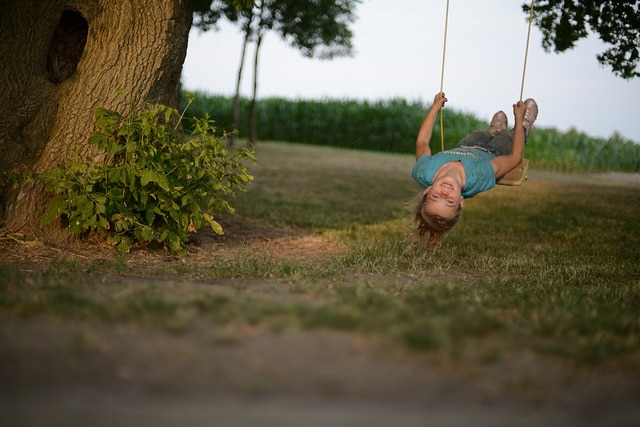
We don’t get to be a saviour for our children, we only get to be like our Saviour to our children.
That evening at home under our roof, I sit with the tender reality that — I can’t go back to when all of our kids were little.
But at the end of the day the surer hope and deeper comfort is:
The Word Himself is the Author of our stories, the only One who has all the authority to re-story and restore us, and the Word keeps writing our stories right into eternity, till the last word is a good Word.
Reflecting on Christ leads to being a reflection of Christ.
I sit there late with a candle flickering, with the open Word, till I lose track of time and feel the relief of it: There is still time, time for every family, time for every relationship, time to move forward in this way that restores all things:
Reflecting on Christ leads to being a reflection of Christ.
Pages Full of Grace: Reads for the Restoring

Words to hold onto when you’re carrying the ache and beauty of loving people deeply… whatever your family looks like, these are pages for the tender work of restoration, grace, reflection, and becoming more like Christ.
As we move into the season of reflecting on motherhood, fatherhood and our families — there’s a life-giving invitation to keep making space to stay close to the heart of Jesus — the One who restores, reconnects, and gently re-stories us all.