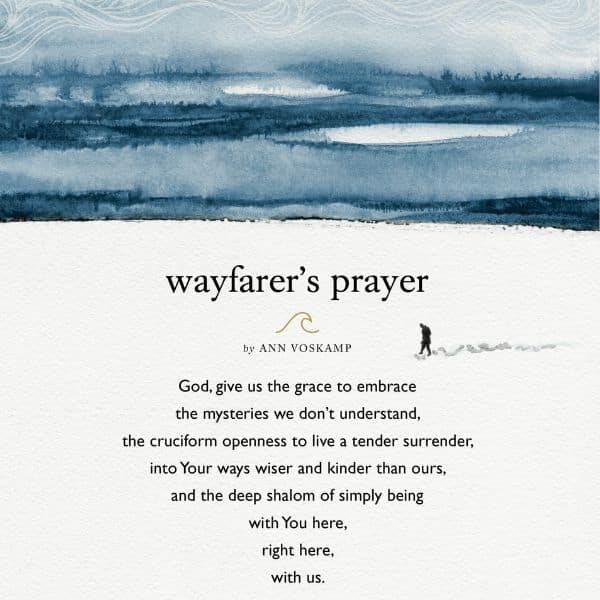
You and I have both walked those kinds of valleys and we’ve experienced it first hand: Grief has a way of dismantling what we thought we knew about God. Tiffany Stien, author of Mourning God, invites us into what she calls “relationship counseling with God”—a brave, honest reckoning with faith in the aftermath of devastating loss. With vulnerability shaped by years of a deep walk with Christ, she models how to bring our hardest questions into God’s presence without shame. If you’ve ever felt abandoned, disoriented, or unsure whether your faith can survive suffering, this reflection offers both permission and hope. Sometimes the most faithful thing we can do is show up and ask, “God, who are you?” It’s a joy to welcome Tiffany to the farm’s table today…
Guest blog post by Tiffany Stien
You’re asking relationship questions. And if you didn’t know it already, you’re in relationship counseling with God.
Let me explain what I mean.
I have lived with chronic depression and generalized anxiety for more than twenty years, and professional therapy continues to be one of the most beneficial tools in my mental health journey. It’s a safe and trusted place to wrestle with the difficult questions of life, share my disappointments, process my suffering, and receive insight and direction from my counselor.
Honestly, I rarely enjoy the process of being in counseling (who delights in being utterly undone in front of someone else?), but I’m grateful for the hard work we do together and for the fruit borne from taking intentional steps toward health and wholeness.
And so when I felt abandoned by God and couldn’t see, feel, or hear him in the wake of our son, David’s death, I did what seemed most natural:
I took God to relationship counseling, metaphorically speaking.


God and I occupied this mental space for about six months.
I imagined us to be in a small counseling room, sitting across from each other in two oversized chairs. This was relationship counseling, and so of course we weren’t sitting side by side on the couch. There was never a counselor present, which I find odd in hindsight, but perhaps that’s because my subconscious understood that I was in counseling with the Counselor himself. He was both the accused and the mediator.
“I was in counseling with the Counselor himself. He was both the accused and the mediator.“
After more than twenty-five years of walking intimately with God, I thought I knew who he was and how he operated. I thought we had a good relationship and enjoyed each other’s company. But this betrayal—this abandoning Jason, David, and me to face death alone—was the breaking of a relationship. And there would be no coming back from it if God didn’t start talking.
Mary and Martha cried to Jesus, “Lord, if you had been here, my brother would not have died” (John 11:21, 32), and my lament was similar. I cried,“God, if you were loving, you wouldn’t have allowed David to die and then abandoned me in my grief.”
So let’s pause right there. You’re in the metaphorical counseling room with God. Go ahead and mentally design a room where you feel as comfortable as possible. Rearrange the furniture to your liking, add plants and pillows, light a candle, install a few windows to let in natural sunlight, and add a therapy dog you can cuddle if that makes your heart sing.
Now if you’re able, state your question, complaint, or concern before God. It might be something like, “God, if you were good, my friend wouldn’t have been killed in a car accident.” Or “God, if you were merciful, my cancer wouldn’t have come back.” Perhaps, “God, if you were my provider, I wouldn’t have lost my job and had my house foreclosed on.”
Please be honest with yourself. In this season of disorientation where everything seems to be sliding and shifting, you owe yourself the stability of truth. There’s no shame in asking hard questions of God or investigating a belief you once held to be true. In fact, it takes great courage and vulnerability to evaluate your framework of beliefs and admit that you may need to refine some of them, or even reject some altogether.
The good news is that if the belief is true, it will hold up to scrutiny.
“There’s no shame in asking hard questions of God or investigating a belief you once held to be true.“
This side of heaven, you and I will likely never know the reason God allowed such traumatic suffering and loss to come into our respective lives. And honestly, no intellectual reason would ever be worth the loss of my son. But in his great love, God did choose to explain why he allowed Lazarus to die.
After he had said this, he went on to tell them, “Our friend Lazarus has fallen asleep; but I am going there to wake him up.” … “Lazarus is dead, and for your sake I am glad I was not there, so that you may believe. But let us go to him.” (John 11:11–15)
Jesus allowed Lazarus to die so that when he later raised Lazarus from the dead, the disciples and onlookers would both believe in Jesus and glorify God. As Jesus said, “This sickness will not end in death. No, it is for God’s glory so that God’s Son may be glorified through it” (verse 4).
This explanation may smart a little, because you and I have received no such promise. Prior to Jesus’ return, we aren’t promised that what is dead and gone in our respective lives will once again rise to new life. You aren’t given a promise that a new and better job will come along, that your estranged child will desire reconciliation, that the heart bypass surgery will be successful, or that your womb will be opened.
What you are promised is the same promise that God gave to Israel: “I’ve never quit loving you and never will. Expect love, love, and more love!” (Jer. 31:3, MSG). Somehow, love endures even when you feel like you can’t.
After the second failed attempt to take our son, David, off his ventilator, I realized my son would likely never be free of medical cords and that short of God’s divine intervention, he wasn’t coming home from the hospital.
Sitting in a rocking chair, half hidden by shadows, I was consumed by this new reality.
I looked up at my husband, Jason, across the sterile room and stated, “If David dies, I don’t know if our marriage or my faith can survive.”
And without missing a beat, Jason turned from David toward me and replied, “Tiffany, my faith in God is strong, and my love for you is strong.”


The agony of watching my son suffer and fearing his impending loss was so great that my hope had been crushed.
But here was someone who loved me and truly knew me, who promised to walk with me through it all. And in that moment, I let my husband, Jason, carry our hope because the weight of hope was too much for me to bear.
If you are despairing, if your confidence in God is shaken, if belief in his love and in his promises feels like a cruel trick, may I invite you to ask God who he is?
To ask, “God, who are you?” and then sit in silence—and sometimes darkness—waiting for the great I Am to speak is the most important question you will ever ask.
You’ve already taken the first step.
You’ve showed up to relationship counseling with God, and that is enough.
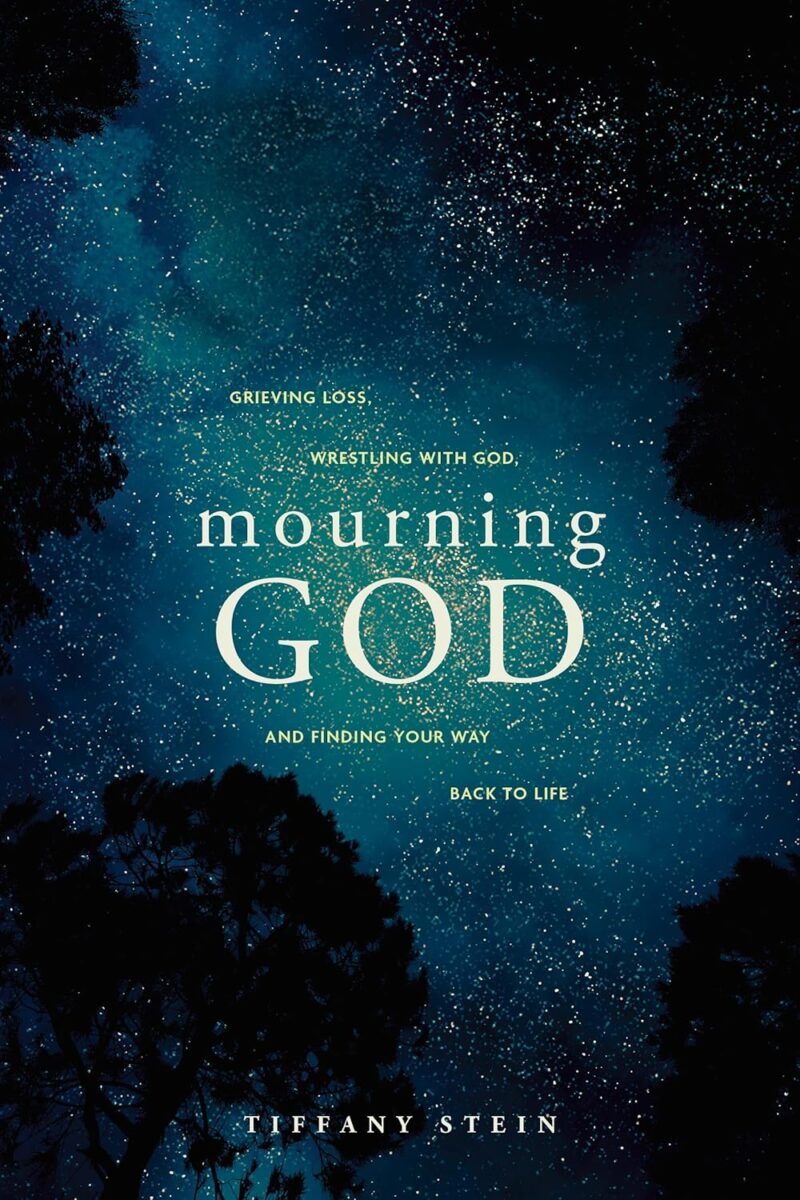
If you’re wrestling with doubt, grief, or disappointment with God, these pages meet you with the honest, compassionate voice you’ve been seeking. Tiffany’s personal experience with loss, combined with her pastoral insights, offers you a safe space to ask tough questions and take your time in finding healing.
hen the bottom falls out, when you’re left questioning, disoriented, and wondering if faith even has a place in your pain. Mourning God is for those tired of Christian clichés and quick-fix theology.
A native Texan and graduate of Dallas Theological Seminary and Oklahoma Baptist University, Tiffany Stein serves in women’s ministry and pastoral care, most recently at Irving Bible Church in Dallas, Texas, where she is passionate about helping others grow in the fullness and joy of Christ. Tiffany lives in the Austin area with her husband, Jason, and their daughter, Emma Ruth, while cherishing the memory of their son David, who is with the Lord.
In her deeply personal book Mourning God, Tiffany tenderly explores what it means to grieve not only loss, but the God you thought you knew.
Drawing from her own story of losing a child and walking through infertility, she offers a compassionate and theologically grounded invitation to wrestle honestly with doubt, disappointment, and sorrow.
{Our humble thanks to NavPress for their partnership in today’s devotional.}